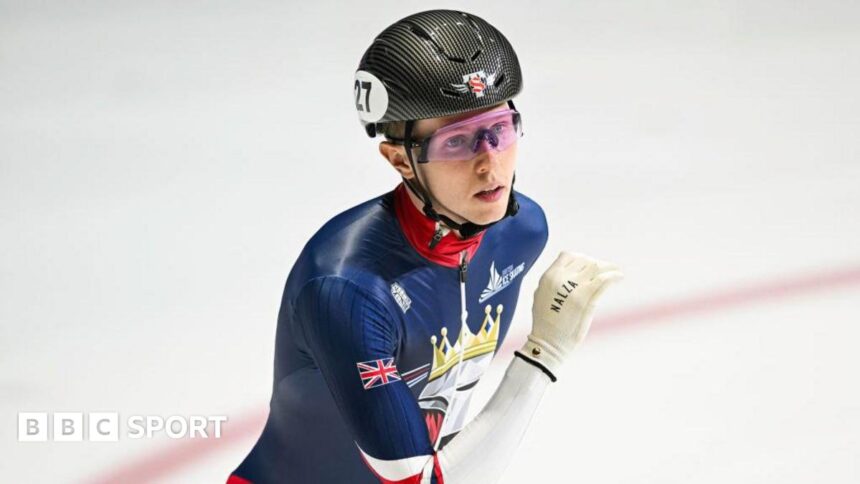
Niall Treacy: Great Britain’s Lone Short Track Speed Skating Hope for Milan-Cortina 2026
The roar of the crowd, the blur of coloured suits, the razor-sharp skates cutting across the ice in a high-stakes dance of strategy and nerve. Short track speed skating is one of the Winter Olympics’ most electrifying theatres. For Great Britain, however, the stage in Milan and Cortina this February will feature a solitary figure. In a significant and telling selection, the British Olympic Association has named just one short track skater for the 2026 Games: Niall Treacy. Carrying the nation’s hopes on his shoulders, Treacy’s journey from a 27th-place finish in Beijing to becoming Britain’s sole standard-bearer encapsulates a story of resilience, strategic focus, and the stark realities of high-performance winter sports.
From Beijing Setback to European Podium: The Treacy Trajectory
Niall Treacy’s Olympic story began at Beijing 2022, an experience he categorizes as a foundational learning curve. Finishing 27th in the 1,000m was a result that could have defined an athlete, but for Treacy, it became fuel. “After Beijing it was always the goal to come back and with more distance, so I’m really happy with that,” the 25-year-old reflected. That “more distance” is both literal and metaphorical. Literally, he has added competitive depth and stamina. Metaphorically, he has put significant ground between himself and that initial Olympic outing, a journey punctuated by a breakthrough medal.
The proof of this evolution came shimmering through at the 2024 European Short Track Championships. There, Treacy seized a landmark silver medal in the 1,000m, announcing himself as a genuine contender on the continental stage. This podium moment was no fluke; it was the result of refined technique, improved racecraft, and a hardened mental approach. This medal did more than just hang around his neck; it validated his post-Beijing path and fundamentally altered his profile from Olympic participant to Olympic threat.
Analyzing the Solo Selection: A Strategic Gambit or a Systemic Reality?
The decision to select only Niall Treacy is a stark headline that invites expert analysis. This singular focus is a double-edged sword, presenting unique challenges and potential advantages for the British team.
For Treacy, the solitude brings immense pressure but also clarity. He avoids the potential distractions of team relay preparations and can channel all his physical and mental resources into his three individual events: the 500m, 1,000m, and 1,500m. His training cycle can be meticulously tailored, a luxury not always available in a squad environment. However, the weight of expectation rests solely on him. There is no teammate to share the Olympic village experience with, no shared momentum from relay heats. His is a lonely mission.
From a systemic perspective, this selection underscores the challenging landscape of British short track. The retirement of stalwarts like Elise Christie and the intense global competition for Olympic quotas mean that qualification standards are ferociously high. Treacy’s European silver was the critical performance that secured his spot, highlighting a performance-driven approach by the selectors. It signals a period of rebuilding and transition for the program, with Treacy as its current pinnacle.
- Focused Preparation: Entire coaching and support staff resources can be dedicated to Treacy’s specific event strategies.
- Pressure Management: Handling the “sole hope” narrative will be as crucial as his physical conditioning.
- Programme Health: The selection raises questions about development pathways, demanding a long-term view for the sport in the UK.
Milan-Cortina 2026: Event Breakdown and Medal Predictions
Niall Treacy is not going to Italy just for the experience. His European silver proves he belongs among the elite. A realistic analysis of his events reveals where his best chances may lie.
The 1,000m is undoubtedly his prime event. The distance of his European success plays to his strengths—a blend of speed, tactical intelligence, and the endurance to strike at the right moment. In the chaotic, pack-style racing of short track, Treacy has shown he can navigate and position himself for the final lap sprint. A realistic goal is an A-final appearance, from which, as his European performance showed, anything can happen. A medal would be a monumental achievement but is within the realm of possibility if he delivers a perfect race.
In the 500m, pure explosive speed is king. This is often a lottery of starts and early positioning. Treacy will need flawless technique off the line to compete with the specialists. Advancing through the quarter-finals would be a strong result. The 1,500m offers a different test—a longer, more strategic battle of attrition. Here, his endurance and race management will be tested over more laps. This distance could suit a skater in strong physical shape and provide an opportunity to spring a surprise in the earlier rounds.
Predicting Olympic short track is notoriously difficult due to its inherent unpredictability. Falls, penalties, and split-second decisions alter destinies. However, based on current form:
- Most Likely Success: A deep run to the semi-finals or final of the 1,000m.
- Key to Victory: Staying upright, avoiding penalty drama, and executing his pre-race tactical plan.
- Victory Benchmark: Outperforming his Beijing result in all three events will be the first marker of success.
The Final Lap: Carrying the Flag for a Nation and a Sport
When Niall Treacy steps onto the Olympic ice in Milan-Cortina, he will be carrying more than just his own ambitions. He embodies the entire British short track program for these Games. His journey from the back of the pack in Beijing to the forefront of European skating is a compelling narrative of sporting growth. “It’s super exciting,” Treacy stated, capturing the palpable anticipation of his second Olympic act.
This solo mission is a pivotal moment. A strong performance, particularly a top-eight or podium challenge in the 1,000m, would be a monumental boost for the visibility and funding of short track speed skating in Great Britain. It would inspire the next generation watching at home, proving that with dedication, British skaters can compete with the traditional powerhouses of Korea, Canada, and China.
Ultimately, Niall Treacy’s selection is a story of quality over quantity. It is a testament to his personal perseverance and a clear-eyed assessment of where British short track stands today. The Olympic crucible will test him like never before, but armed with hard-earned experience and a European medal, he is no longer just making up the numbers. He is Great Britain’s calculated hope, ready to skate his own race, on his own terms, for an entire nation. The spotlight is his alone, and how he performs under its glare will define both his Olympic legacy and the immediate future of his sport back home.
Source: Based on news from BBC Sport.