Oliver Glasner’s Palace Paradox: A Manager 100% Committed, Yet Determined to Depart
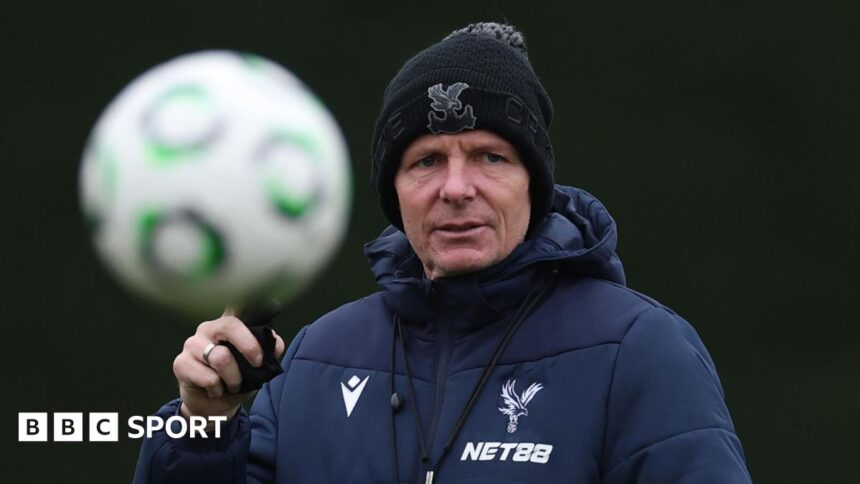
The atmosphere at Selhurst Park is one of curious duality. On the pitch, Crystal Palace are playing some of their most vibrant, attacking football in recent memory. Off it, the club is steeling itself for the inevitable departure of the architect of that style. Oliver Glasner, the Austrian tactician who breathed fire into the Eagles’ season, has made his position unequivocally clear: he is “100% committed” to the cause for the final furlong, but his journey with the club will definitively end this May. This isn’t a messy divorce, but a conscious uncoupling, revealing a complex narrative about modern football’s pressures, ambitions, and fractured relationships.
The Glasner Gamble: A Short-Term Revolution
When Oliver Glasner arrived in February 2024, inheriting a team languishing perilously close to the relegation scrap, the mandate was simple: ensure survival. What followed was nothing short of a tactical revolution. Glasner swiftly implemented his now-famous 3-4-2-1 system, unleashing the explosive talents of Eberechi Eze, Michael Olise, and Jean-Philippe Mateta in a cohesive, high-pressing unit. The results were immediate and spectacular. Palace’s form under Glasner propelled them to a comfortable mid-table finish, with historic victories, including a 5-2 demolition of Aston Villa, showcasing the team’s breathtaking potential.
This success made the club’s desire to keep him inevitable. As reported by the BBC, a new contract was offered last summer. However, Glasner’s decision to decline and subsequently inform chairman Steve Parish of his end-of-season departure points to a rift not based on results, but on philosophy. The core of the issue lies in a fundamental disagreement over the club’s direction, particularly its model for player retention and acquisition.
The Fracture Point: A Clash of Visions
Glasner’s frustration, as understood from numerous reports, stems from a feeling of building on sand. His commitment to a project was repeatedly undermined by the sale of key assets. While every club outside the elite is a “selling club” to some degree, the manner and timing of these departives reportedly grated on the manager’s long-term planning.
- The Marc Guéhi saga last summer, with constant speculation around the club captain and defensive linchpin, set a concerning precedent.
- The recurring anxiety each transfer window around the futures of Eberechi Eze and Michael Olise, despite their importance to the team’s identity, created instability.
- A perceived lack of proactive, strategic reinvestment of funds from major sales to build a balanced squad capable of challenging for Europe.
For a manager of Glasner’s pedigree—a Europa League winner with Eintracht Frankfurt—this cycle represented a ceiling he was unwilling to accept. His statement of 100% commitment for the remainder of the season is a testament to his professionalism, but his decision to leave is a stark verdict on the project’s long-term viability under the current structure. He is, in essence, committing to the players and the fans while consciously stepping away from the boardroom strategy.
The End-of-Season Dynamics: Motivation and Legacy
With the news public, the dynamic for Palace’s final games is fascinating. There is no “lame duck” manager effect here; instead, Glasner is liberated. He can speak his mind, demand maximum effort, and set up his team without any concern for political capital. For the players, there is a dual motivation: to perform for a respected coach in his final acts, and to audition for the next regime, all while sending the fans into the summer with optimism.
Glasner’s legacy at Selhurst Park, though brief, will be significant. He will be remembered for:
- Installing an identifiable and attacking philosophy that maximized the squad’s talents.
- Revitalizing the career of Jean-Philippe Mateta, who became a Premier League force.
- Providing a blueprint for how Palace can, and perhaps should, play moving forward.
- Leaving the club in a far stronger sporting position than he found it.
His departure is not a failure, but a statement. It proves that in today’s game, managerial appointments are about more than just tactics and man-management; they are about alignment of vision from the pitch to the boardroom.
What’s Next for Palace and Glasner?
The crystal ball for both parties is intriguing. For Crystal Palace, the succession planning is paramount. The next appointment is the most critical in years. Do they seek a continuity candidate to maintain Glasner’s system, or pivot entirely? The squad, brimming with young, saleable assets but lacking depth, requires a manager who can either embrace the existing model or convincingly argue for a shift in strategy to Steve Parish and the ownership.
Key questions for the Palace board include:
- Can they convince Michael Olise and Eberechi Eze to stay for another season without Glasner’s project as a draw?
- Will they back a new manager with the proceeds from any inevitable big-money sales?
- Has the Glasner experience prompted any internal rethink on their footballing project?
For Oliver Glasner, the future is bright. His stock is high across Europe. His proven ability to implement a progressive system, develop players, and achieve success on a relative budget makes him an attractive candidate for clubs with ambitions to break into a league’s upper echelon or establish themselves there. He will likely be linked with Bundesliga roles and perhaps even higher-profile Premier League jobs that may come available. His “100% commitment” to Palace’s finale is also a 100% commitment to his own marketability, ending his English chapter on a high note.
The Oliver Glasner era at Crystal Palace will be remembered as a thrilling, truncated masterpiece—a proof of concept that left fans yearning for more. His commitment to the end is professional and admirable, but his decision to depart is a powerful critique. It underscores a modern football truth: the best managers are architects who crave stability to build. At Palace, Glasner saw the blueprint rejected, so he is packing his tools, leaving behind a stunning model home, and moving on to a plot where the foundation matches his ambition. The Eagles soar for now, but they must quickly decide who will guide their flight path once their Austrian pilot disembarks.
Source: Based on news from BBC Sport.