Jaume Guardeno in Intensive Care: A Rising Star’s Journey Halted by Tragedy
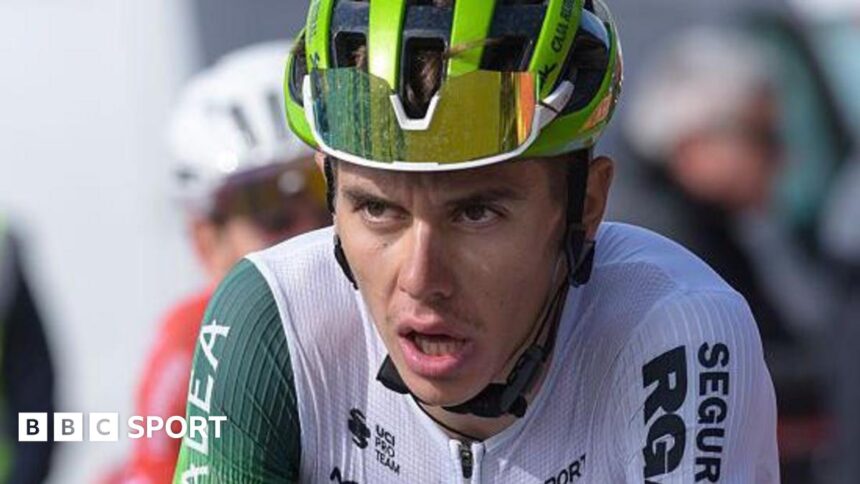
The world of professional cycling, a sport built on calculated risk and supreme endurance, was struck by a sobering and all-too-common horror this week. Jaume Guardeno, the 23-year-old Spanish phenom for Caja Rural-Seguros RGA, is fighting for his future in the intensive care unit of Tauli Hospital in Sabadell. The promising climber, fresh off a strong performance in the Tour of Catalonia, was involved in a devastating collision with a vehicle during a routine training ride on Tuesday. This incident casts a long shadow not only over a burgeoning career but over the entire peloton, reigniting urgent conversations about rider safety on public roads.
A Career on the Cusp: From Vuelta Breakthrough to Tour de France Dreams
To understand the magnitude of this loss, one must appreciate the trajectory Jaume Guardeno was on. This was not just another rider; he was a cornerstone of his team’s ambitious future. At just 23, Guardeno had already announced himself on the grandest stages. His 14th overall in last year’s Vuelta a España was a revelation, a performance marked by gritty resilience in the mountains that signaled his arrival as a genuine Grand Tour talent. Last week, he followed that with a solid 29th in the demanding Tour of Catalonia, further cementing his form and readiness for the season ahead.
Perhaps the most poignant detail in this tragedy is the future it disrupts. In a landmark announcement, Caja Rural-Seguros RGA team will make its Tour de France debut in 2026. For a Spanish continental team, this is a historic leap onto the world’s biggest sporting stage. Guardeno, with his climbing prowess and proven Grand Tour composure, was widely seen as a key leader for that inaugural campaign. His potential was the fuel for the team’s dream.
- Grand Tour Pedigree: 14th overall in the 2023 Vuelta a España.
- Consistent Climber:
A reliable presence in mountainous terrain, crucial for team strategy. - Team Linchpin: A projected leader for Caja Rural’s historic 2026 Tour de France debut.
The Grim Reality: Training Ride Turns to Trauma
The details of the incident are chilling in their simplicity—a scenario every cyclist dreads. On a Tuesday training ride, the fundamental act of preparing his body for competition turned catastrophic in a collision with a vehicle. The severity of his serious injuries necessitated a dramatic emergency response. On Thursday, his team confirmed the grim update: Guardeno had to be airlifted to Tauli Hospital in Sabadell by helicopter, a detail that underscores the critical nature of his condition. The fact that he remains in intensive care speaks to a long and uncertain road to recovery that extends far beyond any mountain pass.
This event is a brutal reminder of the inherent vulnerability of cyclists. While the peloton faces calculated risks during races—high-speed descents, hectic sprints—the greatest danger often lies on the quiet roads used for training. Riders log thousands of kilometers on routes shared with motorists, a daily gamble that, as Guardeno’s case tragically illustrates, can have devastating consequences. The cycling community’s collective heart sinks each time such news breaks, knowing it is a fate that could befall any of its members.
Expert Analysis: The Ripple Effect on a Team and a Sport
From a sporting perspective, the impact is profound. “This is a devastating blow on multiple levels,” notes veteran cycling analyst Marco Sánchez. “For Caja Rural, you lose a young, cost-controlled talent who was integral to your long-term sporting project. The 2026 Tour de France debut is now shrouded in uncertainty. Who leads that charge? This forces a complete recalibration of their roster planning for the next two years.”
Furthermore, Guardeno’s absence creates a vacuum in Spanish cycling. Spain has been searching for its next true Grand Tour contender since the retirement of Alberto Contador and the aging of Alejandro Valverde. Guardeno was among a promising new crop, including Juan Ayuso and Carlos Rodríguez, who could carry that torch. His injury stalls not just an individual career but a narrative of national cycling renewal.
Most importantly, the human element supersedes all sporting analysis. The focus for the team, his family, and the sport must be solely on Guardeno’s health and well-being. The physical and psychological trauma from such an accident is immense, and the priority is a full recovery, however that may be defined moving forward.
Predictions and the Path Forward: Safety, Recovery, and Resilience
Predicting the outcome is impossible. The immediate concern is Guardeno’s stabilization and long-term health. The cycling world has seen riders make miraculous returns from horrific accidents, like that of Jakobsen or Evenepoel, but each journey is unique and arduous. The first step is a very long one: emerging from intensive care and beginning the process of healing.
For the sport, this incident will—and should—amplify calls for action. Predictably, we will see renewed advocacy from rider unions and teams for:
- Improved infrastructure, including more protected bike lanes in training hotspots.
- Stricter legal penalties for drivers who endanger cyclists.
- Enhanced education campaigns promoting shared-road awareness.
- Potential exploration of closed-road technology or designated training times for professional teams in certain areas.
For Caja Rural-Seguros RGA, the coming months will be a test of resilience. They must support their fallen teammate while pragmatically adjusting their sporting objectives. Other riders on the roster will now have opportunities to step up, but the emotional weight of the situation will be a constant presence.
Conclusion: A Stark Reminder of What’s at Stake
The image of Jaume Guardeno, a young man at the peak of his physical powers, lying in intensive care after a training ride, is a heartbreaking paradox. It cuts to the core of professional cycling’s precarious existence. Here was a rider who had conquered the legendary climbs of the Vuelta, who had a ticket to the Champs-Élysées in his future, brought low not by a rival’s attack, but by a hazard faced by every commuter and weekend warrior.
His story is now one of hope and vigilance. The entire cycling community holds its breath, hoping for positive updates from Sabadell. We are reminded that behind the glamour of the yellow jersey and the roar of the crowds lies a dangerous daily reality for these athletes. Jaume Guardeno’s fight is no longer against the clock or a mountain gradient, but for his health and future. His ordeal must serve as a catalyst for change, a stark reminder that the greatest challenge in cycling should always be the climb, not the journey to the start line.
Source: Based on news from BBC Sport.