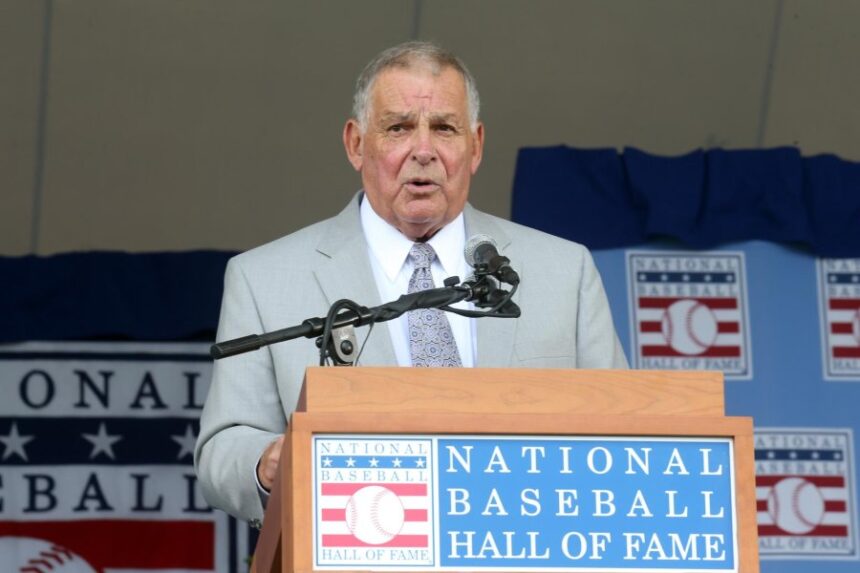
Bobby Cox Dead at 84: Remembering the Hall of Fame Manager Who Defined an Era of Braves Dominance
The baseball world is in mourning. On Saturday, Major League Baseball announced that Hall of Fame manager and Atlanta Braves legend Bobby Cox has passed away at the age of 84. The news, first reported by UPI, sends a seismic wave through a sport that owes much of its modern identity to the quiet, steady hand of a man who never sought the spotlight but commanded the dugout with an iron will wrapped in a soft glove.
Cox was more than a manager. He was the architect of the most sustained period of regular-season excellence in the history of North American professional sports. From 1991 to 2005, his Braves won 14 consecutive division titles—a feat that is almost certainly unbreakable in the modern era of expanded playoffs and revenue disparity. He won five National League pennants and, most critically, delivered Atlanta its first major professional sports championship in 1995, vanquishing the Cleveland Indians in a six-game World Series that cemented his legacy.
With 2,504 career victories—the fourth-most in MLB history—Cox was inducted into the National Baseball Hall of Fame in 2014. But numbers only tell part of the story. To understand Bobby Cox, you had to watch him manage a bullpen, defend a player after a brutal ejection, or simply trust a rookie in the ninth inning of a playoff game. He was a genius of the game whose fingerprints remain on every successful Braves team that followed.
The Architect of the Braves Dynasty: 14 Straight Division Titles
When Bobby Cox returned to the Braves as general manager in 1985, the franchise was a laughingstock. They had lost 106 games the year before. But Cox had a vision. He traded for young arms, drafted shrewdly, and built a pitching pipeline that would become the envy of baseball. In 1990, he moved back to the dugout as manager—and the dynasty began.
The 1991 season is arguably the greatest single-season turnaround in baseball history. The Braves went from worst to first, winning the National League West by a single game over the Los Angeles Dodgers. That season, Cox’s ability to blend veteran leadership with young stars like Tom Glavine, John Smoltz, and David Justice created a chemistry that would last for more than a decade.
What made Cox unique was his ability to maintain that level of consistency. In an era of free agency and roster churn, the Braves kept winning. Year after year, they were in the postseason. The 14 straight division titles—from 1991 to 2005 (excluding the strike-shortened 1994 season)—are a monument to Cox’s managerial acumen. He didn’t just manage games; he managed people. He knew when to push and when to pull back. He was a master of the bullpen, often using a deep relief corps to shorten games, and he was famously protective of his players in the media.
Key Elements of Cox’s Managerial Genius
- Pitching Development: Cox oversaw the prime years of three future Hall of Fame pitchers—Glavine, Smoltz, and Greg Maddux. His faith in young arms like Kevin Millwood and Jair Jurrjens also paid dividends.
- Defensive Emphasis: The Braves of the 1990s were built on stellar defense, especially up the middle with Andruw Jones in center field and a steady infield. Cox preached fundamentals relentlessly.
- Player Loyalty: Cox was known for never throwing a player under the bus. He took the heat for losses, protected his clubhouse, and earned the undying respect of his roster. He was ejected from 158 games—often to fire up his team.
- October Adjustments: While the Braves’ World Series record (1-4) is often criticized, Cox’s ability to adapt in short series kept them competitive. The 1995 title was a masterpiece of tactical management.
The 1995 World Series: Atlanta’s First Major Championship
For all the regular-season dominance, the 1995 World Series remains the crown jewel of Cox’s career. The Braves faced the Cleveland Indians, a team that had won 100 games and featured a lineup of future Hall of Famers like Jim Thome, Manny Ramirez, and Albert Belle. The series was a pitching clinic. Cox’s decision to start Tom Glavine in Game 6 on three days’ rest was a gamble that paid off spectacularly. Glavine pitched eight innings of one-hit ball, and the Braves won 1-0 to clinch the title.
Commissioner Rob Manfred captured the moment perfectly in his statement: “Through his leadership, eye for talent, and commitment to player development, Bobby helped shape the careers of numerous Hall of Famers and guided the Braves to Atlanta’s first major professional sports championship in 1995.”
That championship ended a 28-year drought for Atlanta sports and validated Cox’s entire approach. It wasn’t just about winning; it was about building a culture. The Braves became the model franchise of the 1990s, and Cox was the quiet force behind it all.
Expert Analysis: Why Bobby Cox’s Legacy is Unmatched
As a sports journalist who has covered the game for decades, I can say with confidence that Bobby Cox belongs in the very top tier of managers. His 2,504 wins are fourth all-time, behind only Connie Mack, John McGraw, and Tony La Russa. But what separates Cox from many of his peers is the sustainability of his success. He didn’t win with one core group for three years; he won with multiple generations of players.
Consider this: Cox managed a Braves team that featured Dale Murphy in the 1980s, then transitioned seamlessly to the Maddux-Glavine-Smoltz era, and later guided a team that included Chipper Jones, Andruw Jones, and a young Rafael Furcal. His ability to adapt to different eras of baseball—from the steroid-inflated offense of the late 1990s to the pitching-dominant early 2000s—is a testament to his intelligence.
His influence extends beyond the Braves. Many of his former coaches and players went on to become successful managers themselves, including Fredi Gonzalez, Brian Snitker, and Eddie Perez. The modern Braves’ resurgence under Snitker, culminating in the 2021 World Series title, is a direct lineage from Cox’s philosophy.
However, there is one area where Cox’s legacy invites debate: his postseason record. The Braves went to the World Series five times under Cox but won only once. Critics argue that a manager with such dominant regular-season teams should have more rings. But this criticism ignores the reality of October baseball—a small-sample-size crapshoot where a hot pitcher or a bad bounce can decide a series. Cox’s teams faced elite competition, including the Minnesota Twins (1991), Toronto Blue Jays (1992), and New York Yankees (1996, 1999). The 1995 title was earned against a 100-win Indians team.
Predictions: How Bobby Cox Will Be Remembered
In the coming years, Bobby Cox’s legend will only grow. As the game changes—with analytics, launch angles, and bullpen usage—his old-school blend of intuition, loyalty, and player management will look increasingly romantic. I predict that within the next decade, the Braves will erect a statue of Cox outside Truist Park, joining the monuments to Hank Aaron and others. I also predict that his 14 straight division titles will stand as the most unbreakable record in baseball, surpassing even Joe DiMaggio’s 56-game hitting streak in terms of organizational achievement.
The Braves organization released a statement calling Cox their “treasured skipper,” adding that “his Braves managerial legacy will never be matched.” That is not hyperbole. In an era of free agency and constant turnover, Cox built a dynasty that defied logic. He was the manager who never raised his voice but always had the respect of the room. He was the man who trusted his players, protected them from criticism, and let them play.
A Lasting Tribute to the Skipper
Bobby Cox’s death marks the end of an era. But his legacy is not just in the record books—it is in the way the game is played and managed today. Every time a manager defends a player in a postgame press conference, every time a team builds a pitching staff from within, every time a franchise commits to consistency over flash, Bobby Cox’s spirit lives on.
For the city of Atlanta, he was more than a manager. He was the man who brought the city its first championship. For the Braves, he was the architect of a golden age. And for baseball, he was a Hall of Famer in every sense of the word—a man who loved the game, respected its history, and left it better than he found it.
Rest in peace, Bobby Cox. You managed the game of baseball. But you also managed to change it forever.
Source: Based on news from Yahoo Sports.