Helmut Marko’s Era Ends: Red Bull’s Architect Set for Early Exit Ahead of 2026 Revolution
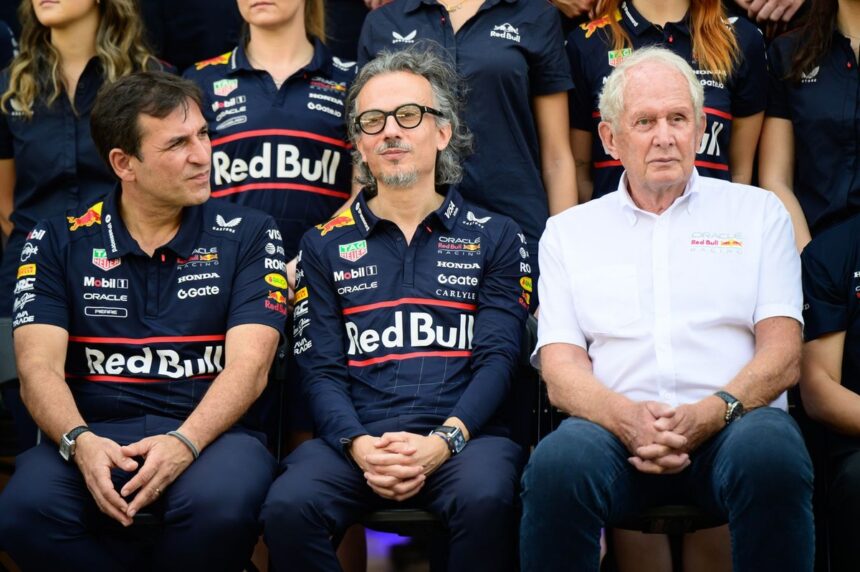
The final curtain fell on the 2024 Formula 1 season under the Abu Dhabi lights, but the most significant conclusion was not the championship standings. In the shadow of the Yas Marina podium, a seismic shift in the sport’s power structure began to quietly unfold. Dr. Helmut Marko, the austere, uncompromising architect of Red Bull’s modern dynasty, is set to depart the team ahead of the 2026 season, bringing a definitive end to one of the most influential careers in motorsport history. This is not a graceful retirement at contract’s end, but an early, negotiated exit that signals a profound transformation within the world champion squad.
The Abu Dhabi Ambiguity: A Paddock Pulse Check
Immediately after the title decider, the usual post-race narratives were punctuated by a sudden, pressing uncertainty. When journalists probed the 82-year-old Austrian about his future, the typically forthright Marko was uncharacteristically circumspect. Gone was the familiar refrain about his contract running through 2026. In its place was a cryptic admission: “It’s a complex [set] of different things.” He promised to sleep on it, a statement that sent immediate ripples through the paddock. This was not the language of a man secure in his position. It was the language of negotiation, of farewell, of a legacy being weighed in real-time. The discussion he alluded to was not a distant boardroom formality; it was imminent, scheduled for the very next day with Red Bull’s top brass, including sporting CEO Oliver Mintzlaff.
The Monday Meeting: Negotiating the End of an Era
The talks in Abu Dhabi on Monday were not about extension, but conclusion. The outcome, as now confirmed, marks a strategic retreat. Helmut Marko will retire as Red Bull’s motorsport advisor at the end of this calendar year, leaving a contract for 2026 unfulfilled. To understand the magnitude of this, one must understand that Marko’s role always vastly exceeded his job title. He was the team’s ruthless talent scout, its political enforcer, and a direct conduit to the team’s late founder, Dietrich Mateschitz. His influence shaped every aspect of Red Bull’s racing philosophy.
His impending departure is the culmination of a year of intense internal turbulence at Red Bull, following the investigation into team principal Christian Horner and the departure of star driver Max Verstappen’s key ally. Marko’s exit represents the final step in a corporate restructuring that has seen the Red Bull GmbH’s executive leadership, led by Mintzlaff, consolidate authority over the F1 operation. The era of the old guard, operating with near-autonomous power granted by Mateschitz, is officially over.
Analyzing the Impact: What Marko’s Exit Truly Means
Helmut Marko’s legacy is etched in the names of champions and the DNA of a team. His departure is not a simple personnel change; it is a philosophical pivot for Red Bull Racing.
- Talent Pipeline Upheaval: Marko was the master of the Red Bull Junior Team, a ruthless system that produced Sebastian Vettel, Daniel Ricciardo, and Max Verstappen. His sharp eye and unforgiving approach were legendary. Who now assumes the role of ultimate judge over the next generation of drivers? This creates uncertainty for talents like Liam Lawson and the future of the junior program itself.
- Power Dynamics Rebalanced: With Marko’s exit, the internal balance shifts decisively. Christian Horner remains, but without the counterweight and sometimes ally, sometimes rival, that Marko represented. The influence of the Verstappen camp is also altered, given Max’s vocal loyalty to Marko. This could be a stabilizing move or a source of new tension.
- Strategic Identity: Marko was a core part of Red Bull’s aggressive, risk-taking identity. His absence from strategy discussions and driver management will change the team’s character. Will a more corporate, board-led approach soften the team’s infamous edge?
The 2026 Horizon: A New Chapter Unshackled from the Past
The timing of this move, just before the monumental 2026 regulatory revolution, is deeply symbolic. Red Bull is not just preparing new engines and chassis; it is preparing a new institutional identity.
The 2026 season will be the first in Red Bull’s history without any direct, day-to-day involvement from Helmut Marko. It will be a clean slate, with the new Red Bull Powertrains division coming online and the team fighting under a completely new set of technical and sporting regulations. For Mintzlaff and the executive team, this allows them to face this brave new world with a structure of their own design, free from the towering shadow of the past. The risk, of course, is discarding the very instincts and expertise that built that world-beating capability.
Predictions for a Post-Marko Red Bull
The landscape of Formula 1 is set for another shift. Here’s what we can anticipate:
- A More Formalized Structure: Look for Red Bull to appoint a more traditional Sporting Director or Head of Driver Development to institutionalize Marko’s roles, likely diluting the absolute power he wielded.
- Max Verstappen’s Long-Term Calculus: While Verstappen is committed, Marko’s departure removes a key pillar of his Red Bull environment. His contract runs through 2028, but the dynamic within the team will be a critical factor he monitors closely, especially as 2026 approaches.
- Paddock-Wide Ripples: Other teams, particularly those looking to strengthen like Audi, will see this as a moment of potential vulnerability or opportunity. The market for top technical and strategic talent may heat up as Red Bull’s internal stability is perceived to shift.
Conclusion: The Final Lap for F1’s Last Don
Helmut Marko’s early exit is more than a retirement; it is the closing of a foundational chapter for Red Bull Racing. He was the sharp-tongued strategist, the feared evaluator, and the living link to the vision of Dietrich Mateschitz. His methods were controversial, his demeanor was intimidating, but his results were undeniable. As he steps aside before his contract concludes, the sport loses one of its last true autocrats, a figure from a less corporate, more visceral era of Formula 1.
For Red Bull, the path to 2026 is now clearer in structure but more uncertain in spirit. The challenge is immense: to navigate the biggest regulatory change in a generation without the man who helped guide them through their greatest triumphs. The legacy of Helmut Marko will be measured not by the years left on a contract, but by the championships already won and the formidable machine he helped create. The question now is whether that machine can retain its ferocious edge without its most feared and respected architect calling the shots from the shadows.
Source: Based on news from Yahoo Sports.