Will Conroy and the No. 5: A Brief, Gritty Chapter in Houston Rockets Jersey History
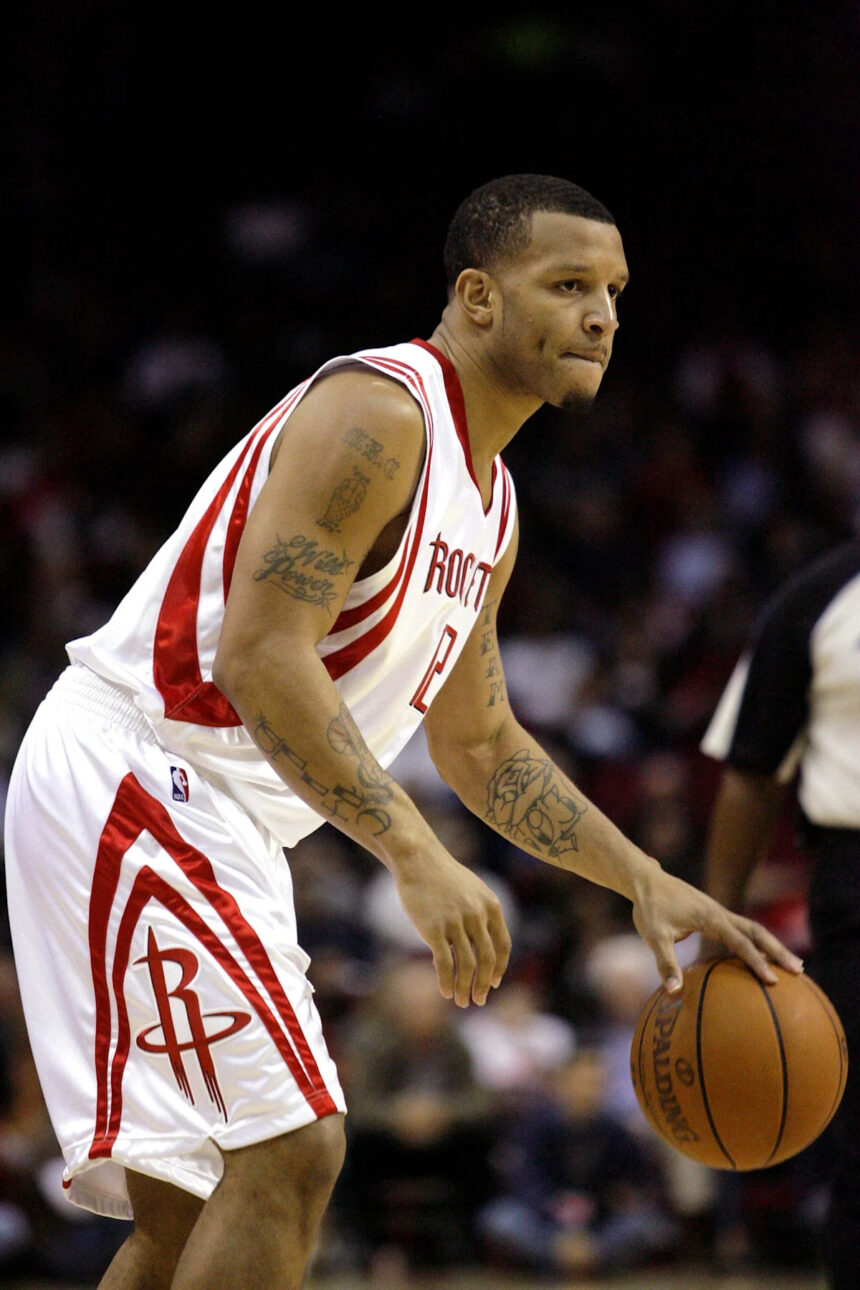
In the grand tapestry of the Houston Rockets, certain jersey numbers evoke instant legend. The No. 34 of Hakeem Olajuwon, the No. 11 of Yao Ming, the No. 22 of Clyde Drexler—these are numbers woven into the very identity of the franchise, immortalized in the rafters of the Toyota Center. But the true story of an NBA team is told not just by its superstars, but by the countless threads that briefly intersect with its fabric. The journey of jersey number 5, worn by 18 different Rockets, is one such narrative. And within that sequence lies the quintessential NBA survivor story: the 10-day contract, the tireless grind, and the dream realized, if only for a moment. This is the story of Will Conroy’s time wearing No. 5 for the Houston Rockets.
The Road Less Traveled: Conroy’s Odyssey to the NBA
Will Conroy’s path to the Rockets was anything but linear. A standout at the University of Washington alongside future NBA star Brandon Roy, Conroy went undrafted in 2005. What followed was a masterclass in perseverance. He became a basketball nomad, honing his craft in the NBA Development League (now the G League), across Europe, and in training camps, always on the periphery of his ultimate goal.
His NBA break finally came in 2007 with the Memphis Grizzlies, but it lasted a mere three games. A stint with the Los Angeles Clippers followed. Yet, it was his relentless performance as a floor general in the D-League, where he routinely posted impressive assist numbers and leadership stats, that kept his name in the conversation. By December 2010, the Houston Rockets, navigating injuries and seeking backcourt depth, came calling. They signed Conroy to a 10-day contract, handing him the No. 5 jersey last worn by guard Mike Harris.
This signing was a testament to a specific basketball archetype: the D-League veteran whose game tape and work ethic are so undeniable that NBA front offices take notice. Conroy wasn’t a prospect; he was a proven commodity at the minor-league level, a point guard who could organize an offense and compete immediately.
No. 5 in Houston: A Number of Journeymen and One Star
To understand Conroy’s place, one must look at the history he entered. The Rockets’ No. 5 has been worn by a diverse group, largely defined by transient players and role specialists before its eventual retirement for a legend. The jersey’s lineage includes:
- Early contributors like guard John Block (1971-72).
- Key role players such as Robert Reid, a defensive stalwart on the 1981 and 1986 NBA Finals teams.
- Notable journeymen including Tyrone “Muggsy” Bogues and later, Mike James.
- And ultimately, a Hall-of-Famer: The number was famously worn by Jason Kidd for his lone college season at California before being retired by the university. In the NBA, it was most prominently worn and later retired by the Rockets for point guard legend Steve Francis, “Stevie Franchise,” the co-Rookie of the Year who brought excitement and star power to Houston in the early 2000s.
Conroy’s tenure fits squarely into the journeyman chapter. He was not the franchise savior like Francis, nor a long-term fixture like Reid. He was a temporary solution, a professional stopgap whose very presence in the lineup spoke to the unpredictable, often harsh, realities of an 82-game season.
The Conroy Game: A Flash of Brilliance in a Tough Season
Will Conroy’s Rockets tenure was brief—just 21 total games across two 10-day contracts and a rest-of-season signing. His statistical footprint is modest: 1.7 points and 1.5 assists in limited minutes. But to define his contribution by averages is to miss the point entirely. Conroy’s value was in readiness and a single, unforgettable performance.
On January 28, 2011, with the Rockets decimated by injuries to guards Kyle Lowry and Aaron Brooks, Conroy was thrust into the starting lineup against the Denver Nuggets. What happened next was the stuff of every grinders’ dream. The undrafted guard playing on a 10-day contract logged 41 minutes, dishing out a career-high 13 assists while committing only one turnover. He directed the offense, found shooters, and played with a poise that belied his precarious NBA status. Though the Rockets lost a close game, Conroy had authored a perfect justification for his place in the league.
That game was the apex of his NBA journey. It was the tangible result of years of work in empty gyms and packed D-League arenas. It proved he belonged, even if the roster calculus would soon change. His role diminished as players returned from injury, and his season—and ultimately, his NBA career—concluded that spring. He signed overseas, continuing a professional journey that is still active internationally to this day.
Legacy and Analysis: The Essence of Jersey Number History
So, what is the legacy of Will Conroy’s No. 5 in Houston? It is a legacy of resilience. In chronicling the 52 different jersey numbers worn by nearly 500 players in Rockets history, stories like Conroy’s are essential. They complete the picture. For every Dream, there are dozens of players dreaming, clinging to the league by their fingertips.
Expert analysis of Conroy’s stint reveals the critical importance of organizational depth and the D-League’s evolution. He was a beneficiary of the Rockets’ forward-thinking approach to their affiliate, the Rio Grande Valley Vipers. His signing highlighted a pipeline that would later become crucial for NBA teams. Furthermore, his performance underscores a universal truth: NBA-level talent exists beyond the draft’s 60 picks, often requiring only opportunity and circumstance to reveal itself.
Looking at the current NBA landscape, Conroy’s archetype is more relevant than ever. The modern two-way contract is built for players of his ilk. One can easily envision a player with Conroy’s D-League pedigree and leadership today shuttling between the G League and the parent club, providing invaluable insurance and veteran presence. His story is a blueprint for the undrafted player: dominate the minor league, be a consummate professional, and stay ready for your moment—because it can arrive in the form of a 10-day contract and a No. 5 jersey in Houston.
Conclusion: More Than a Stat Line
The history of a jersey number is more than a list of names and seasons; it is a collection of human experiences within the franchise. Will Conroy’s chapter in the Rockets’ No. 5 saga is short but profoundly significant. It represents the unwavering pursuit of an NBA dream against formidable odds. It is a story not of stardom, but of substance; not of longevity, but of a single, brilliant night that validated a lifetime of work.
As the Rockets continue to build their future, with new players inevitably donning various numbers, the legacy of those who came before forms the franchise’s bedrock. Some, like Steve Francis, left an indelible mark on the scoreboard and the culture. Others, like Will Conroy, left a different kind of mark—one on the ethos of what it means to be a professional. In the complete history of the Houston Rockets, both are utterly essential. The No. 5 jersey, now retired for Francis, carries with it the echoes of Stevie’s crossover, but also the memory of a night when a journeyman’s vision created 13 assists and a lasting lesson in perseverance.
Source: Based on news from Yahoo Sports.