The Tyre, The T-Shirt, and The Tipping Point: How a Name on a Chest Changed Football Forever
The history of football is written in moments: a last-minute goal, a miraculous save, a tearful farewell. But it is also written in logos. Peel back the layers of memory for any fan, and you’ll find a sponsor’s crest woven into the fabric of their nostalgia. The bold red of Sharp is the treble-winning roar of Manchester United, 1999. The stark white O2 is the invincible stride of Arsenal’s 2004 legends. The soaring script of Fly Emirates is the modern era’s global reach. These corporations, often with no inherent link to the sport, have become emotional shorthand for glory, heartbreak, and identity. But this billion-dollar symbiosis didn’t begin in a boardroom. It began, improbably, with a local tyre salesman and a team from England’s sixth tier.
The Kettering Catalyst: A £250 Revolution
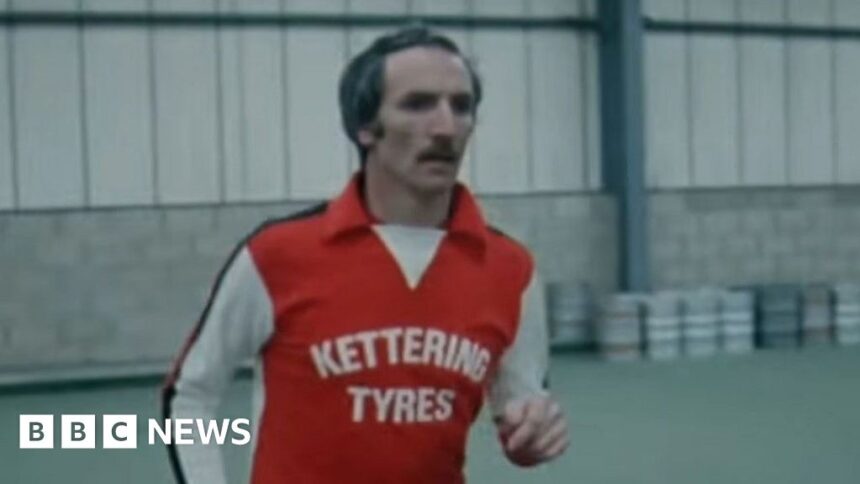
Before the global conglomerates, football shirts were pristine canvases, bearing only the club badge. The very idea of commercial advertising was viewed with purist disdain, a vulgar intrusion into the sport’s community spirit. The dam broke not at the Bernabéu or San Siro, but at Rockingham Road, home of Southern League Premier Division side Kettering Town. In January 1976, with the club struggling financially, manager and former England player Derek Dougan made a desperate, revolutionary deal. For £250, the club’s shirts would carry the name of a local business: Kettering Tyres.
The Football Association was apoplectic. They immediately ordered the slogan removed, citing regulations that prohibited “advertising” on kit. Dougan, a cunning and charismatic figure, spotted a loophole. He changed the wording to “Kettering T”, arguing it was now simply the club’s name in a stylized format. The farcical battle raged, but the genie was out of the bottle. The publicity was monumental, and the financial logic undeniable. Within years, the floodgates opened, rewriting the sport’s economic DNA.
- The Pioneer: Kettering Tyres’ £250 deal (1976).
- The Loophole: Dougan’s switch to “Kettering T” to defy the FA.
- The Impact: It proved the concept, creating a media storm that made sponsorship inevitable.
From Local Patrons to Global Power: The Brand-Identity Merger
The initial trickle of sponsors were often local industries—breweries, construction firms, paint manufacturers. Liverpool’s deal with Crown Paints in 1979 felt like a natural, regional partnership. But as television beamed the game into living rooms worldwide, the stakes and the players changed. The shirtfront became prime real estate, a 24/7 billboard seen by millions.
Clubs and brands began a deliberate, powerful merger of identities. Inter Milan and Pirelli became one of the most enduring marriages in sport, the tyre company’s yellow logo a constant through eras of glory, synonymous with the Nerazzurri’s blue and black stripes. It was more than advertising; it was brand alignment, associating Pirelli’s “high-performance” image with Inter’s style.
Then came the paradigm shift: FC Barcelona and UNICEF. In 2006, Barça, famously without a commercial sponsor, did the unthinkable. They paid UNICEF to wear the charity’s logo, inverting the entire model. This wasn’t selling space; it was buying ethos, cementing the club’s “Més que un club” (More than a club) philosophy in the most visual way possible. It proved the shirt’s value transcended mere revenue—it was a potent communication tool for identity itself.
The Emotional Ledger: Nostalgia, Rivalry, and Shared History
Today, a sponsor’s logo is a time machine. For fans, these emblems trigger a flood of sense memory. The Carlsberg crest is the grit and glory of Liverpool’s 2005 Istanbul miracle. The Vodafone logo is José Mourinho’s prowling Chelsea dominance. T-Mobile is the technical brilliance of the mid-2000s Bayern Munich. The roar of “Aguerooooo!” is forever framed by the Etihad logo on that sky-blue shirt.
This has created a unique emotional ledger for fans. A sponsor’s tenure often defines an era. A change can feel like the end of a chapter, met with resistance or excitement. When a beloved sponsor from a golden era returns, as Sharp did briefly with Manchester United, it unleashes a wave of collective nostalgia. Conversely, controversial or mismatched sponsors can face fan backlash, seen as a betrayal of the club’s soul. The transaction is financial, but the relationship is deeply, irrationally personal.
Analysis: The Double-Edged Sword of Commercialization
As an expert observer, the shirt sponsorship revolution is a tale of necessary evolution with complex consequences. The financial injection has been astronomical, funding world-class stadiums, training facilities, and squads, raising the global quality and spectacle of the game. It created a new revenue stream that allowed clubs to become global brands.
However, this reliance has also accelerated football’s financial stratification. The clubs with the most attractive, globally-marketed “chest space” pull further away. It has also led to a homogenization of aesthetics; the once-unique identity of a club’s shirt is now often dominated by a corporate logo. Furthermore, the pursuit of lucrative deals has seen clubs partner with industries at odds with community values, such as gambling companies, raising serious ethical questions.
The Future: Beyond the Logo on the Chest
So, where does the story go from here? The shirt sponsor is not disappearing, but its form is evolving. We are already seeing the rise of sleeve sponsors and training kit deals, multiplying the inventory. The next frontier is digital and experiential integration.
- Augmented Reality (AR) Jerseys: Fans pointing phones at a logo to unlock exclusive content, player messages, or NFT collectibles.
- Dynamic Deals: Short-term, high-impact sponsorships for specific matches or tournaments, akin to Formula 1.
- Tech-First Partners: A shift from airlines and banks to streaming services, crypto platforms, and metaverse companies seeking engagement, not just exposure.
- The Ethical Reckoning: Increased fan pressure may push more clubs toward “clean” or socially-responsible sponsors, following Barcelona’s UNICEF lead with partners like Spotify, which aligns with music and culture.
The fundamental relationship, however, will remain. The shirt is a sacred vessel, and what adorns it becomes part of a club’s folklore.
Conclusion: More Than a Badge, A Chapter Heading
From a defiant “Kettering T” to the global galaxy of Fly Emirates, Chevrolet, and Allianz, the journey of the shirt sponsor mirrors football’s own path from local passion to global empire. These logos are no longer mere advertisements. They are the chapter headings in a club’s story, the visual anchors for our collective memory. They remind us that football’s history is not just recorded in trophies and headlines, but in the very fabric worn by its heroes. The next time you see an old match photo, don’t just look at the players. Look at the name on their chests. That’s where a revolution started, with a tyre company and a £250 gamble that changed the game, forever.
Source: Based on news from BBC Sport.