The Final Whistle on Christmas Day: Remembering Football’s Lost Tradition
The presents have been opened, the dinner cooked and eaten, the paper hats are askew. Now what? A drowsy collapse in front of the television, perhaps, or a bracing walk to shake off the pudding. But for generations of English football fans, the true post-prandial ritual was altogether more thrilling: pulling on a scarf and heading out to the match. For 75 years, Christmas Day football was as much a part of the festive fabric as carols and crackers. That tradition came to a quiet end sixty years ago, on a damp 1965 afternoon at Bloomfield Road, when a future World Cup winner scored in a game few knew would be the last of its kind.
A Festive Fixture Rooted in Community
Since the Football League’s second season in 1889-90, 25 December was a cornerstone of the sporting calendar. In an era with far fewer public holidays and a six-day working week for many, Christmas and Boxing Day presented a rare opportunity for mass leisure. Clubs, recognising a captive audience, scheduled local derbies and home-and-away double-headers to maximise crowds. Public transport running on Christmas Day made it feasible, turning the match into a communal event that extended beyond the ninety minutes.
Professor Martin Johnes of Swansea University, an expert on the social history of sport, explains the deeper roots of the custom. “Christmas football was originally rooted in a wider tradition of communal entertainments,” he told BBC Sport. “It was part of a pattern of holiday festivities that brought communities together. The football match was an extension of the Christmas spirit—a shared, lively, often raucous experience for working-class communities.”
The atmosphere was unique. The scent of mince pies and mulled wine would mix with the familiar odours of tobacco and damp wool. Crowds were often larger and more festive, if a little worse for wear from pre-match celebrations. It was less about high-stakes competition and more about communal celebration, a shared outing for families and friends amidst the holiday.
Bloomfield Road, 1965: The Last Christmas Game
By the mid-1960s, the tradition was already waning. The rise of television, changes in public transport schedules on the day, and shifting social attitudes towards Christmas as a more private, family-centric affair had eroded attendances. The final fixture was, fittingly, a Lancashire derby: Blackpool versus Blackburn Rovers in the old Second Division.
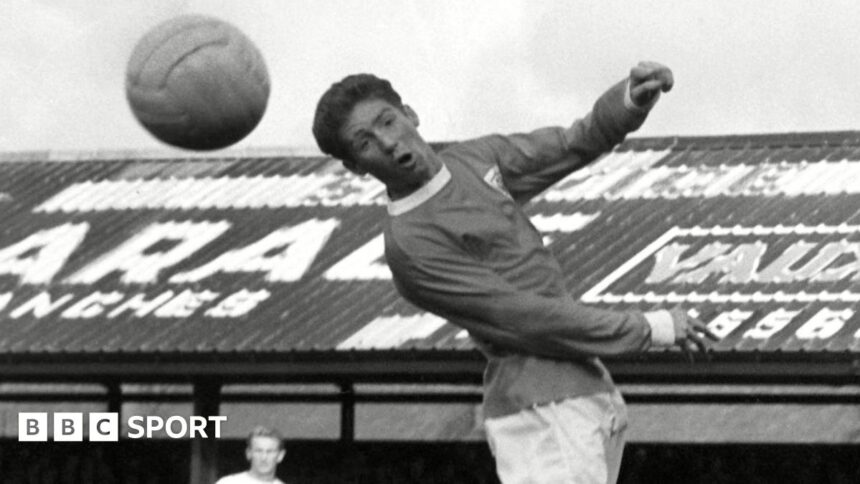
On a grey afternoon, a crowd of 20,972 gathered at Bloomfield Road. The game itself was a lively affair. Blackpool’s young star, the flame-haired Alan Ball, opened the scoring. Ball, who would go on to be a pivotal, indefatigable part of England’s 1966 World Cup-winning team just seven months later, embodied the energetic spirit of the occasion. Blackburn equalised, but Blackpool secured a 3-2 victory. The report in the following day’s press was routine, with no indication that a centuries-old sporting tradition had just concluded. The Football League simply never scheduled another Christmas Day game again.
The reasons for its quiet demise are multifaceted:
- Television’s Rise: As TV sets became ubiquitous, the lure of staying home grew.
- Transport Decline: With fewer buses and trains running, getting to the ground became harder.
- Commercial Pressure: Boxing Day emerged as the more lucrative, family-friendly holiday fixture.
- Player Welfare: Though rarely voiced then, the idea of players working on Christmas Day became increasingly anachronistic.
Expert Analysis: Why The Tradition Couldn’t Survive
Analysing the end of Christmas Day football is to analyse a shift in British society itself. Professor Johnes notes that the tradition faded as Christmas became more commercialised and domesticated. “The idea of Christmas as a time for families to be at home together, often with new toys and television, took hold,” he states. The matchday experience, once a central communal activity, was now in direct competition with the sedentary allure of the TV schedule and the private family gathering.
Furthermore, the economics of football were changing. Boxing Day proved to be a more reliable commercial bet. With public transport restored and families still on holiday, it offered similar crowds without the logistical and ethical quandary of playing on the 25th. The football calendar also became more congested, and a rare full day’s rest for players over Christmas became a valuable commodity.
Today, the very notion seems unthinkable, a relic of a bygone age. The Premier League’s global broadcast juggernaut now takes a brief pause, providing a rare, silent night in the football calendar. The pressure on players is scrutinised more than ever, and the idea of asking them to perform after a Christmas lunch would be met with universal dismay from unions and fans alike.
Predictions: Will Christmas Day Football Ever Return?
In short, no. The modern game’s structure makes a resurrection of the Christmas Day fixture virtually impossible. However, the festive football schedule remains a uniquely English quirk that continues to evolve.
- The Broadcast Behemoth: The Premier League’s international broadcasters crave holiday content. While the 25th is sacrosanct, the density of games between Boxing Day and early January will intensify. We may see more staggered kick-offs across the week to maximise global TV audiences.
- Player Welfare Revolt: With increasing awareness of mental health and physical burnout, the players’ union will continue to push for a more meaningful winter break, potentially challenging the traditional Boxing Day fixture itself in the coming decades.
- The Virtual Experience: The future of Christmas football lies in digital engagement, not stadium turnstiles. Interactive fantasy leagues, festive eSports tournaments, and club-led digital content will become the new “communal entertainment” Professor Johnes described.
The romantic, frostbitten image of crowds streaming to grounds on Christmas afternoon is now firmly preserved in history books and sepia-toned memories. Its return is less likely than a title win for the 1965 protagonists, Blackpool and Blackburn.
A Final Toast to a Lost Tradition
Sixty years on, the final Christmas Day whistle at Bloomfield Road echoes as a poignant marker of social change. That match, featuring a goal from a soon-to-be national hero in Alan Ball, was a last hurrah for a version of football—and a version of Christmas—that has disappeared. The game was less a business and more a local institution; Christmas was a public celebration as much as a private one.
The tradition died not with a bang, but with a routine 3-2 home win. Its passing reminds us that football does not exist in a vacuum. It is shaped by transport policies, television habits, and our evolving ideas of family and festivity. While we may now enjoy the holiday pause, there’s a certain magic lost in the absence of that option: the thrill of escaping the house for the terraces, of sharing cheers and festive greetings with thousands of your community. So, this Christmas, as you slump onto the sofa, spare a thought for the final festive fixture of 1965—a time when the best Christmas box was a last-minute winner under the winter sky.
Source: Based on news from BBC Sport.