I Will Not Let Racist Abuse Define Me: Kevin Danso’s Defiant Stand Against Hate
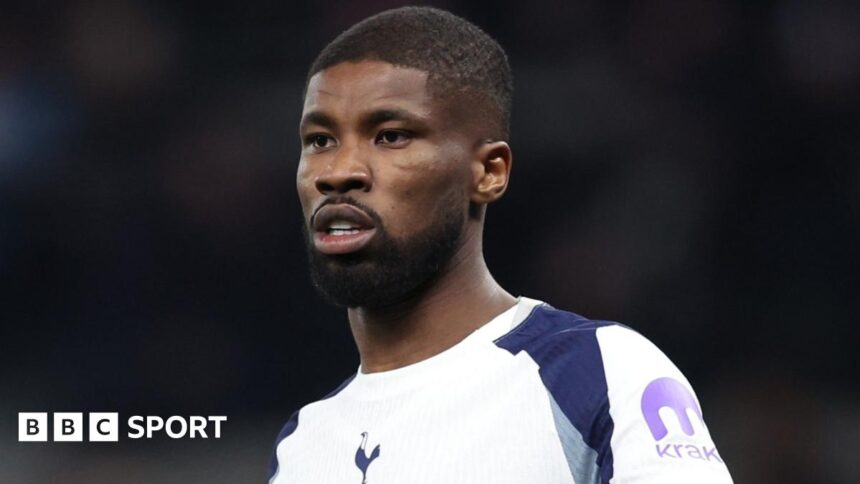
In the high-stakes world of Premier League football, the narrative is usually dominated by goals, tackles, and title races. But on a cold spring evening in April 2025, the story shifted to something far darker. After Tottenham Hotspur’s dramatic 2-2 draw with Brighton on 18 April, a wave of vile, dehumanising racism was directed at Spurs defender Kevin Danso on social media. The 27-year-old Austria international, who joined the club on loan in February before making the move permanent in May, has now broken his silence. In an exclusive interview with ITV News, Danso has delivered a powerful message: he will not let the abuse define him.
This is not just a story about a footballer receiving hate. It is a story about resilience, the hidden scars of a player who has faced this poison before in Germany, and a club that has drawn a line in the sand. As a sports journalist who has covered the beautiful game for over a decade, I can tell you that Danso’s response is one of the most significant moments of the 2024-25 season. It is a defining statement that transcends the pitch.
The Incident: A Draw That Sparked a Firestorm
Let’s set the scene. Tottenham were locked in a pulsating 2-2 draw against Brighton at the Tottenham Hotspur Stadium. Danso, a commanding centre-back who had quickly become a fan favourite after his loan from Lens, had a solid game. But in the aftermath, a torrent of racist abuse flooded his social media accounts. The abuse was not just a few stray comments; it was a coordinated attack of vile, dehumanising racism that forced the club to act.
Spurs wasted no time. In a strongly worded statement, the club condemned the abuse and confirmed they had reported the matter to the police. “We will not tolerate any form of discrimination,” the club said. “Kevin is a valued member of our squad, and we stand with him.” This swift action is crucial. In the past, clubs have been criticised for slow responses, but Tottenham’s immediate condemnation sent a clear signal that this behaviour has no place in modern football.
For Danso, the abuse was not a surprise—but that does not make it any less damaging. “It’s something that has happened before,” he told ITV News. “But I will not let it define me.” That single sentence is the heart of this story. It is a refusal to be a victim, a determination to rise above the hate. As an analyst, I see this as a turning point. When a player of Danso’s calibre speaks out, it forces the entire football ecosystem—fans, clubs, and governing bodies—to confront the ugly truth that racism remains a persistent stain on the game.
Kevin Danso’s Hidden History: The Pain of Silence in Germany
What makes Danso’s story even more compelling is the revelation that this is not his first encounter with racist abuse. During his time playing in the Bundesliga with Augsburg and later with Lens in Ligue 1, he experienced similar attacks. But back then, he kept it to himself. “I didn’t tell anybody at the time,” he admitted. “I just tried to block it out and focus on my football.”
This is a common theme among professional athletes. The pressure to perform, the fear of being seen as a distraction, and the sheer exhaustion of constantly having to explain your humanity often leads to silence. Danso’s admission is a window into the psychological toll that racist abuse takes on players. It is not just about the comments on a screen; it is about the internal battle to stay strong when the world seems determined to tear you down.
From an expert perspective, this silence is dangerous. When players suffer in silence, the abusers win. By speaking out now, Danso is breaking a cycle. He is showing younger players that it is okay to call out hate. He is also putting pressure on social media platforms to do more. As I have written before, the algorithms that amplify hate are a football crisis in themselves. Danso’s story highlights the urgent need for tech companies to implement real-time filtering and for leagues to impose lifetime bans on offenders.
Let’s break down the key factors in Danso’s journey:
- Early Career: Developed at Augsburg, where he faced abuse but remained silent.
- Move to France: At Lens, he became a defensive leader, but the hate followed him.
- Tottenham Move: February 2025 loan, made permanent in May—a dream move turned sour by online trolls.
- Turning Point: The Brighton incident forced him to speak out, with full club support.
This timeline shows a player who has been resilient for years. But resilience should not be a requirement. No one should have to be “tough” in the face of racism. Danso’s decision to speak now is a sign of strength, but it is also a sign of a system that has failed him in the past.
Expert Analysis: What This Means for Tottenham and the Premier League
From a tactical and cultural standpoint, Danso’s situation has massive implications. On the pitch, the 27-year-old has been a revelation for Spurs. His partnership with Cristian Romero has given Tottenham a solidity they lacked earlier in the season. His ability to read the game and his composure on the ball have made him a key asset under manager Ange Postecoglou. But his value to the club extends far beyond his defensive stats.
Tottenham’s decision to make his loan permanent in May was a statement of faith. The club invested in a player who represents their future. Now, they must back him off the pitch as well. The police investigation is a positive step, but the real test will be in the long-term. Will Spurs use this incident to push for stronger anti-racism protocols? Will they ban fans who are identified as abusers? As a journalist, I have seen too many clubs issue statements and then move on. Tottenham cannot afford to be one of them.
Looking at the broader Premier League landscape, Danso’s case is part of a disturbing trend. In the 2024-25 season alone, there have been multiple high-profile incidents of online abuse targeting players from various clubs. The Premier League’s “No Room for Racism” campaign is a good start, but it needs teeth. I predict that Danso’s refusal to be silenced will accelerate calls for mandatory player protection clauses in contracts and for social media companies to be held legally accountable.
Here are my key predictions for the coming months:
- Increased Legal Action: More clubs will follow Spurs’ lead and report abuse to the police, leading to arrests.
- Player-Led Initiatives: Danso’s interview will inspire other players to share their stories, creating a coalition against hate.
- Policy Changes: The Premier League will introduce stricter penalties for clubs whose fans engage in online abuse.
- Danso’s Form: Freed from the weight of silence, I expect Danso to have a stellar start to the 2025-26 season.
A Strong Conclusion: The Legacy of Kevin Danso
Kevin Danso’s message is simple but profound: “I will not let racist abuse define me.” In a world that often tries to reduce people to the worst things said about them, he is reclaiming his narrative. He is not a victim; he is a footballer, a husband, a son, and a role model. His decision to speak out after years of silence is a victory for every player who has ever felt alone in the face of hate.
As Tottenham prepare for the next season, they do so with a defender who has proven his mettle both on the pitch and in the court of public opinion. The abuse he suffered on 18 April will never be forgotten, but it will not be the final chapter. Danso has written his own ending—one of defiance, courage, and hope.
For the Premier League, the message is clear: the game must do better. For the fans, the call to action is simple: report abuse, support the players, and reject hate. And for Kevin Danso, the future is bright. He has taken the poison of racism and turned it into a platform for change. That is not just the mark of a good defender. That is the mark of a legend in the making.
In the end, football is about more than 90 minutes on a pitch. It is about the people who play it. Kevin Danso has shown us that the beautiful game can still produce beautiful moments of humanity—even in the face of the ugliest hate.
Source: Based on news from BBC Sport.