Ireland’s Football Dilemma: Playing Israel After Calling for Their UEFA Expulsion
The world of international football is no stranger to the collision of sport and politics, but rarely is the contradiction as stark as the one now facing the Republic of Ireland. In a development that lays bare the complex, often uncomfortable, realities of global sports governance, the Irish men’s national team has been drawn to face Israel twice in the 2026 UEFA Nations League. This comes just three months after the Football Association of Ireland (FAI) publicly called for Israel’s expulsion from all UEFA competitions. The fixture list now presents a profound ethical and sporting quandary: how does a nation reconcile its principled political stance with the binding regulations of the beautiful game?
A Stance and a Draw: The Timeline of Contradiction
The sequence of events reads like a script designed to test the resolve of a football association. In November 2025, against a backdrop of ongoing geopolitical conflict, the FAI took a definitive stand. Aligning with a sentiment held by several other national associations, Ireland formally requested that UEFA expel Israel from its competitions, citing concerns over the conflict’s impact and the principles of sport as a force for peace.
Fast forward to February 2026. Under the neutral, procedural glare of a UEFA draw in Paris, fate—or more accurately, the algorithm of the Nations League—intervened. The balls were pulled, and Ireland found itself placed in League B, Group B3 alongside Austria, Kosovo, and the very nation it had sought to ostracize: Israel. The Nations League draw mandated four fixtures: home and away against each opponent, scheduled for the September and November 2026 international windows. The political stance had instantly become a practical problem.
The FAI’s response was swift and revealed its constrained position. Within hours, a statement confirmed Ireland would “fulfil their 2026 UEFA Nations League fixtures.” The reasoning was not rooted in a change of heart, but in the cold, hard text of the rulebook. The association explicitly recognized the consequences of refusal: forfeit of the match, severe disciplinary action, and potential disqualification. The principle of expulsion had met the immovable object of UEFA statute.
Between Principle and Punishment: The FAI’s Binding Obligations
This situation underscores the limited power individual football associations wield against the continental governing body. While nations can voice protest and table motions, the authority to suspend or expel a member rests solely with UEFA’s Executive Committee, which has repeatedly declined to take such action against Israel. By entering the competition, Ireland—like all UEFA members—implicitly agrees to abide by its regulations, regardless of later political developments.
The FAI’s statement was a masterclass in navigating an impossible position. It reaffirmed its “ongoing position” calling for expulsion, yet simultaneously committed to playing the games. This dual-track approach is the only viable path available under UEFA regulations. To do otherwise would be an act of sporting self-immolation, harming the Irish team, its players, and fans far more than it would impact Israeli football.
The potential repercussions for boycotting are severe and escalatory:
- Automatic forfeit of both matches (likely 3-0 defeats).
- Substantial fines and disciplinary charges from UEFA.
- Disqualification from the current Nations League, impacting competitive standing.
- Potential exclusion from future UEFA competitions, including the European Championship qualifying pathway.
For a football association already facing financial pressures, and for a team striving to climb the rankings, such penalties would be catastrophic. The commitment to play, therefore, is not an endorsement but a grim acceptance of institutional reality.
Security, Protests, and the Unprecedented Matchday Atmosphere
Beyond the boardroom, the practical challenges of these fixtures will be immense. Matchday security for both legs will require planning at a level rarely seen for a Nations League group game. The home and away fixtures will be played under a microscope, with intense global media scrutiny and the certainty of large-scale protests.
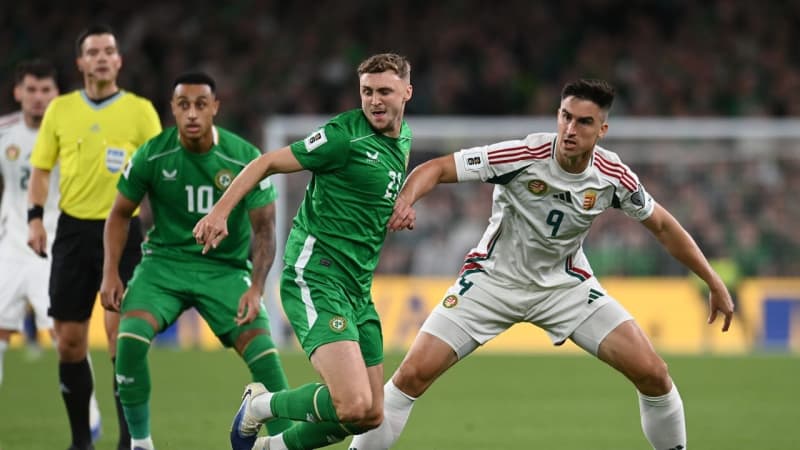
In Dublin, the Aviva Stadium will likely see significant demonstrations outside the ground, while inside, the tension will be palpable. The Irish players, who have no role in crafting foreign policy, will be tasked with performing in a uniquely charged atmosphere. The Israeli team and a small contingent of traveling fans will operate in a security bubble.
The reverse fixture in Israel presents even greater logistical and safety complexities. Will the Irish team and fans travel? If so, their security detail will be unprecedented. Could the match be moved to a neutral venue? While UEFA has allowed this for other nations under specific security threats, it is not a given. These questions will dominate the build-up, threatening to overshadow the football itself. The narrative will focus on geopolitics, sporting boycott debates, and security briefings, rather than tactical formations or player form.
Expert Analysis: The Wider Implications for Football and Politics
This Irish-Israeli dilemma is not an isolated case; it is a potent symbol of modern sport’s inescapable entanglement with global affairs. It exposes the fallacy that “sport and politics don’t mix.” They are, and always have been, deeply intertwined. The question is how governing bodies and individual nations manage that relationship.
From a sporting integrity perspective, UEFA’s stance is clear: its competitions must remain inclusive to all member associations unless a unanimous political directive (like that once applied to Russia) is taken by the executive body. This maintains a consistent, if controversial, framework. For Ireland, the episode highlights the limits of symbolic protest. Taking a stand is one thing; following through when it directly impacts your own team’s fortunes is another.
The situation also sets a fascinating precedent. Does playing the fixtures undermine the original call for expulsion? Or does it provide a global platform—through pre-match statements, potential armband protests, or media opportunities—to continually reiterate the political message? The games themselves become the stage for the very protest the FAI initiated.
Predictions and a Stark Conclusion
Looking ahead, the path is fraught but predictable. Barring a dramatic geopolitical shift or an unexpected UEFA intervention, the two matches will be played. They will be the most politically charged games in Ireland’s recent football history. We can expect:
- Intense, multi-layered security operations for both legs.
- A media frenzy that frames every pre- and post-match comment through a political lens.
- Possible symbolic protests from players or staff, within the limits of UEFA’s regulations on political statements.
- A footballing contest that, for 90 minutes, will briefly take center stage, likely characterized by fierce intensity and emotional weight.
In conclusion, the Republic of Ireland’s commitment to play Israel is a stark lesson in the collision of idealism and institutional power. The FAI’s principled call for expulsion was a moral stance made from the sidelines. The Nations League draw forced it onto the field of play, where the rules are different and the costs of protest are personally borne. This episode confirms that in the arena of international sport, it is far easier to call for a nation’s exclusion than to enact it unilaterally. Ireland will now walk onto the pitch, bound by the rules of the game it loves, to compete against a team it believes should not be there—a living, breathing contradiction that will play out over two tense nights in 2026, revealing once again that football is never just a game.
Source: Based on news from Yahoo Sports.