


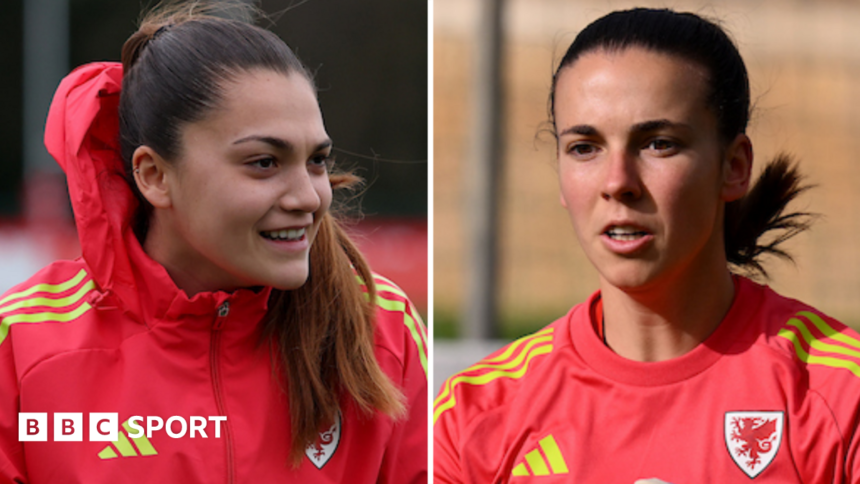
Wales’ Goalkeeper Gamble: Why Rhian Wilkinson is Sticking with Her Rotating Keepers
The path to a first-ever FIFA Women’s World Cup is paved with high-stakes decisions. For Wales manager Rhian Wilkinson, one of her most defining—and debated—strategies is not about a star striker or a tactical formation, but the player wearing the number one jersey. As Wales embark on their 2027 World Cup qualifying journey, kicking off against the Czech Republic in Uherske Hradiste, Wilkinson has confirmed a clear policy: the rotation between goalkeepers Olivia Clark and Safia Middleton-Patel will continue. In a position traditionally defined by consistency and cemented hierarchy, this approach is a bold departure, signaling a new philosophy under the Canadian coach.
A Deliberate Philosophy, Not Indecision
To the casual observer, rotating goalkeepers can suggest a coach unsure of their best option. However, Wilkinson’s comments frame it as a calculated, player-centric strategy designed for long-term gain. “Both of them have performed for Wales but I don’t feel either of them really grabbed the jersey yet and so I try not to make it [so] that it’s a combative environment,” Wilkinson stated. This reveals a multi-layered approach:
- Performance-Based Openness: By not declaring a permanent number one, Wilkinson maintains a competitive pressure where excellence in training and matches is continually rewarded with minutes. It prevents complacency and drives daily improvement from both athletes.
- Fostering a Collaborative Environment: The explicit aim to avoid a “combative” atmosphere is crucial. Goalkeeping is a unique, isolated role; fostering a supportive unit between Clark and Middleton-Patel, where they push each other positively, can strengthen the squad’s overall resilience and culture.
- Building for the Future: With a World Cup qualifying campaign spanning years, developing two international-calibre keepers provides invaluable depth and insurance against loss of form or injury. Both gain vital experience on the road to 2027.
This method breaks from convention, but in the context of a nation building towards historic qualification, it prioritizes process and player development over immediate, rigid hierarchy.
Profiling the Protagonists: Clark and Middleton-Patel
Understanding Wilkinson’s choice requires a look at the two talents vying for the gloves. They bring different profiles and experiences to the role, offering the manager tactical flexibility.
Olivia Clark (Bristol City) is a commanding, physical presence. Her experience in the Women’s Super League, facing some of the world’s best attackers weekly, has honed her shot-stopping and command of her penalty area. She exudes a traditional goalkeeping authority, crucial for managing set-pieces and organizing a defensive line in high-pressure away fixtures, like the upcoming qualifier against the Czech Republic.
Safia Middleton-Patel (Manchester United) represents the modern era. Technically proficient with her feet, she offers an additional outlet in build-up play, effectively acting as an eleventh outfield player. This aligns with contemporary tactical trends where playing out from the back is paramount. Her distribution can be the first spark of a transition, adding a different dimension to Wales’ attacking patterns.
Wilkinson’s rotation isn’t random; it can be matchup-specific. A physically demanding, aerial battle might suit Clark’s strengths, while a game where Wales expects to dominate possession could call for Middleton-Patel’s footwork. This duality makes Wales less predictable and more adaptable.
The Risks and Rewards of the Rotation Policy
No strategic choice is without its potential pitfalls. The goalkeeper rotation policy carries inherent risks that Wilkinson and her squad must meticulously manage.
- Defensive Consistency: Goalkeepers build an almost telepathic understanding with their central defenders. Frequent changes can disrupt defensive timing, communication on crosses, and the general cohesion of the back line. This is the most significant challenge Wilkinson’s staff must solve through intensive, coordinated training.
- Big-Moment Pressure: In a single, decisive qualifier, a goalkeeper needs to be battle-hardened and rhythm-ready. Can a player who hasn’t started the previous two or three matches instantly produce a world-class performance under the brightest lights? This is the ultimate test of the policy’s efficacy.
- Personal Rhythm: Goalkeeping is as much about confidence and rhythm as it is about skill. Some keepers thrive on a string of consecutive games to hit peak form.
Yet, the rewards are equally compelling. It creates a competitive environment that elevates both players. It ensures two motivated, game-ready keepers throughout a marathon campaign. Most importantly, it allows Wilkinson to tailor her selection to the tactical demands of each specific opponent, a nuanced approach that could yield critical points in a tight World Cup qualifying group.
Qualification Journey and What Success Looks Like
The ultimate judgment of this policy will be the results it helps produce. Wales’ quest for a maiden Women’s World Cup appearance is a national mission. The opening match against the Czech Republic sets the tone, and every point in a European qualifying group is precious.
Success for Wilkinson’s goalkeeper strategy won’t necessarily be measured by one emerging as an undisputed star—though that may happen. Instead, success will be defined by:
- Clean Sheets Earned: Regardless of who is in goal, does the unit keep the ball out of the net?
- Critical Saves Made: When called upon in vital moments, does the selected keeper deliver?
- Squad Harmony Maintained: Does the supportive, non-combative environment translate into a unified team spirit that withstands the pressures of qualification?
If both Clark and Middleton-Patel can point to key contributions in vital wins over the next two years, the rotation will be hailed as a masterstroke. If defensive errors creep in due to instability, scrutiny will intensify.
The Final Whistle: A Bold Bet on Building Strength
Rhian Wilkinson’s commitment to rotating her goalkeepers is more than a team selection quirk; it is a statement of her managerial philosophy. It is a belief in fostering internal competition without toxicity, in developing adaptable squad depth, and in making nuanced, tactical choices over automatic ones. In the high-stakes arena of World Cup qualification, where margins are razor-thin, this approach is a calculated gamble.
As Wales steps onto the pitch in Uherske Hradiste, the eyes of a nation will be on the quest for three points. But within that battle, the performance of the chosen goalkeeper—and the continued development of the one on the bench—will be a subplot with lasting implications. Wilkinson is playing a long game, betting that having two confident, experienced keepers ready for the final, decisive hurdles of the 2027 campaign is wiser than anointing a single savior today. In aiming for history, Wales is breaking from tradition, and the journey between the posts will be fascinating to watch.
Source: Based on news from BBC Sport.




