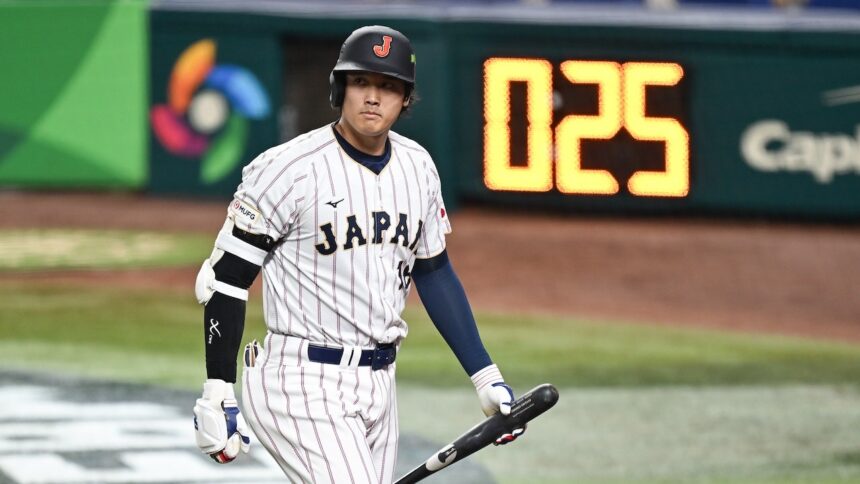
Venezuela Stuns Baseball World, Ends Japan’s WBC Dynasty in Miami Meltdown
The aura of invincibility, built over two consecutive World Baseball Classic titles and 11 straight tournament victories, evaporated into the humid Miami night air with a single, shocking swing. In a quarterfinal game that will be etched in WBC lore, Venezuela orchestrated a breathtaking comeback to dethrone the defending champion Japan, winning 8-5 and sending a seismic shock through the baseball world. The final, haunting image was Shohei Ohtani, the global icon, popping out to second base with the tying run on deck, his historic tournament and Japan’s reign ending not with a roar, but a whimper.
The Calm Before the Storm: Japan’s Early Dominance
For five innings, the script followed the expected narrative. Japan, the tournament’s gold standard, played with its characteristic precision. Starting pitcher Roki Sasaki, the “Monster of the Reiwa Era,” was electric, his fastball humming and his splitter diving out of the zone. He carried a no-hitter into the fifth inning, muzzling a potent Venezuelan lineup. The offense provided support, headlined by the man everyone came to see. In the third inning, Shohei Ohtani launched his third home run of the WBC, a majestic blast that seemed to signal business as usual for the champions. With a 3-0 lead and Sasaki dealing, Japan appeared to be cruising toward the semifinals.
Yet, baseball is a game of relentless pressure, and cracks began to show. Sasaki’s pitch count climbed, and a pivotal moment arrived in the fifth. After surrendering his first hit, Sasaki issued a walk, prompting manager Hideki Kuriyama to go to his bullpen. This decision, while understandable, opened the door. Japan’s bullpen, a source of strength throughout their run, experienced a catastrophic collapse. Venezuela, sensing vulnerability, pounced.
El Torrente: The Venezuelan Floodgates Open
The comeback was not a slow burn; it was an explosion. In the seventh inning, with Japan still leading 3-2, the game turned irrevocably. Maikel Garcia, facing reliever Yuki Matsui, connected on a two-run homer that suddenly put Venezuela ahead. The dugout erupted, but they were far from done. Later in the same inning, with two men on, outfielder Wilyer Abreu stepped in. On a 2-2 pitch, he unleashed a swing that will be replayed in Venezuela for generations, crushing a three-run homer to right field. In a matter of minutes, a one-run deficit had transformed into a commanding 7-3 lead.
The Venezuelan offensive eruption was a masterclass in clutch hitting and relentless pressure. Key to their victory was their approach against Japan’s elite pitching:
- Patience at the plate: They worked counts, fouled off tough pitches, and forced Japanese relievers into the heart of the zone.
- Capitalizing on mistakes: Any mislocated pitch was attacked with ferocity, as evidenced by the two decisive home runs.
- Unwavering belief: Even facing Sasaki and the daunting Japanese legacy, the Venezuelan squad never looked overmatched or intimidated.
This was more than a win; it was a statement. Venezuela, a nation with a deep, passionate baseball history, announced its return to the world’s elite stage, advancing to its first WBC semifinal since 2009.
Analyzing the Fall: What Went Wrong for Japan?
Japan’s loss will be dissected for years. On paper, they had the pitching, the lineup, and the experience. Yet, in a single-elimination format, even giants can fall. The primary culprit was the unexpected bullpen breakdown. The relievers who followed Sasaki could not stem the tide, failing to execute pitches in high-leverage moments. The strategic management of Sasaki’s outing will also be debated—could he have been pushed further to bridge the gap to the bullpen’s back end?
Furthermore, while Ohtani provided a signature moment with his homer, the Japanese offense outside of that struggled to deliver the knockout blow. They left runners on base in key situations, failing to extend their lead when they had the chance. This allowed Venezuela to stay within striking distance, setting the stage for their explosive inning. The loss also highlighted the immense pressure that comes with being the defending champion and the tournament favorite. Every opponent plays you as their World Series, and on Saturday, Venezuela played it better.
Looking Ahead: Ramifications and the Road to 2028
The ramifications of this result are profound. For Venezuela, the victory is multi-layered. Beyond the semifinal berth, they clinched a spot in the six-nation field for the 2028 Olympic baseball tournament, joining the United States and the Dominican Republic. This secures a critical opportunity for their program on another global stage. The win, powered by a mix of MLB stars and rising talent, will galvanize the baseball-crazy nation and cement this team as one of Venezuela’s greatest.
For Japan, an era of WBC dominance is over. The core that won in 2023 and many of the veterans from the 2017 title will likely not be together in 2026. The tournament marks the end of Ohtani’s storied WBC participation as a player, closing a chapter where he helped elevate the event’s global profile. The focus now shifts to development and reloading for the next cycle, with the knowledge that the world has caught up.
Expert predictions for the rest of the tournament must now be recalibrated. Venezuela, with its explosive offense and newfound belief, transforms from a dark horse into a legitimate title threat. Their semifinal opponent will face a team playing with house money and national pride. The landscape of international baseball has been visibly reshaped in one night.
A Night That Redefined International Baseball
March 16, 2024, will be remembered not for Japan’s expected march toward a three-peat, but for Venezuela’s glorious, defiant stand. It was a reminder that in baseball, talent on paper is meaningless once the first pitch is thrown. Heart, timing, and a single swing can topple a dynasty. While Shohei Ohtani’s pop-out concluded Japan’s quest, it was Wilyer Abreu’s home run that truly ended it, a blast that echoed from Miami to Maracay and announced a new contender at the summit of the baseball world. The World Baseball Classic has its defining moment of chaos and glory, and the road to the championship is now wide open.
Source: Based on news from Fox Sports.