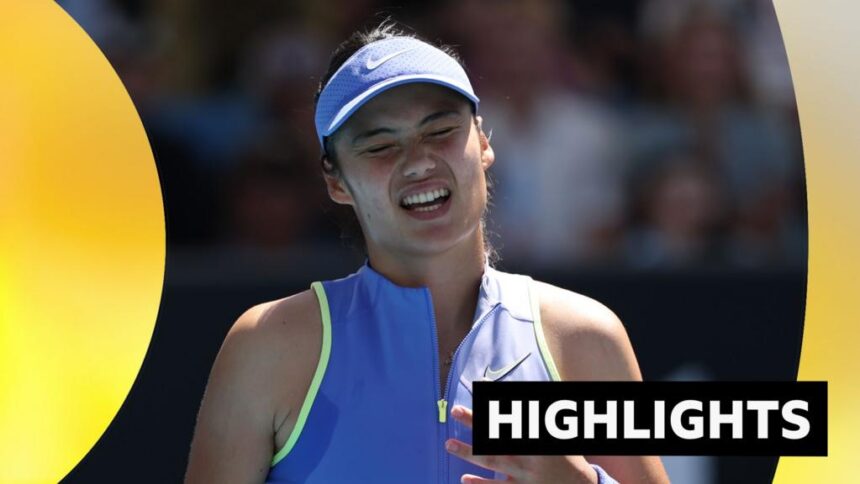
Raducanu’s Australian Open Journey Ends as Potapova Delivers Second-Round Masterclass
The sun was still high over Melbourne Park, but for Emma Raducanu, the lights went out early. In a result that reverberated around the tennis world, the 2021 US Open champion and British number one saw her Australian Open campaign halted decisively in the second round by the powerful and precise Anastasia Potapova of Austria. The 7-6 (7-3), 6-2 scoreline tells a tale of a tight battle that slipped away, a narrative of momentum seized and never relinquished by the world number 47. This was not the fairytale return many had hoped for; it was a stark reminder of the brutal, week-in, week-out demands of the WTA Tour.
A Tale of Two Sets: The Cruelty of the Tiebreak and the Slide
The opening set was a high-quality, fiercely contested affair. Both players held serve with relative comfort, trading heavy groundstrokes from the baseline. Raducanu, showing flashes of the defensive brilliance and clean ball-striking that made her a global star, looked to be finding her rhythm. However, Potapova’s aggressive baseline strategy was relentless. The Austrian refused to be drawn into extended rallies on Raducanu’s terms, instead taking the ball early and redirecting with venom, particularly off her fearsome forehand wing.
The set barreled into a tiebreak, often described as a coin flip in such evenly matched encounters. Here, Potapova’s conviction proved the difference. She elevated her intensity, while Raducanu’s first serve percentage dipped at the worst possible moment. A couple of unforced errors from the Brit handed Potapova the mini-break advantage, which she converted with an authoritative smash to seal the set. The psychological blow was palpable. The second set unraveled quickly for Raducanu. The energy deficit from losing such a close first frame seemed tangible. Her serve lost its pop, and Potapova, smelling blood, went for the jugular. Breaking Raducanu twice, she raced to a 5-1 lead, ultimately closing out the match with a confident hold, a performance that blended power with surprising tactical discipline.
Expert Analysis: Dissecting the Key Battlegrounds
Beyond the scoreline, several technical and mental facets decided this match. The contrast in recent competitive mileage was a significant subplot. Potapova arrived in Melbourne having played a full warm-up schedule, her game hardened by match play. Raducanu, in contrast, was navigating only her fourth tour-level match since her lengthy absence due to triple surgery on her wrists and ankle.
- Serve and Return Dynamics: Potapova’s return position was a masterclass in aggression. She stood exceptionally close to the baseline, taking Raducanu’s second serve extremely early, robbing her of time and dictating the point from the first strike. Raducanu, conversely, offered too many vulnerable second serves that sat up, inviting Potapova’s punishing returns.
- Forehand-to-Forehand Warfare: This was the central duel. Potapova consistently won it. She used her heavier, topspin-laden forehand to push Raducanu deep and wide, opening the court for winners. Raducanu’s flatter, more precise forehand was effective in patches but lacked the consistent weight to hurt Potapova when it mattered most.
- The Physical Question: While Raducanu moved well, the lack of recent best-of-three-set matches was evident as the contest wore on. Potapova, the fitter and more battle-ready player, maintained her power and depth deep into the second set, while Raducanu’s error count rose.
The match underscored a harsh reality: in modern tennis, time away from the court, regardless of the reason, is incredibly difficult to overcome. The mental resilience required to win tight sets is a muscle that needs constant exercise.
Looking Ahead: Predictions for Both Camps
For Anastasia Potapova, this victory is a massive statement. Beating a Grand Slam champion and a player of Raducanu’s profile, regardless of ranking, provides a huge confidence boost. Her draw has now opened up considerably. If she can maintain this level of controlled aggression, she has the game to make a deep run into the second week. She transforms from a dangerous floater into a legitimate dark horse contender, a player no one in her section will want to face.
For Emma Raducanu, the path forward is one of perspective and patience. The positives are clear: she is back on court, pain-free, and competing. The sublime hand skills and court craft have not vanished. However, the road back to the top is a steep climb. The focus must shift from immediate results to the process:
- Building Match Toughness: A consistent run of tournaments, without injury interruption, is now non-negotiable. She needs matches—wins and losses—to rebuild her competitive aura.
- Reinforcing the Serve: Developing a more reliable and powerful second serve will be a key technical priority to avoid the pressure she faced today.
- Managing Expectations: The external noise will be intense, but internally, the goal must be gradual, sustainable progress. The next six months are about laying a foundation, not necessarily capturing titles.
Predicting a swift return to the top 10 would be premature. The WTA tour is deeper and more physical than ever. However, if she can stay healthy, a realistic goal is to steadily climb back into the top 50 by year’s end, rediscovering the joy and rhythm of the weekly grind.
Conclusion: A Setback, Not a Conclusion
Emma Raducanu’s exit from the Australian Open is a headline, but it is not the full story. It is a chapter in a much longer, more complex book of a career that has already seen dizzying peaks and challenging valleys. Today, she was outplayed by an opponent who executed a perfect game plan with fearless conviction. Anastasia Potapova deserves full credit for a performance that announces her as a serious threat in this tournament.
For Raducanu, the Melbourne journey ends, but the 2024 season is just beginning. This defeat, while disappointing, provides the clearest possible blueprint for what comes next. The raw materials of a champion remain. The task now is the patient, often unglamorous work of reconstruction: building fitness, sharpening weapons, and accumulating matches. The tennis world remains captivated by her story, but the next phase will be written not in the blaze of a fortnight’s glory, but in the quiet, determined work between the grand slams. The comeback continues.
Source: Based on news from BBC Sport.