Jason Collins Dead at 47: NBA’s First Openly Gay Player Loses Battle with Brain Cancer
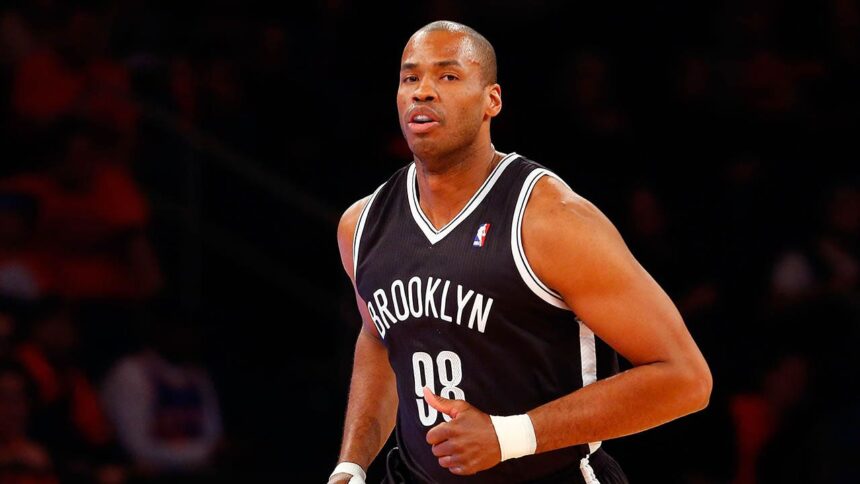
The sports world is waking up to a devastating loss. Jason Collins, the former NBA center who shattered a century-old barrier by becoming the first openly gay active player in a major American professional sports league, has died at the age of 47. According to family sources, Collins passed away Tuesday after an eight-month fight against Stage 4 glioblastoma, an aggressive form of brain cancer diagnosed last August.
- The Legacy of Jason Collins: More Than a Role Player
- Megan Rapinoe, Angel Reese, and the Accountability Crisis in Women’s Sports
- The Cancer That Keeps Taking: A Grim Week for Basketball
- Expert Analysis: What Collins’ Death Means for the NBA and LGBTQ+ Representation
- A Strong Conclusion: Honoring the Pioneer, Demanding Better from the Present
Collins’ death is not an isolated tragedy. The NBA community is reeling, still processing the sudden loss of Memphis Grizzlies forward Brandon Clarke, 29, whose death was announced just days ago. The back-to-back losses of two beloved players—one a pioneer, the other a rising star—has left a gaping wound in the league. As we mourn, it is impossible to ignore the stark contrast between Collins’ legacy of quiet courage and the noise currently surrounding women’s sports, where accountability has become a battleground.
The Legacy of Jason Collins: More Than a Role Player
When Jason Collins came out in a Sports Illustrated cover story in April 2013, he was a 34-year-old journeyman center known for his gritty defense, setting hard screens, and pulling down rebounds. He had played for six teams over 13 seasons, including the New Jersey Nets, Memphis Grizzlies, and Atlanta Hawks. But his announcement instantly transformed him from a footnote in NBA history into a landmark figure in the fight for LGBTQ+ equality in sports.
Collins’ courage was not performative. He did not seek the spotlight. Instead, he simply stated: “I’m a 34-year-old NBA center. I’m black. And I’m gay.” The impact was seismic. He became the first active male athlete in any of the four major U.S. professional sports leagues (NBA, NFL, MLB, NHL) to come out. President Barack Obama called him, and he received a standing ovation from the Brooklyn Nets when he signed with them later that season.
“Jason didn’t just play basketball,” said a former teammate who asked to remain anonymous. “He played for something bigger. He carried the weight of a community on his shoulders, and he never complained. He just did his job, set a pick, and changed the world.”
His battle with glioblastoma—the same cancer that claimed the life of Senator John McCain and former Notre Dame women’s basketball coach Muffet McGraw’s husband—was private and fierce. Collins spent his final months surrounded by family, including his twin brother Jarron, also a former NBA player. The NBA released a statement Tuesday calling him “a pioneer whose bravery paved the way for countless others to live authentically.”
Megan Rapinoe, Angel Reese, and the Accountability Crisis in Women’s Sports
While the basketball world mourns Collins, another controversy is raging in women’s sports. Soccer legend Megan Rapinoe has once again inserted herself into the conversation, this time defending Angel Reese’s decision to skip postgame media obligations. Reese, the WNBA star and former LSU standout, has repeatedly avoided reporters, citing a need to “protect her peace.” Rapinoe applauded the move, framing it as a form of empowerment and boundary-setting.
Longtime sports commentator Dan Dakich isn’t buying it. And frankly, neither should you. Dakich fired back on his radio show, pointing out a fundamental truth: Since when does skipping your job count as “taking power back”?
Let’s be clear: Accountability is not oppression. Athletes at the professional level—especially those in the WNBA, which is fighting for viewership and revenue—have a contractual obligation to speak to the media. It’s part of the job. It’s how the league grows. It’s how fans connect. When a star player like Angel Reese ducks out, she’s not protecting her peace. She’s undermining the collective effort to build the sport.
Dakich broke it down bluntly: “This ‘all empowerment, no accountability’ culture is a disease. You want to be treated like a professional? Then act like one. Show up. Answer the questions. You don’t get to pick and choose which parts of the job you want to do. That’s not empowerment. That’s entitlement.”
Rapinoe, who built her own brand on activism and speaking out, seems to endorse a double standard: speak up when it suits your narrative, but retreat when the questions get uncomfortable. This isn’t protecting mental health—it’s avoiding responsibility. And it’s hurting the growth of women’s sports, which desperately needs stars who are accessible, relatable, and accountable.
The Cancer That Keeps Taking: A Grim Week for Basketball
The death of Jason Collins comes on the heels of another heartbreaking loss. Brandon Clarke, the 29-year-old Memphis Grizzlies forward, passed away suddenly last week. While the official cause has not been released, the grief across the league is palpable. Clarke was a fan favorite in Memphis, known for his high-flying dunks and relentless energy. He was in the prime of his career, averaging 11.3 points and 5.6 rebounds last season.
And it doesn’t stop there. The international basketball community is also mourning Tiana Mangakahia, the former Syracuse star and Australian professional who lost her battle with cancer. Mangakahia, 29, had been fighting Stage 4 breast cancer since 2019, returning to the court after treatment before the disease ultimately claimed her life. Her family confirmed the news earlier this week.
Three basketball players. Three cancers. Three tragedies in a span of days. It’s a sobering reminder that cancer does not discriminate—by age, gender, or fame. Collins fought glioblastoma, one of the deadliest brain cancers, with a median survival rate of just 12-15 months. He lasted eight months after diagnosis. Mangakahia battled for years. Clarke’s death remains a shock to a team that thought they had a cornerstone for the future.
Expert Analysis: What Collins’ Death Means for the NBA and LGBTQ+ Representation
As a journalist who has covered the intersection of sports and social issues for two decades, I can tell you this: Jason Collins’ impact will outlive his playing career by generations. Before Collins, the locker room was a closet. After Collins, it became a sanctuary for many.
“His coming out was the single most important moment for LGBTQ+ inclusion in men’s professional sports,” says Dr. Sarah Kaplan, a sports sociologist at the University of Michigan. “It didn’t just normalize being gay in the NBA—it forced other leagues to examine their own cultures. The ripple effect is still being felt today.”
Since Collins, we’ve seen openly gay athletes in the NFL (Carl Nassib), the WNBA (multiple players), and the NHL (Luke Prokop). But the pace has been slow. No active NBA player has come out since Collins. That’s not a failure of Collins’ legacy; it’s a reflection of how deep homophobia still runs in men’s sports. Collins was the door opener. Now, we need more people willing to walk through.
My prediction: In the wake of Collins’ death, we will see an outpouring of tributes, but also renewed conversations about mental health and safety for LGBTQ+ athletes. Expect the NBA to announce a new initiative—perhaps a Jason Collins Foundation grant or a mental health fund for players. Expect more players to feel emboldened. Grief often accelerates change.
A Strong Conclusion: Honoring the Pioneer, Demanding Better from the Present
Jason Collins is gone at 47. That is too young. Too unfair. But his life was not defined by how he died—it was defined by how he lived. He walked onto NBA courts as a role player and left as a revolutionary. He taught us that courage is not loud. Sometimes, it’s just a quiet statement: “I’m here. I’m gay. I’m playing.”
As we honor his memory, we must also take a hard look at the current state of sports culture. The “protect your peace” mantra sounds noble, but it becomes hollow when it’s used as a shield against basic professional duties. Angel Reese and Megan Rapinoe can learn something from Jason Collins: He faced the media after every game, good or bad. He answered every question about his sexuality with grace. He never hid. He never ducked. He showed up.
That is the legacy we should carry forward. Not empowerment without accountability. Not courage without action. But the kind of strength Jason Collins embodied every single day—the strength to be yourself, do your job, and change the world, one screen, one rebound, one honest interview at a time.
Rest in peace, Jason. You set the screen. Now it’s our turn to run the play.
Source: Based on news from Fox Sports.