Leeds United Condemn “Disappointing” Boos During Ramadan Pause at Elland Road
The beautiful game is often a mirror to society, reflecting its best and, at times, its most challenging aspects. In a poignant moment during Saturday’s Premier League clash between Leeds United and Manchester City, that mirror showed a crack. A planned, respectful pause in the 13th minute to allow Muslim players observing Ramadan to break their fast was met with a jarring cacophony of boos and whistles from sections of the Elland Road crowd, an act the club has since labeled “disappointing.” This incident transcends a mere football match, sparking a vital conversation about inclusion, respect, and the evolving culture of the modern game.
A Moment of Respect Meets a Wall of Noise
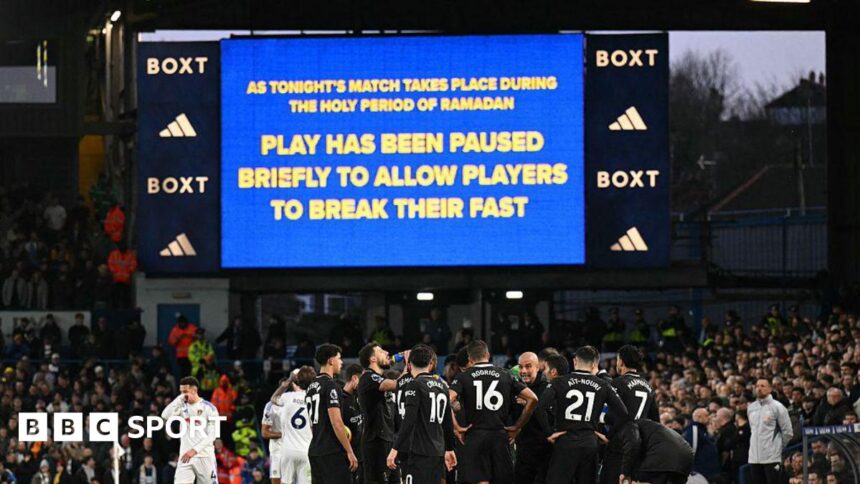
The scene was unprecedented in English football. With the clock reading 13 minutes—symbolic of the 13th day of Ramadan—players from both sides moved to the touchline during a natural stoppage. A message illuminated the stadium’s big screen, clearly informing the 36,000-plus supporters that this was a planned pause for Ramadan. What should have been a minute of quiet understanding or even applause for a display of sporting solidarity turned sour. Instead, a significant portion of the crowd responded with loud, sustained jeers.
This was not a spontaneous reaction to a controversial refereeing decision or a player’s mistake. It was a directed response to a gesture of religious accommodation. The brief stoppage at Elland Road followed protocols successfully implemented in other competitions, like the 2022 World Cup, and was agreed upon by both clubs and the match officials. Its purpose was simple: to allow players who had been fasting from dawn to sunset to take on fluids and energy supplements, ensuring their health and safety during elite competition.
- Agreed Protocol: The pause was pre-arranged with clubs and officials.
- Clear Communication: Supporters were informed via the stadium big screen.
- Player Welfare Focus: The core purpose was athlete health during a religious observance.
Club Response and the Wider Context of Football’s Culture
Leeds United’s initial silence on Saturday night spoke volumes, suggesting a club grappling with how to address an uncomfortable incident involving its own fanbase. By issuing a statement, they took a necessary stand. Labeling the boos as “disappointing” is a minimal but firm starting point. The club now faces the tougher task of educating and engaging with its community to prevent a recurrence.
This incident did not occur in a vacuum. It clashes directly with the extensive, league-wide equality, diversity, and inclusion campaigns that have become staples of matchday programming. The Premier League’s “No Room For Racism” and the Football Association’s broader inclusion initiatives promote a message that football is for everyone. The boos at Elland Road, therefore, represent a stark contradiction—a vocal minority rejecting the very inclusivity the sport’s governing bodies are trying to foster.
From an expert analysis perspective, the reaction can be viewed through multiple lenses: a lack of understanding about Ramadan, a frustration with any interruption to the flow of the game, or a more troubling resistance to the visible accommodation of religious practice in a traditionally secular, and sometimes insular, football culture. The challenge for clubs like Leeds is to bridge this gap, transforming passive tolerance into active understanding.
Ramadan in Football: From Marginal Note to Mainstream Consideration
The visibility of Ramadan in elite football has grown significantly. With a high percentage of Muslim players across Europe’s top leagues, clubs have become increasingly adept at supporting their athletes. Nutritionists adjust meal plans, training loads are managed, and kick-off times are sometimes considered. The in-game Ramadan pause is the latest, and most public, adaptation.
Pioneers like France’s Ligue 1 have led the way, implementing official breaks without controversy. The positive reception at the World Cup in Qatar demonstrated that a global audience could accept and respect the practice. The negative reaction at Elland Road, therefore, may be less about the act itself and more about its novelty in the domestic English context. It represents a cultural shift in Premier League operations that some fans are not yet comfortable with, highlighting a need for proactive communication from clubs long before the matchday message appears on the screen.
Players like Manchester City’s Riyad Mahrez and Leeds’ own Illan Meslier (who, while not Muslim, participated in the pause in solidarity) are high-profile figures. Their commitment to faith while performing at the peak of their profession deserves respect. The footballing world has largely celebrated this dedication; the task is to ensure that sentiment reaches every corner of the stadium.
Predictions and Pathways Forward for Leeds and the Premier League
This incident will likely serve as a catalyst for more structured action. We can predict several developments in its wake:
- Enhanced Club Education: Leeds, and other clubs, will likely intensify efforts to educate fans about cultural and religious practices observed by players, using club media channels and fan forums.
- League-Wide Guidance: The Premier League may issue clearer guidelines or support for clubs implementing similar breaks, ensuring consistent messaging and presentation.
- Player Advocacy: High-profile Muslim players may speak more openly about their experiences, using their platforms to foster understanding and normalize such accommodations.
- Zero-Tolerance Enforcement: A firmer stance from clubs and security on discriminatory behavior, including booing during moments of religious respect, could be enacted.
The true test for Leeds United is not just in their statement but in their follow-through. Will they use this as a teachable moment for Premier League inclusivity? Initiatives could include features on player faith in matchday programs, collaborations with local Muslim communities, or a clear, vocal statement from players and managers ahead of any future planned pauses. Silence is no longer an option.
Conclusion: The Final Whistle on Intolerance
The boos that echoed around Elland Road were more than just a disappointing noise; they were a reminder that the fight for a truly inclusive football culture is ongoing. While the beautiful game has made monumental strides in tackling overt racism and homophobia, subtler forms of exclusion and misunderstanding persist. The planned Ramadan pause was a progressive, player-centric, and compassionate innovation. The negative reaction to it underscores the distance still to travel.
Leeds United’s acknowledgment is step one. The journey ahead involves turning disappointment into dialogue, and jeers into respect. Football, at its best, is a unifying force. It has the power to introduce cultures to one another and foster shared respect in a common cause. The incident on Saturday should be a watershed, not a setback. The goal now must be to ensure that the next time the big screen lights up with a message of respect, the response from every seat in the house is one of silent solidarity or resonant applause—the only sounds fitting for the beautiful game.
Source: Based on news from BBC Sport.