Discriminatory Chants at Hull vs. Chelsea: A “Stain on the Game” and a Critical Juncture for Football
The roar of the crowd, the tactical battle on the pitch, the raw passion of a cup tie—these are the elements that define the magic of the FA Cup. Yet, during Friday night’s fourth-round clash between Hull City and Chelsea at the MKM Stadium, a more sinister noise pierced the atmosphere. Homophobic chanting from sections of the home support forced a stark and unprecedented intervention: a public address warning to cease discriminatory behavior, backed by the threat of CCTV monitoring. The subsequent confirmation of multiple arrests has ignited a fierce conversation, with fan groups labeling the incident a “stain on our game.” This is not just a report on an isolated event; it is an examination of a persistent blight on football and a pivotal moment for the sport’s ongoing fight for inclusivity.
The Unfolding of a Damaging Incident
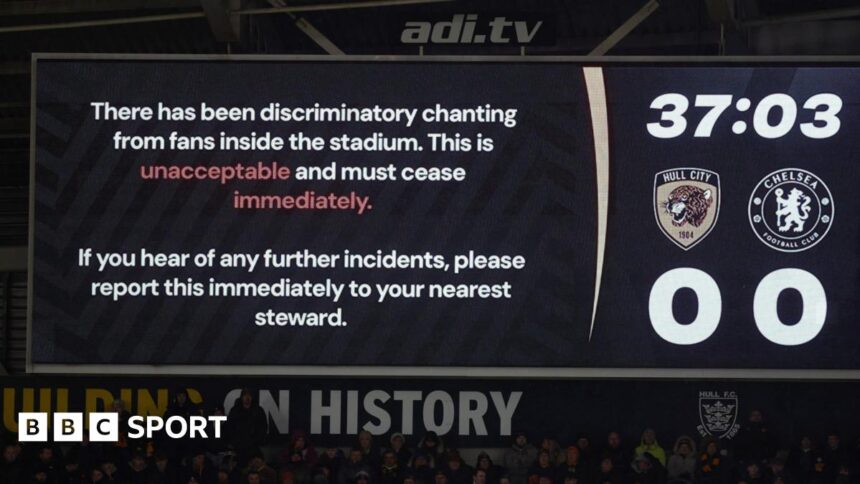
As the first half of the tightly-contested match drew to a close, the focus was abruptly wrested from the players. Over the stadium’s PA system, an official announcement echoed, warning spectators to stop discriminatory chanting immediately. This direct address, a measure of last resort, signaled the severity of the situation. It was a clear, institutional acknowledgment that the line had been crossed. The warning explicitly stated that CCTV was being monitored, transforming the stadium from a mere venue of spectacle into a space of active surveillance for the protection of basic decency.
The second half brought a chilling update. Another announcement confirmed that action, including arrests, had been taken. While Hull City and Humberside Police have yet to disclose the exact number of individuals detained, the message was unequivocal: consequences would be delivered in real-time. This procedural sequence—from chant, to warning, to arrest—frames the incident not as a spontaneous outburst of “banter,” but as a premeditated act met with a structured, zero-tolerance response. It lays bare the operational playbook now being activated against discrimination in grounds across the country.
Expert Analysis: Beyond “Banter” – The Systemic Challenge
To dismiss such chants as “traditional terrace banter” is to fundamentally misunderstand their impact and intent. Homophobic chanting, like all forms of discriminatory abuse, is a tool of exclusion. It creates a hostile environment not only for opposing fans and players but, crucially, for LGBTQ+ individuals within the stadium—whether they are fans, staff, or players hiding their identity for fear of such abuse.
“This incident at Hull is a stark reminder that the fight against discrimination in football is not won,” notes Dr. Emily Rutherford, a sociologist specializing in sport and inclusion. “The public address warning is a powerful tool, but it is ultimately a reactive one. It signals that the problem has already erupted. The real work is in the proactive, cultural shift that must happen in communities, in fan groups, and in the relentless education of younger supporters. Arrests are a necessary deterrent, but they are the end point of a failure of prevention.”
The role of CCTV monitoring and digital evidence gathering has become a game-changer. It moves enforcement from the realm of the anecdotal to the prosecutable. Clubs and police forces now have the capability to identify offenders with precision, leading to not only stadium bans but potential criminal records. This technological leverage is shifting the risk calculus for would-be offenders, making the cost of their “chant” profoundly personal.
The Key Pillars of an Effective Response:
- Immediate Intervention: The PA warning serves as a mass awareness tool, putting the majority of well-behaved fans on notice and isolating the perpetrators.
- Evidence Gathering: Leveraging CCTV monitoring and fan footage to build indisputable cases against individuals.
- Swift Sanctions: Arrests and subsequent stadium bans demonstrate that policies have tangible teeth.
- Fan Group Leadership: The condemnation from supporter groups is vital in delegitimizing the behavior within fan culture itself.
Predictions: The Road Ahead for Clubs and Supporters
The fallout from the MKM Stadium incident will reverberate far beyond Humberside. We are likely to see a rapid escalation in the standard operating procedures for dealing with discriminatory abuse at football grounds. Expect the following developments in the coming seasons:
1. The Normalization of Real-Time PA Warnings: What once seemed a nuclear option will become a standard, if regrettable, tool. Clubs will be empowered and expected to act decisively at the first sign of coordinated discriminatory chanting, without fear of public relations backlash.
2. A Surge in Fan-Led Education Initiatives: The most powerful antidote to hate is a strong, positive fan culture. Clubs will increasingly partner with organizations like Kick It Out and the Football v Homophobia campaign, but the drive will be fan-led. Expect prominent supporter groups to launch their own inclusivity campaigns, explicitly distancing their identity from bigotry.
3. Increased Scrutiny on Club Accountability: Governing bodies like the FA may begin to hold clubs more directly responsible for the conduct of their fans in such clear-cut cases, potentially leading to more severe sporting penalties if proactive measures are deemed insufficient.
4. A Focus on the “Why”: Simply punishing offenders is not enough. There will be a growing push for restorative justice programs and mandatory education for those who receive bans, aiming to address the ignorance at the root of the abuse.
Conclusion: A Stain That Demands Collective Action
The FA Cup fourth round match between Hull City and Chelsea will be remembered not for its scoreline, but for the jarring interruption that laid bare a festering problem. The characterization of these chants as a “stain on our game” is apt; they tarnish the fabric of football, pushing away those who love it and betraying the sport’s modern aspirations of being a home for all.
However, within this grim incident lies a template for progress. The swift action—the warning, the monitoring, the arrests—shows a system learning to defend its values. The condemnation from within the fan community itself is perhaps the most hopeful sign, indicating a cultural immune system beginning to reject the poison. The path forward is clear: unwavering enforcement must be matched with relentless education. The goal is not just silent stadiums, but inclusive ones, where passion is channeled into support, not hate. The stain exposed at the MKM Stadium is deep, but football now has the tools, and more importantly, the growing collective will, to scrub it out for good.
Source: Based on news from BBC Sport.