Farrell’s Reckoning: Ireland’s Paris Pummeling Must Forge a New Identity
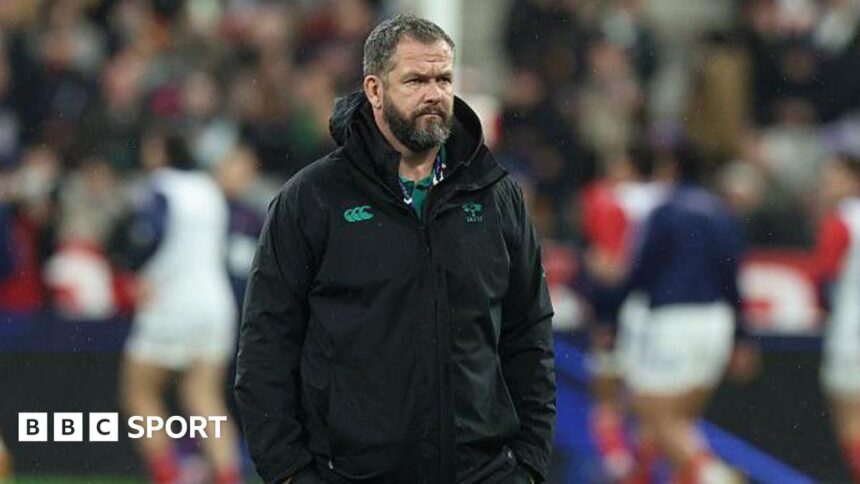
The final whistle at the Stade de France didn’t just signal a 36-14 defeat; it felt like the closing of a chapter. Ireland’s opening salvo in the 2026 Six Nations, a comprehensive and at times brutal dismantling by a rampant French side, laid bare a reality many had suspected but few had seen so starkly. The scoreboard told one story, but the post-match words of head coach Andy Farrell pointed to a deeper, more urgent narrative. For a squad in flux, this wasn’t just a loss. It was, as Farrell insisted, an experience that “has to stand to us.” The question now is whether this painful lesson becomes the foundation for a new era or a tombstone for a fading golden generation.
A Humbling in Paris: More Than Just an Opening Defeat
On paper, a trip to Paris without a full-strength team is rugby’s toughest assignment. The context, however, cannot fully soften the blow of this performance. Ireland were not merely beaten; they were outmuscled, outthought, and out-enthused. The French pack dominated the gainline, the kicking game was superior, and the clinical edge that defined Ireland for years was conspicuously absent. This wasn’t a narrow loss forged in a heroic rearguard action. It was a four-try-to-one dismantling that exposed systemic issues.
The injury list—featuring pivotal figures like Dan Sheehan, Caelan Doris, and Hugo Keenan—is a legitimate mitigating factor. Yet, Farrell’s post-match focus wasn’t on excuses but on accountability and growth. “I said during the week that whatever happens it has to stand to us because it’s another experience for a different enough group,” he stated. This is the core of the challenge: Ireland are no longer the settled, experienced machine that hunted Grand Slams. They are a team in transition, and transitions in elite sport are often brutal.
- Fourth Heavy Defeat in 12 Months: The 22-point margin in Paris follows double-digit losses to England, New Zealand, and South Africa in the past year.
- World Ranking Slide: Dropping to fifth in the world is their lowest position since March 2022, a symbolic fall from grace.
- Leadership Void: With Johnny Sexton retired and key leaders absent, on-field decision-making under pressure was exposed.
Expert Analysis: Where the Foundations Cracked
Beyond the scoreline, several tactical and psychological fault lines emerged. The absence of a commanding presence at the breakdown allowed French jackalers like Charles Ollivon to thrive, turning over precious ball. Ireland’s much-vaunted defensive system, the “green wall,” showed uncharacteristic leaks, with missed tackles and miscommunication gifting France easy meters and momentum.
Most concerning was the lack of a discernible ‘Plan B’. When the power game failed to gain traction, Ireland seemed to lack the strategic variety or individual spark to change the point of attack. The half-back pairing, tasked with steering the ship, found themselves perpetually on the back foot, their kicking game neutralized by a superior French back three. This points to a deeper issue: the system that brought historic success may need evolution. Opponents have studied it, adapted, and found ways to disrupt its rhythm. The injuries have accelerated the need for that evolution, forcing Farrell to integrate new personnel who must now learn not just the system, but how to adapt it under fire.
The psychological component cannot be ignored. For years, Ireland played with the swagger of champions. In Paris, that aura was missing. The mental resilience to withstand early French pressure and claw back into the contest seemed diminished. Rebuilding that intangible belief is perhaps Farrell’s greatest task.
The Italian Job: A Litmus Test for Farrell’s Words
This is why Farrell immediately pivoted to the response against Italy. A home game in Dublin is no longer a guaranteed five-point procession; it is a pressure cooker. The coach warned the defeat would be “for nothing” without a reaction. Italy, improved and spirited, will arrive with nothing to lose, sensing vulnerability. This match is no longer about championship contention—it’s about identity.
What must that response look like?
- Set-Piece Redemption: The scrum and lineout must provide a stable platform, an area of non-negotiable pride.
- Defensive Fury: The tackle count and line speed must return to ferocious, organized levels.
- Attack with Clarity: Whether it’s a return to multi-phase precision or injecting more creative risk, the attack must find a coherent voice.
Selection will be fascinating. Does Farrell double down on the new faces, trusting the long-term project, or recall every available veteran to secure a must-win? His choices will signal his true priority: immediate results or sustained regeneration.
Predictions: A Pivotal Crossroads for Irish Rugby
The trajectory of Ireland’s entire 2026 campaign—and perhaps the next World Cup cycle—hangs on the coming weeks. The prediction here is one of painful but necessary growth. Ireland will likely rally to beat Italy, but the performance will be scrutinized more than the result. The true test will come against England and Scotland—fixtures that will reveal if the lessons of Paris have been absorbed.
This loss has irrevocably shifted the narrative. The era of consistent dominance is over. Ireland now enter a phase of fierce competition within the squad, where jerseys are truly up for grabs. Emerging players like Joe McCarthy (who battled valiantly in Paris) and Sam Prendergast must step from prospects to pillars. The prediction is not for an immediate return to the top of the world rankings, but for a turbulent, inconsistent season that ultimately forges a tougher, more adaptable squad. The alternative—a continued slide into mediocrity—is the spectre Farrell must exorcise.
Conclusion: Forged in Fire, or Consumed by It?
Andy Farrell’s insistence that the Paris defeat “has to stand to us” is the defining mantra for Irish rugby in 2026. This was more than a bad night at the office; it was a vivid portrait of a team at a crossroads. The pillars of the past are either injured, retired, or under siege. The future is unwritten, and its authors are a mix of scarred veterans and untested talents.
The humbling by France can be the catalyst for a necessary rebirth—a moment that strips away any lingering complacency and forces a tactical and personnel refresh. Or, it can be the moment a great team’s decline accelerated. The responsibility lies with Farrell to channel the pain into purpose, and with the players to prove their mettle. The journey back begins not with grand pronouncements, but with the raw, gritty response demanded in Dublin next weekend. The stand has been taken. Now, Ireland must build upon it.
Source: Based on news from BBC Sport.