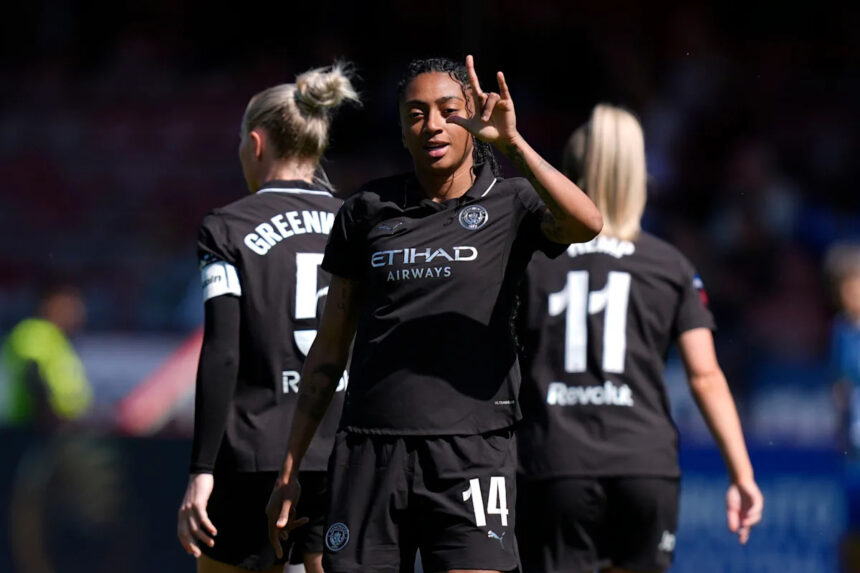
Man City Ends Chelsea’s WSL Dynasty: A New Era Dawns in English Football
MANCHESTER, England — The reign is over. After six years of relentless dominance, Chelsea’s iron grip on the Women’s Super League has finally been broken. On a decisive Wednesday evening, Manchester City were officially crowned champions, not with a kick of their own, but thanks to Arsenal’s 1-1 draw with Brighton & Hove Albion. The result confirmed what the table has screamed since November: City is the new standard-bearer of English women’s football.
For Swedish manager Andrée Jeglertz, the moment marked a stunning debut season. Arriving from the Denmark national team, he inherited a squad that had failed to qualify for the Women’s Champions League—a humiliation for a club of City’s ambition. Yet, in a single campaign, Jeglertz has not only restored pride but has authored a redemption story that will be studied for years.
This title, City’s second WSL crown after their 2016 triumph, represents more than a trophy. It is a seismic shift in the balance of power. Chelsea’s streak of five consecutive titles—a run that seemed unbreakable—has been shattered. The question now is whether this is a fleeting upset or the beginning of a new dynasty in Manchester.
The Long Road Back: How City Rose from the Ashes
To understand the magnitude of this achievement, one must rewind to last summer. Manchester City, a club synonymous with investment and success, had just endured a painful season. Missing out on Champions League qualification was not just a failure; it was a crisis of identity. Key players were linked with exits, and the shadow of Chelsea loomed large.
Enter Andrée Jeglertz. The Swedish coach, known for his tactical flexibility and man-management, walked into a pressure cooker. His first task was to rebuild confidence. He did not tear down the structure; instead, he refined it. Jeglertz instilled a high-pressing, possession-based system that maximized the talents of his stars while demanding relentless defensive discipline.
The result was immediate. City went unbeaten for 14 league matches from the start of the season. They took top spot on November 9 and never relinquished it. While Chelsea stumbled—drawing matches they previously would have won—City kept winning ugly, grinding out 1-0 victories and showing a resilience that had been missing.
Key to this turnaround was the mid-season form of Khadija “Bunny” Shaw. The Jamaican striker scored 20 goals in the WSL, including a hat-trick against Bristol City and a crucial brace in the title-deciding clash with Chelsea. But the credit does not belong to one player. It belongs to a squad that bought into a new philosophy.
- Defensive solidity: City conceded just 12 goals all season, the best defensive record in the league.
- Midfield control: The duo of Yui Hasegawa and Laura Coombs dictated tempo, breaking up Chelsea’s rhythm.
- Depth: Substitutes like Chloe Kelly and Lauren Hemp provided game-changing energy off the bench.
Expert Analysis: Why Chelsea’s Empire Crumbled
To understand why Chelsea’s dominance ended, we must look beyond City’s brilliance. Emma Hayes, the legendary Chelsea manager who built the dynasty, faced a perfect storm of challenges. Injuries to key players like Sam Kerr and Millie Bright disrupted the spine of the team. The summer transfer window saw departures of experienced leaders, and the new signings took time to gel.
But the deeper issue was tactical stagnation. For years, Chelsea’s physicality and direct style overwhelmed opponents. This season, teams like City and Arsenal found ways to bypass the press. Chelsea dropped points in five matches—a fatal number in a tight title race. Their 1-1 draw with Liverpool in December and a shock 1-0 loss to West Ham in February exposed a lack of adaptability.
“Chelsea’s reign was built on an aura of invincibility,” says former England international and Sky Sports analyst Karen Carney. “Once that aura cracked, the psychological advantage vanished. City smelled blood and never let up.”
Carney points to City’s 2-0 victory over Chelsea at the Academy Stadium in March as the defining moment. “That match was a statement. City didn’t just beat Chelsea; they outplayed them in every department. It proved the gap had closed.”
For Jeglertz, the win was validation. “We knew we had to be perfect for 22 games,” he said after the title was confirmed. “This group showed incredible character. We didn’t just want to win; we wanted to change the culture.”
Predictions: What This Means for the WSL and the Champions League
The coronation of Manchester City as champions sends shockwaves through the women’s game. First, it signals that the WSL is no longer a one-horse race. Arsenal, despite their inconsistency, finished third and showed flashes of brilliance. Manchester United is investing heavily. The league is becoming a genuine multi-team battleground.
For City, the immediate priority is the Champions League. Having missed out this season, they will be desperate to make an impact in the 2025-26 edition. Jeglertz’s squad is young and hungry. With Bunny Shaw leading the line and a defense that has learned how to win tight matches, City could become a force in Europe.
But the challenge is retention. Success attracts suitors. Will key players like Hasegawa and Alex Greenwood stay? The club’s ability to keep its core will determine if this is a one-off title or the start of a dynasty.
For Chelsea, the rebuild begins now. Emma Hayes has already announced she will step down at the end of the season to take over the U.S. women’s national team. The search for a new manager will be the most important decision the club makes. The next coach inherits a squad with immense talent but a bruised ego. Can they rebuild the aura? Or will City’s reign last longer than six years?
My prediction: This is not a fluke. City’s infrastructure, financial backing, and now a proven manager make them the team to beat for the next two seasons. Chelsea will bounce back, but the gap has narrowed. The WSL is entering its most competitive era yet.
Strong Conclusion: The End of an Era, The Start of Something New
As the confetti settles on Manchester City’s triumph, the narrative is clear: change is here. Chelsea’s six-year monopoly has been broken, not by luck, but by meticulous planning, tactical genius, and a refusal to accept mediocrity. Andrée Jeglertz has done what no manager has managed since 2017: he has dethroned the queen.
For the neutrals, this is a gift. A competitive WSL means higher stakes, bigger crowds, and better football. For City fans, it is vindication. For Chelsea, it is a wake-up call. The dynasty is over. But in its place, a new chapter begins—one where Manchester City writes the first page.
The question now is not whether City can win again. It is whether anyone can stop them.
Source: Based on news from Yahoo Sports.