Miami Dolphins’ Stunning QB Shift: McDaniel Explains Move from Tua Tagovailoa to Rookie Quinn Ewers
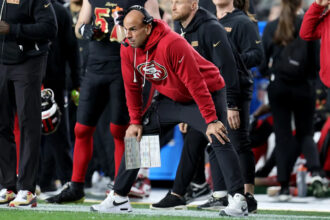
The Miami Dolphins, a franchise perpetually chasing the ghost of Dan Marino, have once again thrown the NFL into a state of shock. In a move that reverberated from South Beach to the national sports talk airwaves, head coach Mike McDaniel has pulled the plug on the Tua Tagovailoa era, benching the former first-round pick in favor of untested rookie Quinn Ewers. The decision, explained by McDaniel in a sober press conference at the team facility in Miami Gardens, is less about injury and more about a single, cutting word: conviction.
A Decision Forged in “Conviction,” Not Just Competition
Mike McDaniel, often lauded for his offensive ingenuity and player-friendly demeanor, presented a steely, analytical front when addressing the seismic shift. This was not a rash, in-game decision but a calculated, philosophical pivot. “The simple piece is I think Quinn gives this team the best chance to win,” McDaniel stated, a phrase that will echo as the defining epitaph for Tagovailoa’s tumultuous tenure in Miami.
But the core of his reasoning cut deeper. “I’m looking for conviction in quarterback play,” McDaniel elaborated. “Given that he’s a rookie, I think he’ll play the position most convicted. … I needed more conviction from the quarterback.” This emphasis on conviction over experience is a stark revelation. It suggests that beyond completion percentages and passer ratings, McDaniel perceived a critical deficit in decisive, authoritative play from the quarterback position—a deficit he believes a rookie, unburdened by past scars, can fill.
Dissecting the End of the Tua Tagovailoa Era
Tua Tagovailoa’s journey in Miami has been a rollercoaster of brilliant flashes, concerning injuries, and persistent questions about his ceiling. To understand the magnitude of this benching, one must analyze the confluence of factors that led McDaniel to this crossroads:
- Injury History and Contract Implications: While currently healthy, Tagovailoa’s alarming concussion history last season altered the franchise’s long-term calculus. The Dolphins, after picking up his fifth-year option, had hesitated on a massive extension, a telltale sign of internal uncertainty. Moving on now provides a cleaner, if not cheaper, financial off-ramp.
- The “Conviction” Gap: McDaniel’s wording is a professional critique of Tagovailoa’s tendency to hesitate, particularly on intermediate and deep throws outside the structure of the offense. In a system built on speed and precision, any hint of indecision—a double-clutch, a missed window—derails the entire operation.
- Super Bowl or Bust Pressure: With a roster boasting talents like Tyreek Hill, Jaylen Waddle, and a high-priced defense, the Dolphins’ window is perceived as wide open. McDaniel’s job security is now inextricably tied to playoff success. The move to Ewers is a dramatic, all-in gamble that the status quo under center was not going to deliver that.
Ultimately, McDaniel, the architect brought in to unlock Tagovailoa’s potential, has concluded the project has reached its limit. The quarterback benching is an admission that the once-perfect marriage of coach and QB could not produce the required championship consistency.
Quinn Ewers: The Unproven Savior
The beneficiary of this high-stakes decision is Quinn Ewers, the polarizing prospect from Texas whose arm talent and “blue-chip” pedigree made him a first-round pick. Ewers represents the ultimate boom-or-bust prototype. His appeal to McDaniel is clear:
- Fearless Arm Talent: Ewers never saw a tight window he didn’t believe he could exploit. His willingness to throw with anticipation and velocity into contested areas is the literal embodiment of the conviction McDaniel craves.
- A Clean Slate: Unlike Tagovailoa, Ewers carries no baggage in Miami. There are no past failures, no injury comebacks, just raw potential. This allows McDaniel to mold him precisely to his vision from day one.
- Vertical Threat Synergy: The mere threat of Ewers’ deep ball could theoretically open even more space for Hill and Waddle underneath, stretching defenses vertically in a way Miami has only sporadically achieved.
However, the risks are monumental. Ewers’ college career was marked by inconsistency and questionable decision-making at times. The jump to the NFL speed, especially behind a Dolphins offensive line that can be leaky, is a formidable challenge. McDaniel is betting his system and his star receivers can accelerate the rookie’s learning curve at a breakneck pace.
Predictions and Ramifications for the Dolphins’ Season
This decision sends the 2024 Miami Dolphins season into uncharted territory. The immediate fallout and predictions are multifaceted:
Short-Term Turbulence: Expect growing pains. Ewers will make “wow” throws followed by head-scratching turnovers. The Dolphins’ identity will shift from a controlled, timing-based attack to a more volatile, explosive downfield offense. The division, with the loaded Buffalo Bills and New York Jets, offers no respite.
Locker Room Dynamics: How the veteran-laden team, particularly offensive leaders who supported Tagovailoa, responds is crucial. McDaniel is banking on his credibility and the universal desire to win to smooth any initial friction. A fast start from Ewers would quickly galvanize the team.
Defensive Pressure: The margin for error shrinks. The Dolphins’ defense, under coordinator Vic Fangio, must elevate from good to elite to support a rookie quarterback. The QB shift is as much a challenge to the defense as it is to Ewers.
Playoff Ceiling: The Dolphins’ playoff hopes now have a wildly variable range. They could crash to 9-8 and miss the postseason entirely, or Ewers could catch lightning in a bottle, unleashing the offense’s full terrifying potential and making a deep January run. There is no more middle ground.
Conclusion: McDaniel’s Defining Gamble
By benching Tua Tagovailoa for Quinn Ewers, Mike McDaniel has done more than change his starting quarterback. He has staked his reputation as an offensive guru and his future as head coach of the Miami Dolphins on a single principle: that in the modern NFL, unwavering conviction from the quarterback is more valuable than proven, yet imperfect, experience.
This is not a move made from desperation, but from a specific, pointed philosophy. McDaniel looked at his Super Bowl-caliber roster and decided the final, critical component wasn’t just physical ability, but a particular mindset. The days of cautious, efficient play are over in Miami. The Ewers era begins with a mandate to be bold, to be daring, and to play with the unshakeable belief that every throw can be a game-winner. Whether this bold stroke is remembered as a masterstroke or a misstep will define the franchise for the next decade. The gamble is on, and the pressure, just like Quinn Ewers’ passes, will be thrown with maximum velocity.
Source: Based on news from Yahoo Sports.