The Tomlin Crossroads: A Historic Streak of Playoff Futility Demands a Reckoning
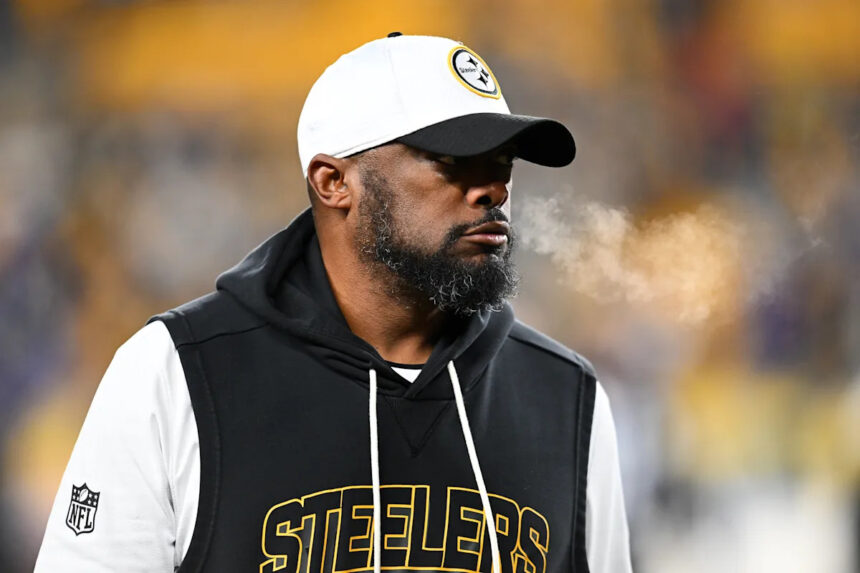
The final whistle on a frigid Monday night in Houston didn’t just signal the end of the Pittsburgh Steelers’ 2025 season. It echoed with the weight of history, a chilling confirmation of a pattern that has morphed from troubling trend to inescapable legacy. In a 30-6 demolition at the hands of the Houston Texans, the Steelers didn’t merely lose a football game. Head coach Mike Tomlin etched his name into an NFL record book he never wanted to grace, tying former Cincinnati Bengals coach Marvin Lewis for the most consecutive postseason losses by a head coach in league history: seven.
For a franchise synonymous with stability and success, the current reality is a jarring dissonance. The Steelers’ 2025 season is over, extinguished in the wild card round for the third straight year, and each exit has been more emphatic than the last. Over these three most recent one-and-done appearances, the Steelers have been outscored by a staggering 89-37 margin. This isn’t competitive hardship; it’s a systemic collapse when the lights burn brightest. The record-tying loss is not an anomaly—it is the culmination of an eight-year playoff victory drought that now defines an era and demands a profound organizational soul-searching.
Deconstructing the Streak: From Heartbreak to Humiliation
The genesis of this historic skid was a spectacular, if painful, shootout. The streak began in the 2017 Divisional Round with a 45-42 loss to the Jacksonville Jaguars, a game where defensive failures overshadowed a heroic offensive effort. That loss felt like a missed opportunity. The losses that followed, however, have felt like something else entirely—a widening gap between the Steelers and the AFC’s true contenders.
The seven-game streak, a chronicle of consistent postseason failure, is a roadmap of evolving disappointment:
- 2017 Divisional Round: Lost 45-42 to Jacksonville Jaguars
- 2020 Wild Card: Lost 48-37 to Cleveland Browns
- 2021 Wild Card: Lost 42-21 to Kansas City Chiefs
- 2023 Wild Card: Lost 31-17 to Buffalo Bills
- 2024 Wild Card: Lost 31-9 to Kansas City Chiefs
- 2025 Wild Card: Lost 30-6 to Houston Texans
The trajectory is unmistakable. The high-scoring affairs of the early streak have given way to recent blowouts where the Steelers’ offense has looked utterly paralyzed. The most recent wild card losses haven’t been battles; they’ve been exposures. The team, particularly on offense, appears unprepared, out-schemed, and physically overmatched. The “next man up” mentality that once defined Tomlin’s tenure has frayed, revealing a concerning lack of depth and schematic adaptability against elite competition.
Beyond the Record: The Systemic Questions Facing Pittsburgh
Tying Marvin Lewis’s record is a symbolic milestone, but the implications for Pittsburgh run deeper than a statistical footnote. Lewis’s Bengals were often criticized for regular-season prowess undone by January meltdowns—a label that now fits these Steelers with uncomfortable precision. This streak forces an evaluation of every facet of the football operation.
First, the consecutive playoff losses spotlight a persistent issue with quarterback play and offensive philosophy in the post-Ben Roethlisberger era. The carousel of signal-callers has failed to provide stability, and the offensive game plans in these playoff games have been notoriously conservative and ineffective. The failure to modernize and innovate offensively has left the team vulnerable against the dynamic, aggressive defenses they face in the postseason.
Second, Tomlin’s legendary ability to “keep the wheels on the bus” and avoid losing seasons—a remarkable feat in itself—now exists in paradoxical tension with this playoff futility. It creates a perplexing “Tomlin Conundrum”: Is sustained mediocrity (or slightly above) preferable to a full rebuild? The culture of resilience he built is now being tested by a culture of postseason expectations that are consistently unmet. The standard, as Tomlin himself often intones, is championships. By that own metric, the standard has not been met for over a decade.
The Path Forward: Rebuild, Retool, or Reckoning?
As the Steelers enter the offseason, the organization stands at a crossroads unseen in nearly two decades. The path they choose will define the next chapter of the franchise. Several scenarios are in play, each with monumental consequences.
Scenario 1: A Fundamental Rethink. This involves acknowledging that the current core and approach have hit a ceiling. It would require a ruthless evaluation of the roster, likely moving on from aging, high-cost veterans, and empowering the front office to be aggressive in acquiring a franchise quarterback—whether through the draft or a bold trade. This is the most painful path, potentially sacrificing another season or two of “competitive” football for a chance at a true reset.
Scenario 2: Double Down on Tomlin’s Culture. The organization could argue that Tomlin’s consistency is an asset too valuable to discard, and that with the right quarterback acquisition (even a mid-tier veteran) and some defensive retooling, the playoff hump can be overcome. This is the path of least resistance but carries the enormous risk of continuing the cycle of early-January exits.
Scenario 3: A Change in Leadership. While still unlikely given the Steelers’ historic aversion to firing coaches, tying an undesirable NFL record inevitably sparks the conversation. Would a new voice and a new schematic direction break the cycle? It’s a high-stakes gamble that the Rooney family must at least consider, even if they ultimately reject it.
Conclusion: The Weight of the Standard
Mike Tomlin’s place in Steelers lore is secure. He is a future Hall of Famer, a Super Bowl champion, and the embodiment of sustained competitiveness. Yet, in Pittsburgh, the standard is the standard. It is a standard set by Noll and reinforced by Cowher—a standard defined by Lombardi Trophies, not just participation banners.
The record-tying seventh consecutive postseason loss is more than a streak; it is a loud, unignorable alarm. It signals that the methods that guarantee respectability in the regular season are no longer sufficient for excellence in the postseason. The blowout nature of the most recent wild card losses confirms a talent and preparation gap that can no longer be explained away by injuries or bad luck.
The 2025 offseason is the most critical in Tomlin’s tenure. It is a time for brutal honesty, not platitudes. The historic streak he now co-owns is a challenge to his core philosophy. How he and the Steelers respond will determine whether this era is remembered as a prolonged period of good-but-not-great football, or the painful but necessary prelude to a return to true championship contention. The record books have been written. The next chapter is entirely up to them.
For continued in-depth analysis, roster breakdowns, and all the latest on the Pittsburgh Steelers’ pivotal offseason, be sure to bookmark Behind the Steel Curtain.
Source: Based on news from Yahoo Sports.