Missouri Weighs Ban on College Player Prop Bets in Wake of NCAA Scandal
The neon glow of legal sports betting, a new fixture in the American landscape, is facing a critical test in the heartland. In Jefferson City, the Missouri Gaming Commission is poised to make a pivotal decision that could reshape the betting market just months after its launch. At the center of the debate: the high-risk, high-reward world of prop bets on college athletes. This move, spurred by a direct plea from the NCAA following a massive federal indictment, forces a national conversation about the integrity of amateur sports in the era of ubiquitous gambling.
The Scandal That Forced the NCAA’s Hand
The NCAA’s request to states was not born from abstract concern, but from a concrete and sprawling crisis. Last week, federal prosecutors unveiled an indictment charging more than two dozen individuals with bribery, wire fraud, and conspiracy in a scheme that allegedly corrupted the very core of college basketball. The details are staggering: over 39 players from more than 17 Division I men’s basketball teams are accused of conspiring to rig more than 29 games.
The alleged mechanism? Player prop bets. Unlike a simple bet on which team wins, a prop bet focuses on an individual athlete’s performance—whether a basketball player will score over or under 12.5 points, or a football quarterback will throw for more than 250 yards. These micro-markets, the NCAA argues, are uniquely vulnerable. A single missed free throw, a dropped pass, or an intentional foul can swing the outcome of the bet without necessarily altering the game’s final score, making them a prime target for manipulation.
“The NCAA’s letter is a direct fire alarm,” says Dr. Sarah Jenkins, a sports ethics professor and author. “They are acknowledging that the economic pressures on amateur athletes, when combined with the granular targeting of prop bets, create a perfect storm for corruption. An athlete facing financial strain might see manipulating a single stat as a victimless crime, but it strikes at the foundational trust of competition.”
Missouri at a Crossroads: New Market, Old Problems
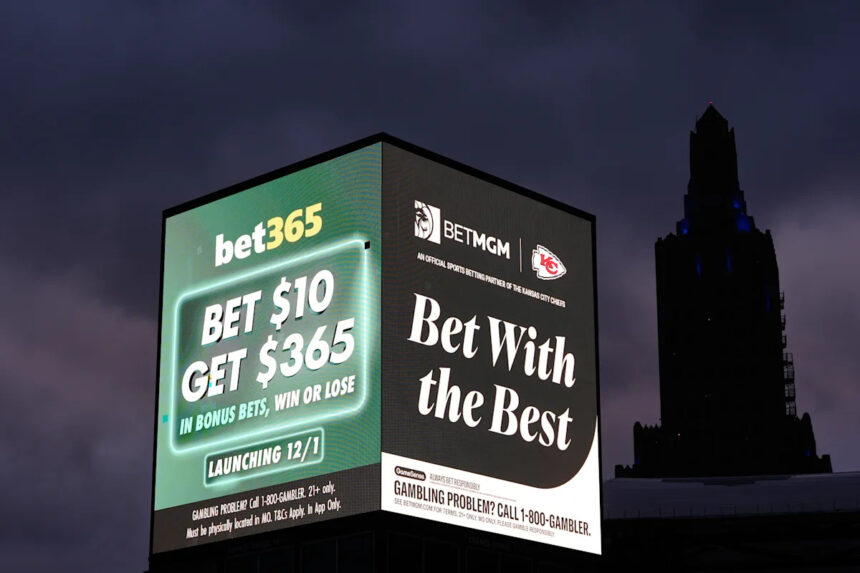
Missouri’s timing is uniquely consequential. The state only launched legal sports betting on December 1, becoming the 39th state to enter the arena. The market, fueled by online apps and websites, is in its infancy. Now, regulators must decide whether to curtail a popular product before it fully takes root.
The numbers underscore why this is a thorny decision. Nationally, legal sportsbooks generated a staggering $15 billion in revenue in the first 11 months of 2025, a 17% year-over-year increase. Player prop bets are a significant driver of that engagement, particularly for star college athletes whose names are more recognizable to casual bettors than many professionals. For states and operators, they represent a lucrative segment of the market.
Key points in the Missouri debate include:
- Integrity vs. Revenue: Does protecting the sanctity of college sports outweigh the potential tax revenue from a full, unrestricted betting menu?
- Harassment of Athletes: The NCAA cited athlete harassment as a key concern. Prop bets personalize the gambling action, making athletes direct targets for angry bettors on social media and in person.
- Regulatory Precedent: As a newer market, Missouri’s decision could influence other states considering similar bans. A handful of states, including Ohio and Vermont, already prohibit college player props.
- Enforcement Challenges: A ban would apply to legal, regulated books. Experts note the risk of pushing this popular bet type to the unregulated, offshore market where oversight is nonexistent.
Expert Analysis: The Broader Implications for Sports Betting
The situation in Missouri is a microcosm of the unresolved tensions in the post-2018 sports betting boom. When the Supreme Court opened the floodgates, the focus was on revenue generation and consumer protection. The darker corollaries—the pressure on amateur athletes and the novel avenues for game-fixing—are now coming into sharp relief.
“This isn’t just about Missouri or basketball,” argues Michael Torres, a former gaming compliance officer. “The NCAA scandal reveals a systemic flaw. Prop bets on individual college athletes create dozens of corruptible data points in every game. It’s exponentially harder to monitor and safeguard than a simple win-loss market. The industry may need to accept that some products, no matter how popular, carry an unacceptable risk when applied to non-professional sports.”
Sportsbooks themselves are in a delicate position. While they oppose broad prohibitions, they have a vested interest in maintaining the perceived integrity of the contests on which they take wagers. A loss of public trust is bad for business. Many already have extensive monitoring systems to detect unusual betting patterns, but the federal indictment suggests sophisticated schemes can still evade detection.
Predictions and the Path Forward
The momentum appears to be shifting toward some form of restriction. Given the fresh memory of the scandal and Missouri’s status as a new market, regulators may see a proactive ban as a necessary step to establish a reputation for integrity.
We predict the following likely outcomes:
- Missouri will enact a ban on college athlete prop bets, aligning with the NCAA’s request. The ban may extend to the other “specialty bets” mentioned, like halftime point spread wagers.
- This will trigger a domino effect, with several other states reviewing their own rules under increased public and political scrutiny.
- The NCAA will likely push for a federal standard on college player prop bets, arguing that a state-by-state patchwork is insufficient to protect a national championship system.
- Sportsbooks will respond by innovating alternative bet types, such as enhanced team-based props or “group” props (e.g., “Which team’s QB will throw for more yards?”) that maintain engagement without targeting a single amateur athlete.
Conclusion: Protecting the Game in the Gambling Age
Missouri’s deliberation is more than a regulatory meeting; it’s a referendum on the future of college sports. The rapid expansion of legal wagering has delivered economic benefits but has also shone a harsh light on the inherent vulnerabilities of a system built on amateurism. The alleged basketball scandal is a worst-case scenario realized, proving that the threats are not theoretical.
Banning college player prop bets is a blunt instrument, but in this moment, it may be the necessary one. It draws a clear ethical line, prioritizing the protection of student-athletes from manipulation and harassment over the unfettered growth of a betting menu. As Missouri’s young market takes shape, its decision will send a powerful message: that the integrity of the game must be the non-negotiable foundation upon which the business of sports betting is built. The eyes of the nation are on Jefferson City, watching to see if the Show-Me State will show the way toward a more sustainable balance between America’s passion for sports and its newfound freedom to bet on them.
Source: Based on news from Yahoo Sports.