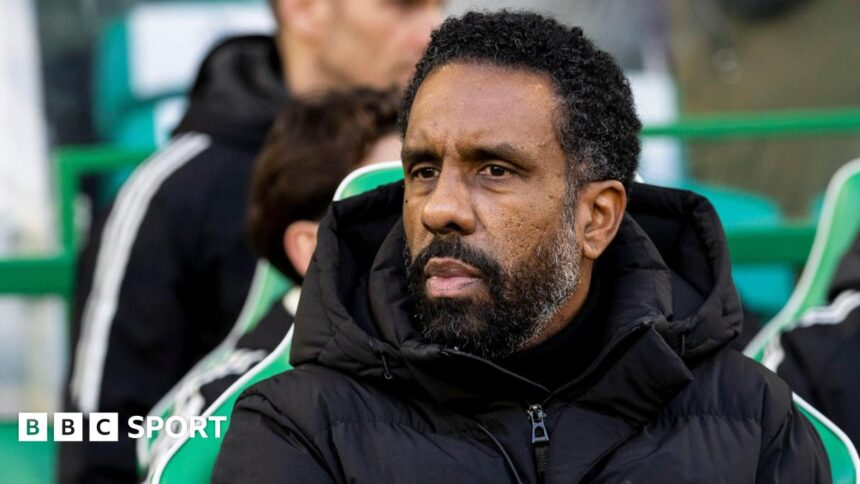
Wilfried Nancy Rues Lack of Time After ‘Beautiful’ 33-Day Celtic Spell: “It Was a No Brainer”
In the turbulent world of football management, few stories are as bizarre and poignant as Wilfried Nancy’s 33-day reign at Celtic. The Frenchman, who succeeded and preceded the legendary Martin O’Neill in a chaotic season for the Scottish giants, has broken his silence for the first time since departing in January. Speaking on the Training Ground Guru podcast, Nancy described his time at Parkhead as a “beautiful experience” but admitted that the timing of his move was a mistake. With a record of two wins and six defeats—including a painful League Cup final loss—Nancy’s tenure was the shortest of any permanent Celtic manager in the modern era. Now back living in the United States, where he enjoyed immense success with MLS club Columbus Crew, the 49-year-old has offered a rare, candid reflection on what went wrong.
This article dives into Nancy’s exclusive comments, the tactical and cultural clashes that defined his spell, and what the future holds for a coach who still believes he could have succeeded at Celtic—if only he had been given more time.
The “Beautiful” but Brutal Reality of Nancy’s 33-Day Celtic Tenure
When Wilfried Nancy walked into Celtic Park in December, he was tasked with replacing Martin O’Neill, a club icon who had returned for a second stint only to leave after a series of disappointing results. The irony is thick: Nancy succeeded O’Neill, and then O’Neill succeeded him just over a month later. For Nancy, the experience was a whirlwind of high hopes and harsh realities.
“It was a beautiful experience,” Nancy said on the podcast. “To be at Celtic, to feel the passion of the fans, to walk through those doors—it’s something I will never forget. But it’s a no brainer to say that I didn’t get long enough to impose my way of doing things. Thirty-three days is not enough for any manager to build something.”
Indeed, Nancy’s record of two wins and six defeats tells a story of a team in transition—but also of a manager who was never given the chance to finish the job. The low point came in the League Cup final, where Celtic fell to a heartbreaking defeat, a result that sealed Nancy’s fate. Yet, he insists that the seeds of his philosophy were visible, even if the results were not.
Nancy’s style, honed during his successful spell at Columbus Crew where he won the MLS Cup, is built on possession-based, high-pressing football with fluid positional play. At Celtic, he found a squad that was not ready for such a radical shift. “Some players struggled to adjust to my style,” he admitted. “It’s not about them being bad players—far from it. But when you change the way a team thinks about the game, it takes time. Time I didn’t have.”
This is a critical point. Nancy’s approach requires players who are comfortable with constant movement, quick decision-making, and a high defensive line. Celtic’s squad, built under O’Neill’s more direct, physical style, was not equipped for such a transformation. The result was a disjointed team that looked lost on the pitch, leading to six defeats in eight matches.
Why the Timing Was a “Mistake” and the Clash of Cultures
One of the most striking admissions from Nancy was his concession that the timing of his move was a mistake. “I should have waited,” he said. “I came in mid-season, in the middle of a campaign, and that’s never easy. The club was in a difficult place, and I thought I could turn it around quickly. That was naive.”
The Frenchman’s comments highlight a deeper issue: the clash between his modern, data-driven methods and the traditional, emotional culture of Scottish football. At Columbus Crew, Nancy was given a full preseason and the backing of the front office to implement his system. At Celtic, he was thrown into the fire with no time to build relationships or drill his tactics.
“In MLS, you have time to work,” Nancy explained. “You can make mistakes in training, learn, and adapt. In Scotland, every game is a cup final. Every mistake is magnified. The pressure is immense. And when you lose the League Cup final, the noise becomes overwhelming.”
The League Cup final defeat was a turning point. Celtic had dominated possession but lacked the cutting edge to break down a resolute opponent. Critics pointed to Nancy’s insistence on playing out from the back, which led to costly errors. But Nancy defends his philosophy: “If you want to win consistently, you have to have a way of playing that is sustainable. One bad result doesn’t mean the idea is wrong. It means we needed more time to execute it.”
Despite the brief tenure, Nancy’s impact on some players was positive. “I had conversations with players who said they learned a lot,” he revealed. “But there were others who were resistant. That’s normal. Change is hard. But I believe that if I had been given until the end of the season, the results would have been different.”
This belief is echoed by some analysts who point to Celtic’s underlying numbers during Nancy’s tenure. Expected goals (xG) data showed that Celtic created more high-quality chances than their opponents in most matches, but poor finishing and individual errors cost them. In a longer timeframe, those metrics often regress to the mean, leading to better results.
Expert Analysis: What Celtic Missed Out On
Wilfried Nancy’s success at Columbus Crew was no fluke. He transformed the Ohio club into one of the most entertaining and effective teams in MLS, winning the MLS Cup in 2023 with a brand of football that drew praise from across the league. His ability to develop young players and create a cohesive tactical identity is well-documented.
So, what did Celtic miss out on? The answer lies in Nancy’s ability to build long-term structures. At Columbus, he implemented a positional play system similar to that of Pep Guardiola, where players occupy specific zones to create passing triangles and overloads. This system takes months to master, but once it clicks, it can dominate domestic competitions.
For Celtic, a club that has struggled to compete with Rangers in recent years, a manager like Nancy could have provided a sustainable edge. Instead, the board panicked after a few bad results, opting for the safe return of Martin O’Neill. While O’Neill is a club legend, his style is more pragmatic and less progressive than Nancy’s. The contrast is stark: O’Neill’s Celtic plays with a direct, physical approach, while Nancy’s vision was one of technical, fluid football.
Key factors that doomed Nancy’s tenure:
- Lack of preseason: No time to implement his system or build player relationships.
- Player resistance: Some senior players were not comfortable with the new demands.
- High-pressure environment: Every defeat was treated as a crisis, leaving no room for growth.
- Mid-season timing: The worst possible moment to introduce a radical tactical overhaul.
Looking ahead, Nancy’s future remains bright. He is back in the United States, where he is reportedly considering offers from MLS clubs and even European teams. “I love the game, and I love coaching,” he said. “I will be back. And next time, I will be smarter about the timing.”
For Celtic, the question is whether they will ever give a manager like Nancy the time he needs. The club’s recent history is littered with short-term appointments, and the fanbase’s demand for instant success often clashes with the patience required for modern tactical evolution. If Celtic wants to compete at the highest level, they must learn from this episode.
Predictions: What’s Next for Nancy and Celtic?
Wilfried Nancy’s stock remains high despite the Celtic disaster. His work at Columbus Crew is still fresh in the minds of MLS owners, and his willingness to reflect publicly on his mistakes shows a maturity that will appeal to clubs looking for a progressive coach. I predict that Nancy will return to management within the next six months, likely with a team that can offer him a full preseason and a clear project.
Possible destinations include Atlanta United, LAFC, or even a return to Europe with a club in France or Belgium, where his style would be more appreciated. The key for Nancy is to find a club where the board understands that tactical revolutions take time.
As for Celtic, the club is now under the guidance of Martin O’Neill, who has steadied the ship but faces questions about his ability to modernize the squad. If Celtic fail to win the league this season, the board may again look for a long-term solution. Could Nancy be a candidate? Unlikely, given the sour taste of his brief tenure. But stranger things have happened in football.
One thing is certain: Nancy’s 33-day spell at Celtic will be remembered as a fascinating “what if” in the club’s history. The Frenchman had the ideas, the passion, and the track record. What he didn’t have was time. And in football, as in life, time is the one resource you can never get back.
Conclusion: A Beautiful Dream That Ended Too Soon
Wilfried Nancy’s Celtic story is a cautionary tale about the brutal nature of modern football management. In just 33 days, he experienced the highs of leading a historic club and the lows of a League Cup final defeat. His admission that the timing was a mistake is a rare moment of honesty from a coach who refuses to make excuses.
“It was a beautiful experience,” Nancy said, and he meant it. Despite the losses, despite the criticism, he cherishes the chance to have managed Celtic. But he also knows that his vision for the club was cut short before it could take root. For fans, the memory of Nancy’s tenure will be one of unfulfilled potential—a glimpse of a different, more progressive Celtic that never materialized.
As Nancy returns to his life in the United States, he carries with him the lessons of those 33 days. He will be back, smarter and more prepared. And perhaps, one day, he will get the chance to show what he could have done at Celtic—if only he had been given the time.
Follow the latest updates on Wilfried Nancy’s career and Celtic’s ongoing season right here.
Source: Based on news from BBC Sport.