NHL Stars Issue Ultimatum: No Safe Ice, No Olympics in 2026
The dream of seeing Connor McDavid, Auston Matthews, and Nathan MacKinnon skate for Olympic gold is facing a chilling reality check. With the 2026 Milan-Cortina Winter Games less than two years away, a stark warning from the NHL has shifted the conversation from medal predictions to fundamental infrastructure. The league has declared its players will not participate if the ice conditions are deemed unsafe, casting a long shadow over the highly anticipated return of the world’s best to the Olympic stage.
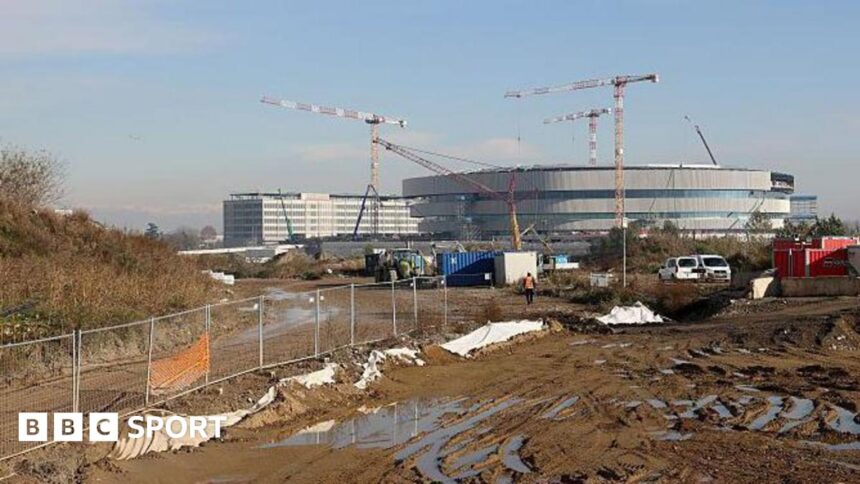
This ultimatum centers on the Santagiulia Arena in Milan, a crucial venue that, as of late November, remains an active construction site. The concern isn’t just about finishing the building; it’s about the precise science and time required to create NHL-quality ice in a brand-new facility. The clock is ticking, and the hockey world is watching with bated breath.
The Core of the Controversy: More Than Just a Frozen Surface
For casual fans, ice might just be ice. But for the NHL and its players, it is the non-negotiable foundation of the sport. The league’s deputy commissioner, Bill Daly, while expressing “cautious optimism,” made the league’s position unequivocally clear. This isn’t about preference; it’s about player safety and the integrity of competition.
NHL-quality ice is a product of rigorous engineering and constant maintenance. The requirements are exacting:
- Temperature Consistency: The ice must be kept at a precise temperature (typically between 18-22°F or -7 to -5°C) from the base concrete to the surface to prevent soft spots or brittleness.
- Perfectly Level Surface: Any undulation can cause unpredictable puck bounces, leading to turnovers, missed scoring chances, and, most dangerously, players losing their edges at high speed.
- Optimal Hardness and Thickness: Ice that is too soft becomes choppy and slow; ice that is too thin risks cracking and exposing the concrete below. The ideal sheet is about one inch thick, built over a miles-long network of coolant pipes.
- Adequate Arena Climate Control: Humidity and ambient air temperature must be meticulously managed. High humidity leads to fog and soft ice, while a warm building causes melting and poor conditions.
The problem with the Santagiulia Arena is twofold: its late construction timeline and its intended multi-purpose design. Building a world-class ice sheet is a process that can take weeks of fine-tuning. The NHL and its players need time for test events and skates to ensure the ice performs under game conditions. A rushed job is an unacceptable risk.
A History of Hesitation: The NHL’s Rocky Olympic Relationship
To understand the firmness of the NHL’s stance, one must look back. The league’s participation in the Olympics has always been a complex calculus of global marketing, player relations, and logistical disruption. After participating in five consecutive Games (1998-2014), the NHL balked at the 2018 PyeongChang Olympics, citing costs, insurance, and the disruptive mid-season break. The COVID-19 pandemic ultimately scuttled plans for 2022 in Beijing.
This makes Milan-Cortina 2026 a pivotal moment. It is seen as the grand return, a chance to reignite the magic of best-on-best international hockey. For the players, who overwhelmingly desire to compete for their countries, it’s a career-defining opportunity. For the NHL, it’s a chance to showcase its superstars on a global platform.
However, this history also means the league is entering this arrangement with heightened scrutiny. They cannot afford a debacle. A poorly executed Olympic experience with subpar facilities would validate every past hesitation. The threat of pulling out over ice quality is a powerful lever to ensure organizers prioritize this critical need. It protects the players, the product, and the league’s reputation.
The Path Forward: Cautious Optimism on a Tight Deadline
Bill Daly’s “cautiously optimistic” phrasing is a diplomatic but loaded term. It signals that while the NHL believes a resolution is possible, the onus is entirely on the Milan-Cortina organizing committee and Italian authorities. The roadmap to securing NHL participation is now publicly defined.
Key milestones and demands will likely include:
- Accelerated, But Not Rushed, Construction: The Santagiulia Arena must be completed with significant time to spare before the Games, not just by the opening ceremony.
- Mandatory Test Events: The NHL and IIHF will insist on full-scale, competitive games being held in the arena in late 2025. These are non-negotiable dress rehearsals for both the ice crew and the facility systems.
- NHL/IIHF Oversight: Expect league and international federation ice experts to be on-site throughout the ice installation process and during the Games themselves.
- Contingency Scrutiny: The secondary venue, the Milano Rho Arena, will also undergo intense evaluation. If issues arise at Santagiulia, could the tournament schedule be adjusted? The viability of backup plans will be assessed.
The involvement of the players’ union, the NHLPA, is also crucial. Star players like McDavid and Matthews, who have never Olympic experience, will be vocal stakeholders. Their trust in the environment is just as important as the league’s official approval.
Predictions and Stakes: The High Cost of Failure
The potential outcomes of this standoff carry enormous consequences for every party involved.
Scenario 1: The Ice Passes the Test. This is the ideal outcome. The arena is completed on time, test events are successful, and the world enjoys a spectacular Olympic hockey tournament. The NHL’s firm stance is credited for ensuring high standards, reinforcing its commitment to player safety, and the Olympic “brand” is strengthened by featuring the true best in the world.
Scenario 2: The NHL Withdraws. If the ice is deemed unsafe, the league will follow through on its threat. The result would be catastrophic for the Olympic hockey tournament. While still featuring talented players from European leagues, it would instantly be labeled a “watered-down” competition, losing massive global viewership and prestige. The relationship between the NHL and the International Olympic Committee would be fractured, potentially for decades. The city of Milan and the IOC would face severe criticism for failing to deliver a core Winter Games facility.
The most likely prediction lies between these poles. Expect a tense, down-to-the-wire process. The NHL may accept a compromise, such as altered game schedules or increased reliance on the Milano Rho Arena, if primary concerns are met. However, they have drawn a bright red line on safety and quality. The immense pressure and global embarrassment of a pull-out will likely force all resources toward a solution.
Conclusion: A Defining Test for Milan’s Olympic Legacy
The 2026 Winter Olympics promised a romantic return to the Italian Alps, a celebration of sport and culture. For hockey, it promised a renaissance. Instead, an unfinished arena in Milan has become the symbol of a high-stakes gamble. The message from the NHL is not a negotiating ploy; it is a principled stand rooted in the basic requirements of their sport.
The coming months will be a defining test for the Milan-Cortina organizers. It is no longer just about pouring concrete and installing seats. It is about proving they can master the delicate, invisible art of creating a perfect sheet of ice. The world’s greatest hockey players are waiting, skates in hand, but they will not step onto the Olympic stage unless that stage is flawless. The dream of Olympic gold in 2026 now depends, quite literally, on what lies beneath their feet.
Source: Based on news from BBC Sport.