Texas Longhorns Drop Series to Tennessee: Power Surge Exposes Pitching Flaws in 14-9 Loss
For just the second time this season, the No. 4 Texas Longhorns find themselves on the wrong side of a weekend series. A Saturday afternoon slugfest in Knoxville ended with a 14-9 loss to the Tennessee Volunteers, a game that showcased both the explosive potential of the Longhorns’ offense and the alarming fragility of a pitching staff that has suddenly lost its sting. The loss drops Texas to a 2-1 series deficit heading into Sunday’s finale, and it raises serious questions about depth, consistency, and the team’s ability to weather the grind of SEC baseball.
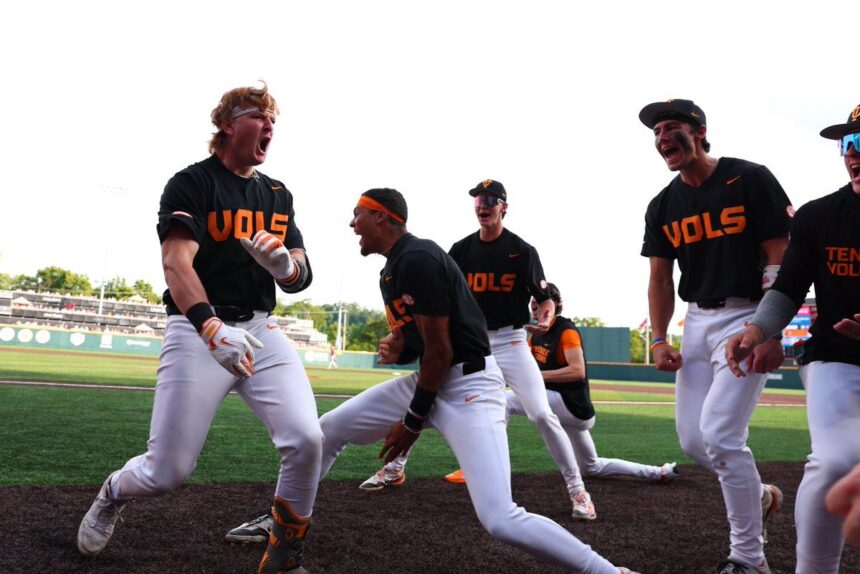
The game was a tale of two narratives. On one side, the Texas lineup, led by redshirt senior third baseman Temo Becerra, finally woke up after a quiet Friday night. Becerra launched his first home run since March, finishing 3-for-4 with five RBI. On the other side, the pitching staff, from the starter to the bullpen, was battered by a Tennessee lineup that treated Lindsey Nelson Stadium like a batting cage. The Volunteers hit four home runs, turning a winnable game into a rout that exposed a worrying trend: Texas cannot afford to fall behind early, and right now, its arms are making that a recurring reality.
Starting Pitching Shuffle: Luke Harrison’s Rocky Outing
The Longhorns entered the weekend with a pitching plan that required flexibility. Senior right-hander Ruger Riojas was expected to start on Sunday after dealing with general soreness. Head coach Jim Schlossnagle confirmed after the loss that there is “nothing structurally wrong” with Riojas, but the decision to push him back forced redshirt senior left-hander Luke Harrison into the Saturday spotlight. It was a spot start that quickly turned sour.
Harrison, a 6’2, 220-pound veteran, has developed a troubling pattern. For the third time in his last five starts, he allowed a run in every inning he pitched. The Volunteers didn’t just score; they punished him. Tennessee connected for four home runs against Harrison, including a crushing unearned two-run homer in the fourth inning that chased him from the game. His final line was ugly: six runs (four earned) on six hits with two walks over just 3.2 innings.
This is not the Harrison that Texas fans hoped to see. The lefty has the stuff to be a reliable arm, but his inability to escape early innings without damage is becoming a liability. When a team like Tennessee—one of the most powerful lineups in the country—sees a pitcher laboring, they pounce. Harrison’s fastball command was off, his breaking ball was left up in the zone, and the Volunteers made him pay. Schlossnagle’s decision to start him was a calculated risk, but the outcome reinforces a key concern: Texas lacks a reliable third weekend starter when Riojas isn’t available.
Bullpen Collapse: A Parade of Freshmen and Missed Spots
If Harrison’s start was a warning sign, the bullpen’s performance was a full-blown alarm. The Longhorns’ relief corps has been a strength for much of the season, but on Saturday, it was a revolving door of struggles. Only one reliever—redshirt junior left-hander Ethan Walker—escaped without allowing a run, and he faced just one batter. That is a damning statistic.
- Brett Crossland (freshman right-hander): Allowed three runs (two earned) in one inning, hurt by yet another defensive error behind him.
- Brody Walls (freshman right-hander): Gave up two runs on a home run in his lone inning of work.
- Michael Winter (freshman right-hander): Continued his recent struggles, surrendering three runs on another Tennessee home run over two innings.
The common thread here is inexperience. When the game tightened, the young arms cracked. Tennessee’s lineup is relentless—they don’t chase bad pitches, and they punish mistakes. Crossland, Walls, and Winter all made the kind of mistakes that veteran pitchers learn to avoid: elevated fastballs in hitter’s counts, hanging breaking balls, and nibbling at the edges instead of attacking the zone. The result was a relentless assault that turned a 6-3 deficit into a 14-9 blowout.
Schlossnagle’s bullpen management will be under the microscope. The reliance on freshmen in high-leverage spots is a gamble that backfired. The Longhorns need a veteran arm—someone like Walker, but for more than one batter—to stabilize the middle innings. Without that, the offense is forced to play catch-up every game, and that is a recipe for inconsistency.
Offensive Awakening: Becerra and Pack Jr. Lead the Charge
While the pitching floundered, the Texas offense showed signs of life—and it came from an unlikely source. Temo Becerra has been a steady presence all season, but his power had been dormant since March. That changed in a big way on Saturday. The redshirt senior third baseman went 3-for-4 with a home run and five RBI, driving in runs with authority. His bat was the primary reason Texas stayed within striking distance for most of the game.
Joining Becerra in the hit parade was freshman left fielder Anthony Pack Jr., who added three hits of his own. Together, the two players accounted for seven of Texas’ 10 total hits. That is both a positive and a warning: the lineup is top-heavy. When Becerra and Pack produce, the offense hums. But when they are neutralized, as happened on Friday, the team struggles to score.
The Longhorns’ approach at the plate was noticeably better than in Game 1. They were more patient, worked counts, and took advantage of Tennessee’s mistakes. Becerra’s home run was a no-doubt shot to left-center, a sign that his timing is returning. Pack’s three hits included a double and two singles, showing he can be a table-setter at the top of the order. If these two can sustain this production, the Texas offense becomes far more dangerous.
However, the rest of the lineup must step up. The Longhorns stranded seven runners and struck out nine times. Against a team like Tennessee, you cannot afford to leave runs on the basepaths. The Volunteers’ pitching is good enough to escape jams, and Texas let them off the hook too often.
Expert Analysis: What This Series Means for Texas Going Forward
This series loss is not a disaster, but it is a flashing red light. The Longhorns are still ranked No. 4 in the country for a reason—they have elite talent, a proven coach in Jim Schlossnagle, and a lineup that can score in bunches. But the pitching inconsistency is a problem that must be addressed before the postseason.
Here is what I see:
- Luke Harrison needs to find consistency or lose his spot in the rotation. Three out of five starts with early-inning runs is not sustainable. Schlossnagle may need to consider a bullpen game or a shorter leash for Harrison moving forward.
- The bullpen needs a leader. Ethan Walker is effective, but he cannot be the only reliable arm. Freshmen like Crossland and Walls have talent, but they are being asked to do too much too soon. A veteran like Ruger Riojas returning to full health would be a massive boost, but he is a starter, not a reliever.
- The offense must stay hot. Becerra and Pack Jr. cannot carry the load alone. Players like Jalin Flores and Peyton Powell need to find their rhythm. If the lineup becomes deeper, Texas can outslug teams. But that is a dangerous game to play.
Prediction for Sunday: Ruger Riojas will take the mound, and Texas will play with a chip on its shoulder. I expect a bounce-back win—the Longhorns are too proud to get swept. But the series is already lost. The focus now turns to damage control and momentum heading into the next SEC series.
Strong Conclusion: Lessons from Knoxville
The No. 4 Texas Longhorns walked into Knoxville with a target on their backs and walked out with a series loss that stings. The 14-9 defeat to Tennessee was a microcosm of their season: flashes of brilliance on offense, but a pitching staff that is struggling to find its footing. For the second time this year, Texas lost a weekend series, and the reasons are clear. The starters are inconsistent, the bullpen is young, and the defense has been sloppy at the worst moments.
But this is not the time to panic. Schlossnagle has been here before. He knows how to manage a pitching staff through rough patches. The return of Riojas on Sunday provides a stabilizing force. The offense, led by Becerra and Pack Jr., has proven it can compete with anyone. The key now is pitching development and bullpen execution.
Tennessee is a legitimate College World Series contender. They hit the ball hard, they pitch well, and they play with confidence. Texas matched them for stretches, but not for nine innings. That is the difference between winning a series and losing one. The Longhorns need to learn from this loss, tighten up their pitching, and get back to the formula that made them a top-five team: strong starts, clean defense, and timely hitting.
Sunday’s game is not just about avoiding a sweep. It is about proving that this team has the resilience to bounce back. If Texas can win the finale, they leave Knoxville with a split and a lesson learned. If they lose, the questions will only grow louder. Either way, the path to Omaha just got a little harder—and a lot more interesting.
Source: Based on news from Yahoo Sports.