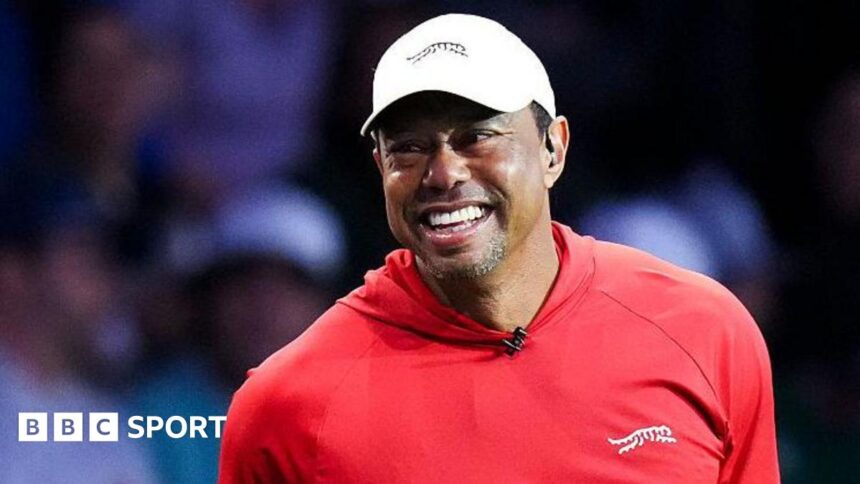
Tiger Woods and the Masters: The Unwritten Chapter of a Golfing Legend
The name Tiger Woods has, for three decades, been synonymous with not just golf, but with the very concept of competitive resurrection. His career is a tapestry woven with threads of dominant victory and agonizing physical strife. As the azaleas prepare to bloom at Augusta National, the sport’s most compelling question mark once again wears red on Sunday. Tiger Woods, now into his sixth decade, has confirmed that a start at the 2025 Masters is “not off the table,” yet he offers no date, no timetable, only the quiet, daily grind of a body in rebellion against its owner’s will. In this limbo between hope and reality, the golf world holds its breath, witnessing not just a race against the calendar, but the latest act in an epic struggle of mind over matter.
The Relentless Grind: Recovery as a Way of Life
Since his car accident in February 2021, Tiger Woods’s competitive appearances have been fleeting glimpses, each one a medical and logistical miracle. His last official start was a missed cut at The Open in July 2024. In October of that year, he underwent yet another procedure, this time to replace a disc in his back. This surgery adds to a medical file that reads like an orthopedic textbook: multiple knee surgeries, spinal fusions, and leg fractures. For Woods, the simple act of walking 72 holes on the undulating terrain of Augusta is as formidable a challenge as contending with its treacherous greens.
His recent comments are a masterclass in tempered realism. “It’s just one of those things where it’s each and every day, I keep trying, I keep progressing,” Woods stated. This is no longer the language of a man targeting world number one; it is the mantra of an athlete engaged in a profoundly personal battle. The fact that his indoor golf league, TGL—a venture designed to be less physically taxing—has also proceeded without his participation speaks volumes about the current state of his rehabilitation. His focus is singular: achieving a baseline of health that allows for the possibility of competition, not merely exhibition.
Augusta National: The Ultimate Litmus Test
The Masters Tournament occupies a unique space in the Tiger Woods saga. It is the site of his iconic 1997 breakthrough, his 2019 triumph that defied all logic, and every poignant step in between. Augusta is why the speculation persists. The course offers specific, though still immense, challenges for a player with Woods’s physical limitations:
- Walking the Course: Augusta’s severe elevation changes are a brutal test for a fused spine and reconstructed leg. Cart use is unthinkable in the traditional tournament, making endurance the primary hurdle.
- Course Knowledge: No active player possesses a deeper, more intuitive understanding of Augusta’s nuances. This intangible advantage is Woods’s greatest asset, allowing him to potentially compete with strategy where physical power may falter.
- Invitational Field: As a past champion, Woods holds a lifetime invitation. The pressure of “qualifying” is absent, allowing him to make a game-time decision based solely on his body’s readiness.
- Sentiment and Will: The emotional fuel of Augusta cannot be discounted. If there is one place where Woods could will himself through pain, it is here, surrounded by the ghosts of his past glory.
When Woods says the Masters is “not off the table,” he is acknowledging this unique alchemy. It is not a promise, but a testament to the tournament’s singular pull on his competitive soul.
Expert Analysis: Reading Between the Lines
From a clinical perspective, the outlook is cautious. Sports medicine experts point to the cumulative toll of Woods’s injuries and the specific demands of a disc replacement surgery. While the procedure aims to alleviate pain and increase mobility, the recovery and adaptation period is extensive, especially for an athlete with his surgical history. The goal shifts from optimal performance to functional capability.
Golf analysts note a critical evolution in Woods’s public messaging. The defiant pronouncements of old have been replaced by a stark, day-by-day assessment. This isn’t a lack of desire; it’s a hardened understanding of his new reality. His team is likely managing a complex regimen of rehabilitation, pain management, and limited practice. The decision to play at Augusta won’t be based on feeling “good,” but on whether he can walk without significant setback and whether his game has enough sharpness to not embarrass the champion within.
Furthermore, his role as a global golf ambassador and founder of ventures like TGL shows a man building a legacy beyond his own swing. This perspective may ease the psychological burden of returning, but it does not extinguish the competitive fire that the Masters uniquely ignites.
Predictions: The Plausible Scenarios for 2025
Given the available facts, several scenarios could unfold as the first week of April approaches:
Scenario 1: The Ceremonial Start. Woods arrives, tests his body in practice rounds, and determines the workload is too great. He may still participate in the Par-3 Contest, embrace the patrons’ affection, but withdraw before tournament play begins, prioritizing his long-term health and mobility.
Scenario 2: The Valiant Effort. This is the scenario fans hope for. Woods tees it up, fueled by adrenaline and willpower. He battles to make the cut, providing electric moments and a profound narrative. A weekend appearance would be hailed as a victory in itself, regardless of final position.
Scenario 3: The Last-Minute Withdrawal. The most likely outcome, based on his “no timetable” stance. If the daily progression isn’t sufficient, Woods has shown he will not risk a public struggle. A graceful withdrawal, citing advice from his medical team, would reaffirm that his future quality of life is the paramount concern.
A competitive victory seems beyond the realm of current probability. The modern field is deep, and the physical cost of four rounds at major championship intensity is a mountain even Tiger may not be able to climb again.
The Enduring Legacy: Beyond the Fairways
The obsession with Tiger Woods’s return is about more than golf scores. It is a human drama about resilience, aging, and the acceptance of change. Every wince, every ginger step, and every cautiously optimistic quote is analyzed because he represents the eternal struggle to defy limits.
Whether or not he drives down Magnolia Lane in a competitive capacity this year, his impact is indelible. He has transitioned from an unbeatable force to a symbol of perseverance. His very presence, even in uncertainty, moves the needle for television ratings and fan engagement like no other. The “Tiger Effect” now operates in the realm of inspiration as much as domination.
Conclusion: The Unwavering Spectacle of Will
Tiger Woods has long understood that his journey is a public narrative. The statement that the Masters is “not off the table” is a carefully crafted chapter in that story—one that maintains hope while managing expectation. It is an acknowledgment of the dream, paired with a respect for the harsh realities of his physical condition. The countdown to Augusta will be filled with speculation, but the final decision rests in the quiet of a rehabilitation room and on the practice grounds, where a 50-year-old man measures his pain against his passion. His return is not just a sports story; it is a testament to the enduring power of a champion’s spirit, a spirit that ensures that as long as Tiger Woods can swing a club, the world will be watching, waiting for the next, perhaps final, unforgettable walk up the 18th fairway.
Source: Based on news from BBC Sport.