Diplomatic Offside: The World Cup, Greenland, and the Unlikely Specter of a Boycott
The beautiful game has always existed at the intersection of sport and geopolitics, but rarely has the collision been as surreal as the current scenario unfolding between the United States, Europe, and a remote Arctic island. As the global football community prepares for the 2026 FIFA World Cup, an unexpected diplomatic row has threatened to cast a shadow over the tournament, not over human rights or war, but over a potential real estate deal gone awry. At the center of the storm is a lingering, contentious proposal from the Trump administration to annex Greenland, a threat that has now improbably escalated to the point where a World Cup boycott was floated—and, for now, decisively shot down by a key European power.
The Greenland Gambit: From Real Estate to Retaliation
The saga began several years ago with then-President Donald Trump’s confirmed interest in purchasing Greenland, an autonomous Danish territory rich in natural resources and of immense strategic importance in the Arctic. Denmark swiftly and publicly rebuffed the idea, calling it “absurd.” The issue, however, was resurrected recently as part of a broader political narrative, with Trump threatening retaliatory tariffs against eight European nations, including France, for their continued opposition to the Greenland annexation plan. This move transformed a geopolitical curiosity into a tangible economic threat, placing European governments in a difficult position: how to respond to pressure on a matter most consider a settled issue of national sovereignty.
The escalation from trade to sport was perhaps inevitable in our interconnected world. With the 2026 World Cup, co-hosted by the United States, Canada, and Mexico, on the horizon, the tournament became a potential leverage point. Boycotts of major sporting events have a storied history as tools of political protest, from the 1980 Moscow Olympics to calls for action regarding various World Cup hosts. The question became whether Europe would use the world’s most-watched sporting event to make a stand.
France’s Clear Stance: “No Desire” for a Boycott
Enter Marina Ferrari, France’s Sports Minister. In a statement that brought immediate clarity to the brewing storm, Ferrari explicitly stated the French government’s position. “As it stands now, there is no desire from the ministry for a boycott of this great competition,” she declared. This definitive language from a major European footballing powerhouse effectively took a powerful tool off the table, for the moment.
However, Ferrari’s comments were nuanced, leaving a sliver of diplomatic ambiguity. She acknowledged hearing “voices raised from certain political blocs,” indicating that the idea has traction among some opposition parties or within the European Parliament. This highlights the internal political pressures governments face when balancing sport, economics, and principle. France’s stance can be interpreted through several lenses:
- Protecting Sporting Integrity: French football, with stars like Kylian Mbappé, has a deep investment in World Cup success. A boycott would punish athletes at their peak.
- Economic Realities: The tournament is a massive commercial engine for broadcasters, sponsors, and federations. A boycott carries severe financial repercussions.
- Diplomatic Pragmatism: Directly boycotting an event in a key NATO ally over a dormant territorial claim is seen by many as a disproportionate response.
Expert Analysis: The Futility and Power of the Boycott Threat
Sports political analysts see this episode as a classic case of “the threat being more powerful than the execution.” Dr. Anya Petrova, a geopolitics and sport scholar, explains: “The French minister’s statement is a masterclass in diplomatic signaling. By publicly rejecting a boycott, she reassures FIFA, sponsors, and fans, stabilizing the event. But by acknowledging the raised voices, she sends a clear message to Washington that European unity on Greenland is solid and that continued aggression could have unpredictable consequences, even in arenas beyond trade.”
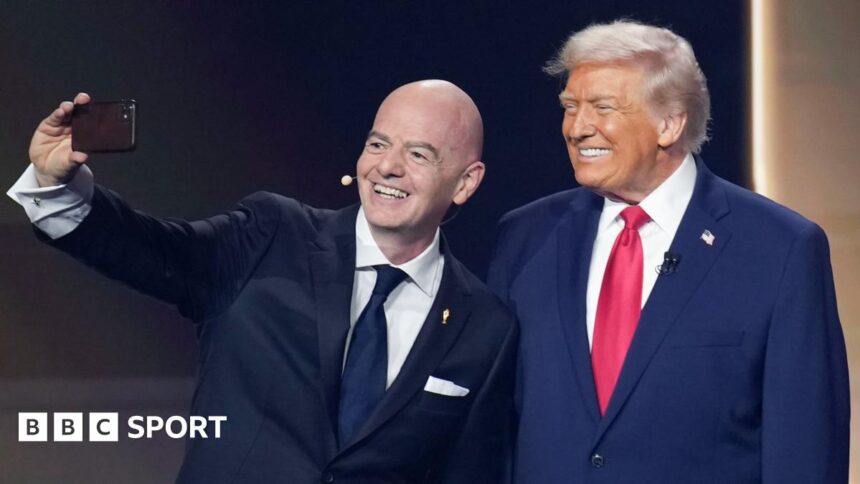
The FIFA Peace Prize awarded to Donald Trump by Gianni Infantino adds a layer of profound irony to the situation. That gesture, intended to recognize a now-defunct Middle East initiative, is now juxtaposed against threats that sow discord among traditional Western allies. This contrast underscores FIFA’s often-awkward dance with global politics, where its mission of “uniting the world” is constantly tested by the realities of international relations.
Furthermore, the focus on a Greenland annexation boycott is unprecedented. Historically, boycotts have centered on grave issues like apartheid, invasion, or systemic human rights abuses. Using it for a territorial dispute that most legal experts deem a political fantasy sets a strange and potentially problematic precedent, potentially diluting the potency of the boycott as a tool for more serious causes.
Predictions: Will the Issue Fade or Flare Before 2026?
Looking ahead to the 2026 tournament, the trajectory of this issue depends almost entirely on the political climate in the United States. The current administration has not pursued the Greenland proposal with the same public vigor, allowing tensions to cool. The most likely scenario is that the boycott talk will remain a diplomatic footnote—a bizarre chapter in World Cup history, but not an active crisis.
However, analysts warn of potential flashpoints:
- Campaign Rhetoric: If the annexation idea is revived as a campaign topic in the upcoming U.S. election, European governments could face renewed public pressure to respond.
- Symbolic Protests: While a full-team boycott is off the table, we may see symbolic gestures from individual teams or federations, such as statements or banner displays supporting Danish sovereignty.
- FIFA’s Nightmare: The governing body will work tirelessly behind the scenes to keep sport and politics separate, fearing any action that could disrupt their flagship event. Their leverage, however, is limited against sovereign nations.
The ultimate prediction is that cooler heads and sporting passion will prevail. The World Cup’s unifying power, the career dreams of thousands of athletes, and the sheer logistical and commercial magnitude of the event create immense inertia against disruption. The French statement is likely the first and last major governmental word on a Greenland-related boycott.
Conclusion: When the Political Game Overshadows the Pitch
The fleeting discussion of a World Cup boycott over Greenland is a testament to how modern geopolitics can infiltrate every aspect of global culture, even the hallowed grounds of international sport. While France’s firm rejection has likely extinguished the immediate threat, the episode serves as a stark reminder that in the 21st century, no major event is immune to the tensions of the world stage.
It underscores that the true victory in 2026 may not just be hoisting the trophy, but successfully navigating a tournament that brings together nations amidst a complex backdrop of diplomatic sensitivities. For fans, the hope is that the focus will return to the drama on the pitch—to breathtaking goals and underdog stories—rather than the diplomatic maneuvers off it. Yet, as the Greenland saga shows, the beautiful game must constantly prove its ability to rise above the noise, uniting us in shared passion despite the political winds that try to blow it off course.
Source: Based on news from BBC Sport.