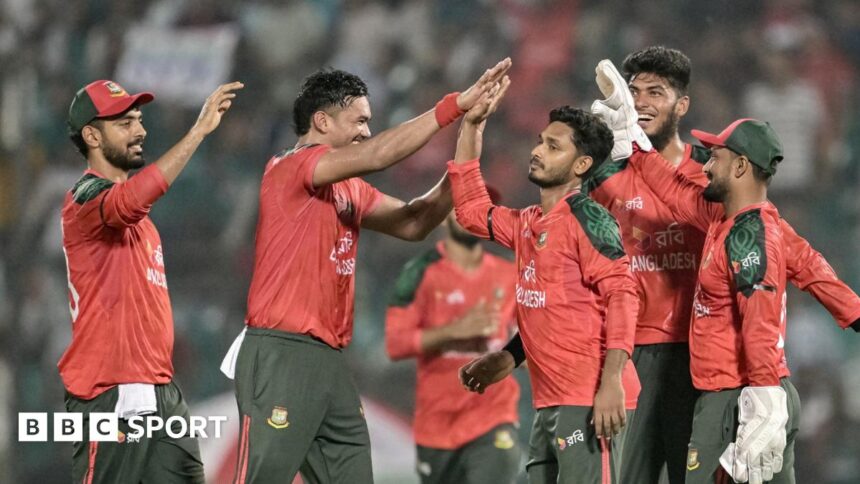
Bangladesh’s T20 World Cup Standoff: A Political Storm Hits the Cricket Pitch
The stage was set for a carnival of cricket, but a sudden diplomatic chill threatens to freeze out a key contender. In an unprecedented move that has sent shockwaves through the sport, the Bangladesh Cricket Board (BCB) has declared it will not travel to India for the upcoming T20 World Cup “under current conditions.” This isn’t just a logistical hiccup; it’s a geopolitical gambit played on the cricket field, exposing frayed nerves and raising profound questions about the intersection of sport, politics, and player safety. The request to relocate all of Bangladesh’s Group C matches against heavyweights like England and the West Indies, as well as Nepal and Italy, throws the tournament’s schedule into disarray and marks one of the most significant boycotts in modern cricket history.
The Spark That Ignited the Fire: The Mustafizur Rahman Saga
To understand Bangladesh’s drastic stance, one must look to the Indian Premier League (IPL). The flashpoint was the curious and sudden release of Bangladesh’s premier fast bowler, Mustafizur Rahman, from his IPL franchise. Reports confirm his release came “at the request of the Indian board” (BCCI), a move perceived in Dhaka as a politically motivated slight. While the BCCI has not publicly elaborated, the timing—amidst broader, simmering tensions between the two nations over trade, river water sharing, and regional politics—was seen as provocative. For the BCB, this was not an isolated administrative decision but a targeted action against a national icon, signaling a hostile environment. It transformed abstract diplomatic friction into a tangible threat against a player’s livelihood and, by extension, the team’s morale and standing.
The BCB’s emergency meeting following this incident was less about cricket and more about principle and protection. Their subsequent statement is unequivocal: the step is “necessary to safeguard the safety and well-being” of their entire contingent. This phrasing is critical. It moves the issue beyond mere protest into the realm of duty of care, framing the Indian landscape as potentially unsafe for Bangladeshi citizens—a serious charge that the ICC cannot ignore.
Between the Wickets: Unpacking the BCB’s Calculated Risk
The Bangladesh Cricket Board’s decision is a high-stakes gamble. On one hand, they risk alienating the powerful BCCI and potentially facing financial or scheduling repercussions in future bilateral series. On the other, they are standing firm on a point of national pride and pre-emptive security. Expert analysis suggests several layers to this strategy:
- Precedent and Player Psyche: The BCB is likely looking at past tours where Bangladeshi players and fans have faced intense, sometimes vitriolic, hostility in certain Indian venues. By acting now, they aim to shield their team from a potentially toxic atmosphere that could impact performance.
- Leverage with the ICC: By formally requesting the ICC to move matches, the BCB is testing the global body’s authority and its commitment to member nations’ concerns. It forces the ICC to choose between its most powerful financial engine (India) and its mandate to govern the sport fairly for all.
- A Domestic Political Win: Domestically, the stance plays powerfully. It positions the BCB as a strong defender of national interest, deflecting any potential criticism and rallying public support behind the team.
This is not a whimsical travel ban. It is a calculated move born from a specific trigger (Mustafizur’s release) and a broader context of unease. The BCB has effectively stated that the social and political climate is an inseparable part of the “playing conditions,” and they find the current ones unplayable.
Tournament Tremors: The Domino Effect on the T20 World Cup
The immediate practical implications are a nightmare for tournament organizers. Group C, already a tough pool, is now in limbo. Relocating matches for one team is a logistical labyrinth. Would England vs. Bangladesh be played in Dubai or Sri Lanka while the rest of the group plays in India? This creates a massive competitive imbalance and scheduling chaos.
Potential scenarios the ICC must now urgently consider include:
- Last-Minute Venue Shift: Moving an entire group’s matches to a neutral venue like the UAE or Sri Lanka. This is the cleanest but most costly and complex solution.
- Forfeiture and Points: The nuclear option. If Bangladesh refuses to travel and no compromise is found, the ICC could award points to their opponents. This would devastate the tournament’s integrity and spark global outrage.
- Diplomatic Arbitration: High-level intervention between governments and cricket boards to de-escalate tensions and provide the BCB with the security assurances it seeks.
The ICC now holds the hottest of potatoes. Its response will set a monumental precedent for how cricket handles political disputes. Can it ensure a safe, apolitical environment for all participants, or will commercial might dictate the terms?
Predictions and the Road Ahead for Cricket Diplomacy
Predicting the outcome is fraught, but several likely paths emerge. First, a behind-the-scenes scramble is already underway. The most probable resolution is a face-saving compromise: the ICC, with BCCI cooperation, will likely offer enhanced, explicit security guarantees for the Bangladeshi team, possibly with designated “neutral” venues within India that have a history of being welcoming. The BCB, having made its powerful point, may accept this under a “re-evaluated conditions” framework.
However, if the stalemate continues, the damage will be deep and lasting:
- Fractured Future Tours: India-Bangladesh bilateral cricket, a vibrant rivalry, could be suspended for years.
- The Politicization Precedent: Other nations may begin to cite political reasons to avoid touring, fragmenting the international calendar.
- Player Careers in Crossfire: Bangladeshi players may find themselves barred from the IPL and other Indian competitions, harming their development and earnings.
The Bangladesh Cricket Board has drawn a line in the sand. Their move is a defiant assertion that cricket cannot pretend to exist in a bubble. The sport’s administrators have long argued for a separation between politics and play, but reality, as we see, is infinitely messier.
Conclusion: A Defining Moment for the Global Game
Bangladesh’s refusal to travel to India is more than a tournament disruption; it is a symptom of a changing world. Cricket, with its colonial past and its current financial epicenter in India, is constantly navigating complex national identities and sensitivities. The BCB’s stance, triggered by the treatment of Mustafizur Rahman, is a bold claim of agency from a nation often sidelined in cricket’s power corridors.
The coming weeks will reveal whether the spirit of cricket can bridge this diplomatic divide. The ICC’s handling of this crisis will either reaffirm the game’s unifying potential or expose it as a prisoner to geopolitics and commercial interest. One thing is certain: the outcome will resonate far beyond the boundary ropes of Group C. It will define how cricket governs itself in an increasingly polarized age, and whether the safety and dignity of all its participants—not just those from the wealthiest boards—are truly non-negotiable. The world is watching, and the pitch report now includes a forecast for political storms.
Source: Based on news from BBC Sport.