Nolan Bianchi’s Final 2026 NFL Mock Draft: Lions Swing for the Fences on Massive Tackle
The speculation is over. The war rooms are set. On Thursday night in Pittsburgh, the future of 32 NFL franchises will begin to take new shape as the 2026 NFL Draft officially gets underway. For teams on the cusp of contention, like the Detroit Lions, every selection carries the weight of a championship window. After a 9-8 campaign in 2025 that saw them narrowly miss the postseason, the Lions hold the 17th overall pick—a pivotal spot to add a game-changing talent. With one final chance for prognostication, here is my definitive projection for how the first round will unfold, headlined by a bold, franchise-altering move by Detroit.
Quarterback Carousel Kicks Off in Pittsburgh
The top of the draft is, as always, dominated by the pursuit of a franchise quarterback. This year’s class features a fascinating blend of polished production and sky-high potential, leading to a predictable yet intriguing run on signal-callers.
Fernando Mendoza of Indiana, with his elite processing and pinpoint accuracy, has separated himself as the consensus top prospect. The Las Vegas Raiders, having cycled through veterans for years, finally secure their man at No. 1. He is the new face of the franchise in the desert.
The dominoes fall quickly from there. The New York Giants, unable to pass on the dynamic athleticism and cannon arm of Jalen Milroe from Alabama, take him second overall. At pick No. 3, the Denver Broncos end their long post-Russell Wilson search by selecting the most pro-ready passer in the class, Quinn Ewers from Texas. The quarterback frenzy sets the tone for the entire evening, pushing premium talent at other positions down the board.
Non-QB Talent Creates Mid-Round Goldmine
With three quarterbacks off the board in the first three picks, a glut of elite defensive and offensive talent becomes available. This creates a dream scenario for teams picking in the middle of the round, where true blue-chip prospects often don’t linger.
- Edge Rusher Chaos: The first non-QB selected is Georgia’s terrifying edge defender, Malaki Starks, to the New England Patriots at No. 4. His combination of speed and power is unmatched.
- Wide Receiver Wealth: The class is deep at receiver, with Missouri’s Luther Burden III coming off the board at No. 6 to the Carolina Panthers. His route-running wizardry makes him an instant WR1.
- Secondary Stars Shine: Two lockdown corners, Clemson’s Shelton Lewis and Colorado’s Travis Hunter, go in the top 10, reinforcing the premium on shutting down today’s passing attacks.
As the draft progresses toward the teens, an unexpected trend emerges: a slight slide for the offensive tackle group. While Notre Dame’s Will Campbell goes eighth overall, a logjam of defensive players pushes another top-tier tackle right into the Lions’ lap.
Detroit Lions’ Pivotal Pick: A Swing on Size and Ceiling
At pick No. 17, the Detroit Lions are in an enviable yet challenging position. The roster is built to win now, but key holes remain. The secondary could use help, and the pass rush needs a complementary piece opposite Aidan Hutchinson. However, General Manager Brad Holmes has always adhered to a core philosophy: take the best player available, especially when he fills a long-term need.
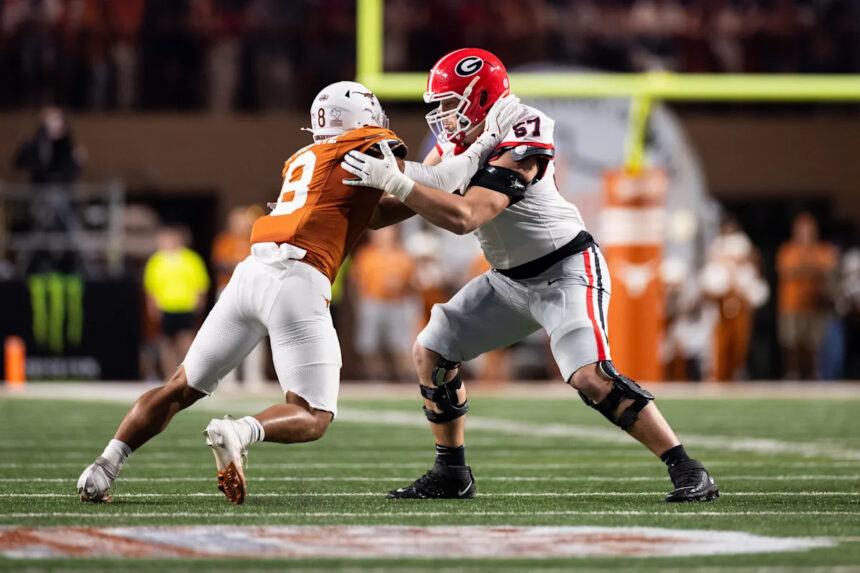
That player is Kelan Butler, the monolithic tackle from the University of Tennessee. At 6-foot-8 and 335 pounds with absurd 36-inch arms, Butler is a prototype left tackle with rare athleticism for his size. He started for three years in the SEC, dominating in the run game and showing steady improvement in pass protection.
Why Butler for the Lions? The analysis is two-fold:
- The Immediate Impact: Butler can start Day 1 at right tackle, shoring up a spot that has seen fluctuation. He instantly upgrades the run game, creating even wider lanes for Jahmyr Gibbs and David Montgomery. His presence solidifies the entire offensive line, protecting Jared Goff and extending the offense’s window.
- The Future-Proofing Move: Taylor Decker, the stalwart left tackle and team leader, is entering the final year of his contract and will be 32 next season. Butler represents a seamless succession plan. He can learn from Decker for a year before potentially taking over the blindside in 2027, ensuring the Lions’ offensive line remains a strength for the next decade.
Passing on a defensive playmaker will sting for some fans, but securing a franchise tackle is a luxury a contending team rarely gets. Butler’s combination of size, pedigree, and upside is too significant for Holmes and head coach Dan Campbell to bypass. This is a pick for both 2026 and 2030.
First Round Fallout and Steals of the Night
The Lions’ selection of Butler sends ripples through the rest of the first round. With the top tackle off the board, a run on defensive linemen and receivers ensues. The Philadelphia Eagles, picking 18th, happily scoop up the falling interior disruptor, defensive tackle Mason Graham from Michigan. The Los Angeles Rams, at No. 19, find a replacement for the retired Aaron Donald in Texas A&M’s explosive Shemar Stewart.
Notable steals in the back half of the round include:
- WR Tetairoa McMillan (Oregon) to the Buffalo Bills at 24: A 6-foot-5 red-zone nightmare who gives Josh Allen a new favorite target.
- CB Will Johnson (Michigan) to the Dallas Cowboys at 26: A local product and polished cover man who inexplicably fell out of the top 20.
- Edge Nic Scourton (Texas A&M) to the San Francisco 49ers at 31: A relentless pass-rusher who fits perfectly into the 49ers’ defensive scheme.
As the first round concludes in Pittsburgh, the narratives are set. The Raiders have their quarterback, the Giants and Broncos have their new hopes, and the Detroit Lions have made a decisive, forward-thinking investment in the trenches.
Conclusion: Lions Double Down on Their Identity
The 2026 NFL Draft’s first round reinforces a timeless truth: football games are still won and lost at the line of scrimmage. By selecting Kelan Butler, the Detroit Lions are not merely filling a roster spot; they are making a profound statement about their identity and their timeline. They are choosing to fortify their greatest strength—the offensive line—with a player who can anchor it for the next era.
This pick is a swing, yes. But it’s a calculated one. It’s a swing on size, on SEC production, and on the kind of player who allows a contending team to stay physical, control the clock, and protect its most valuable assets. For a Lions team looking to reclaim the NFC North and make a deeper playoff run, the path forward starts, as it always has under this regime, in the trenches. On Thursday night in Pittsburgh, the Lions didn’t just make a pick; they laid a new cornerstone.
Source: Based on news from Yahoo Sports.