North Carolina Guard Derek Dixon Enters Transfer Portal: A Stunning Blow in Chapel Hill’s Offseason of Change
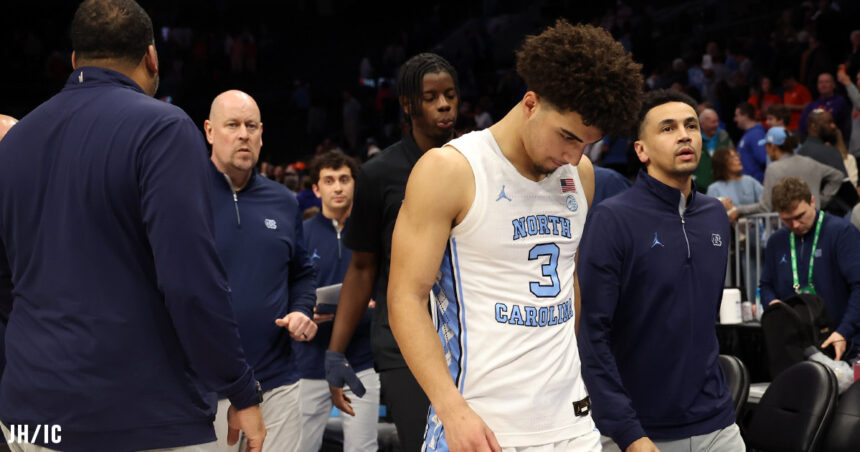
The winds of change are howling through the Dean E. Smith Center, and they have swept up a key piece of North Carolina’s future. In a move that underscores the seismic shifts within the program, true freshman guard Derek Dixon plans to enter the NCAA transfer portal, as first reported by On3’s Joe Tipton. Dixon’s decision arrives on the heels of the university’s stunning dismissal of head coach Hubert Davis and amid swirling reports of the Tar Heels’ pursuit of NBA veteran coach Michael Malone. For a fanbase already reeling, the departure of a promising young talent who flashed significant potential marks a critical inflection point in the program’s trajectory.
A Freshman of Promise: Dixon’s Tar Heel Tenure
Derek Dixon’s lone season in Chapel Hill was a tale of steady growth and late-season emergence. The Vienna, VA native appeared in 33 games, earning 16 starts, and posted averages of 6.5 points, 2.3 rebounds, and 2.7 assists per contest. While those numbers are solid for a first-year player in a high-major conference, the true story lies in his efficiency and clutch performances.
Dixon established himself as a reliable floor spacer and a player who thrived under pressure. His shooting splits were impressive for a freshman:
- 39.7% from three-point range on 2.8 attempts per game.
- 81.8% from the free-throw line.
- Scored in double figures eight times, with four of those coming in the final seven games of the season.
His role expanded dramatically as the season wore on, culminating in a team-high 41 minutes during UNC’s crushing overtime loss to VCU in the NCAA Tournament. In what now stands as his potential finale in Carolina Blue, Dixon logged 11 points, six assists, and five rebounds, demonstrating his all-around capability on the biggest stage.
Peaking at the Right Time: The Duke and Clemson Performances
To understand the magnitude of this loss for UNC, one must look at how Dixon finished the season. He wasn’t just a role player; he was evolving into a primary offensive threat during the most critical stretch of the calendar.
In the regular-season finale against arch-rival Duke, Dixon announced his arrival with a career-high 17 points, draining 5-of-8 from beyond the arc in a hostile Cameron Indoor Stadium. His confident shooting and poised play kept the Tar Heels within striking distance in a high-stakes environment. He followed that legendary-stage performance with another 16-point outing in the ACC Tournament against Clemson, again connecting on three three-pointers.
This late surge proved Dixon was not intimidated by the moment. He was a four-star recruit, ranked No. 43 nationally and the No. 4 combo guard in his class per the Rivals Industry Rankings, and he was beginning to play to that pedigree. His development curve suggested a player poised for a breakout sophomore campaign, making his portal entry a significant setback for the Heels’ backcourt planning.
The Catalyst for Change: Coaching Turmoil and Portal Realities
Dixon’s decision is inextricably linked to the unprecedented coaching upheaval in Chapel Hill. The firing of Hubert Davis—the coach who recruited him—creates a natural period of uncertainty for any player. While the potential hiring of a coach of Michael Malone’s caliber is intriguing, it represents a complete philosophical reset. A freshman like Dixon, who just carved out a significant role, must now weigh starting over with a new coach versus starting over elsewhere.
The modern college basketball landscape, governed by the transfer portal, incentivizes such moves. For talented players coming off strong freshman seasons, the portal offers a chance to re-evaluate fit, playing time, and coaching style with increased leverage. Dixon’s proven shooting, his experience in big games, and his three years of remaining eligibility will make him one of the most coveted guards available. Programs nationwide will see a player who has already proven he can perform in the ACC and the NCAA Tournament, with his best basketball clearly ahead of him.
What’s Next for Dixon and the Tar Heels?
For Derek Dixon: The portal process will be flush with suitors. Expect high-major programs from across the country to line up for a skilled, efficient guard who thrives as a catch-and-shoot threat but also shows playmaking instincts. His recruitment will likely focus on systems that prioritize floor spacing and guard-oriented play, where his shooting can be a centerpiece. Given his late-season play, he will have legitimate options to be an immediate starter and focal point for a tournament-caliber team.
For North Carolina: Dixon’s departure exacerbates the backcourt crisis facing the new coach, whoever that may be. It depletes guard depth, removes a proven shooter, and takes a chunk of the program’s future backcourt scoring off the roster. The new staff’s first order of business will now doubly involve not only filling the head coaching vacancy but also aggressively mining the transfer portal to replace the production and potential Dixon is taking with him. It’s a stark reminder that in today’s game, roster management is a relentless, year-long challenge, especially amid a coaching transition.
Conclusion: A Calculated Move in an Era of Empowerment
Derek Dixon’s choice to enter the transfer portal is a calculated business and basketball decision, emblematic of the power now wielded by student-athletes. While painful for North Carolina faithful, it is a rational step for a player seeking stability and a clear path to maximize his potential after the program that recruited him abruptly changed course. His freshman season in Chapel Hill was a successful audition for the rest of the country—a demonstration of clutch shooting, toughness, and a ceiling that is far from reached.
As the Tar Heels embark on a new, uncertain chapter, they do so without one of the brightest sparks from their previous season. For Dixon, a new journey begins, with the lessons learned in Carolina Blue serving as a foundation. His departure is more than a simple transfer; it is a defining subplot in North Carolina’s offseason of upheaval and a clear signal that in modern college basketball, even the most storied programs are not immune to the transformative—and often unforgiving—nature of change.
Source: Based on news from Yahoo Sports.