Germany’s 2026 World Cup Path Revealed: A Crucial Test for Die Mannschaft’s Redemption
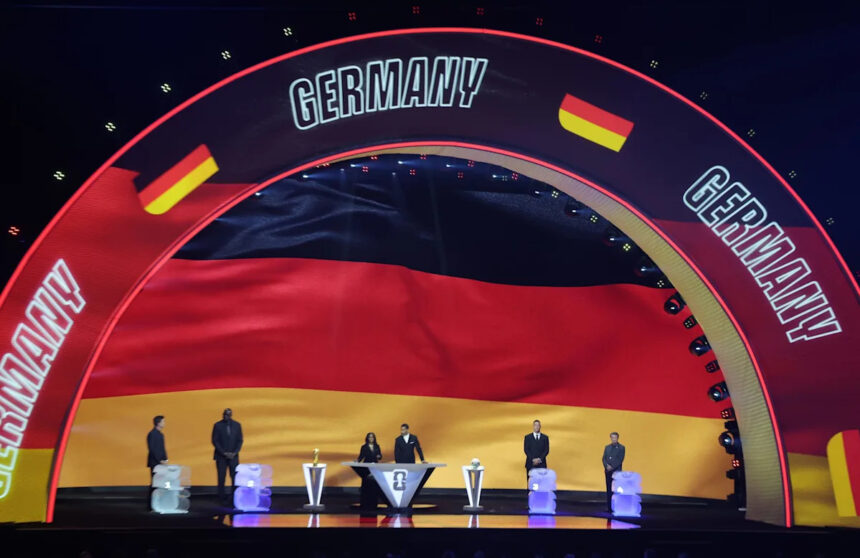
The road to redemption now has a map. In a ceremony in Washington, the footballing world learned the contours of the 2026 FIFA World Cup, and for Germany, the draw has set a clear and challenging stage. Placed in Group E, Julian Nagelsmann’s side now knows the precise hurdles they must clear to banish the demons of their last two disastrous tournaments. For a nation that defines itself by footballing excellence, the 2026 campaign is not just about progression; it’s about restoring a fractured identity on the world’s grandest stage.
- Decoding Group E: The Opponents and the Stakes
- Tactical Breakdown: The Three Challenges for Nagelsmann
- The CONCACAF Opener: A Physical and Atmospheric Baptism
- The European Derby: A Clash of Footballing Philosophies
- The South American Finale: The Ultimate Litmus Test
- Predictions and the Path Beyond the Group
- Conclusion: More Than a Group, A Defining Journey
The relief of automatic qualification, sealed with a 6-0 thrashing of Slovakia, has been replaced by the sober reality of the task ahead. The haunting statistics are well-known but bear repeating: no knockout match since their 2014 triumph in Brazil, followed by the unprecedented humiliation of back-to-back group stage exits in 2018 and 2022. The 2026 World Cup, sprawling across the United States, Canada, and Mexico, presents a monumental opportunity for die Nationalmannschaft to write a new chapter. The draw for Group E is the first sentence.
Decoding Group E: The Opponents and the Stakes
Drawn from Pot 1 as one of the seeded nations, Germany’s status as a favourite in the group comes with immense pressure. Their opponents present a fascinating mix of styles, narratives, and threats. This is not a group of death in the traditional sense, but for a Germany side in recovery, it is a dangerous and revealing constellation. Each match carries a unique psychological and tactical challenge that will test Nagelsmann’s project to its core.
The group stage schedule will see Germany navigate a trio of distinct challenges. Their campaign will be a journey of increasing intensity, starting with a clash against a CONCACAF giant, moving to a European tactical battle, and culminating in a South American showdown. The venues—spread across the heart of the USA—will offer a mix of atmospheres, from the fervent home support for regional teams to the neutral, expectant crowds awaiting a German resurgence.
Tactical Breakdown: The Three Challenges for Nagelsmann
Julian Nagelsmann, appointed to be the architect of Germany’s revival, now has specific puzzles to solve. His philosophy of high-intensity, proactive football will be scrutinized against three very different blueprints.
The CONCACAF Opener: A Physical and Atmospheric Baptism
Germany’s opening match will be a classic clash of footballing cultures. Facing a CONCACAF opponent, likely the United States or Mexico, in what will effectively be a home game for their rival, is a stern first test. The challenge here is multifaceted:
- Physicality and Pace: CONCACAF teams are renowned for their athleticism, relentless pressing, and direct transitions. Germany’s technically gifted midfield must be prepared for a bruising, fast-paced encounter.
- The 12th Man: Playing in a stadium overwhelmingly supporting the opponent requires immense mental fortitude. For a squad scarred by recent failures, starting strong and silencing the crowd is non-negotiable.
- Setting the Tone: A convincing win here is crucial for momentum. A stumble or a scrappy performance would immediately resurrect doubts and intensify the pressure exponentially.
The European Derby: A Clash of Footballing Philosophies
The second match presents a more familiar, but no less complex, tactical duel. Facing a fellow European side means a battle of structured systems and nuanced game management. Nagelsmann, a student of the modern European game, will face a mirror of sorts.
- Midfield Control: This game will likely be decided in the engine room. Germany’s ability to dictate tempo, break lines with incisive passing, and control possession against a well-drilled, organized block will be paramount.
- Defensive Discipline: European opponents are less likely to be physically overwhelming but are supremely efficient in exploiting mistakes. Germany’s defensive structure, which has looked vulnerable at times, must be flawless.
- Strategic Flexibility: This is where Nagelsmann’s reputation as a tactical innovator must pay off. The ability to adapt in-game, change formations, and introduce impactful substitutes could be the difference between a statement win and a frustrating draw.
The South American Finale: The Ultimate Litmus Test
The final group game against Ecuador on June 25th in Philadelphia or New Jersey looms as a potential group decider and the ultimate test of Germany’s tournament readiness. Ecuador embodies the vibrant, unpredictable spirit of South American football.
- Individual Brilliance: Ecuador possesses players capable of moments of magic. Containing dynamic wingers and a physical presence up front will test Germany’s defensive concentration for 90 minutes.
- High Stakes Pressure: By this point, qualification may be on the line. Germany’s ability to handle the specific pressure of a “must-not-lose” or “must-win” scenario against a passionate, technically gifted side is the final hurdle of the group.
- Tournament Stamina: This match will reveal the squad’s physical and mental depth. Can they produce a high-level performance in their third game in a short span, under intense scrutiny?
Predictions and the Path Beyond the Group
On paper, as a Pot 1 team, Germany is expected to top Group E. However, their recent history demands caution. The prediction here is one of cautious optimism, contingent on key factors:
- Key to Success: Germany’s progression hinges on winning their opening match. A positive start builds confidence and allows them to control the group narrative. A draw or loss immediately plunges them into a perilous knockout scramble.
- Expected Outcome: Germany should advance, likely as group winners, but not without facing significant moments of adversity. Each game will have periods where they are tested, and their response will define their tournament.
- The Knockout Horizon: Emerging from Group E sets up a likely last-16 clash against a runner-up from a strong group (potentially containing teams like the Netherlands or Croatia). This is where the real redemption arc begins. A confident, group-topping Germany is a threat. A scarred, second-place Germany remains vulnerable.
Conclusion: More Than a Group, A Defining Journey
The draw for the 2026 World Cup has handed Germany a clear and manageable path, but also one devoid of hiding places. Group E is a perfect microcosm of the challenges this team must overcome: the physicality of the Americas, the tactical rigor of Europe, and the pressure of expectation. For Julian Nagelsmann and his players, the analysis begins now. Every training session, every friendly, every squad selection from this moment forward will be viewed through the prism of Ecuador, the European foe, and the CONCACAF opener.
This is more than a football tournament for Germany; it is a cultural reset. The ghosts of Russia and Qatar will be passengers on every flight, in every hotel, and in the echoes of every stadium until this team proves they have been exorcised. The draw in Washington did not hand Germany a death sentence; it handed them a script. The narrative of failure or the story of glorious rebirth is now theirs to write, one grueling, revealing match at a time. The world will be watching, waiting to see if the fallen giant has finally learned to stand tall again.
Source: Based on news from Yahoo Sports.
Image: Source – Original Article