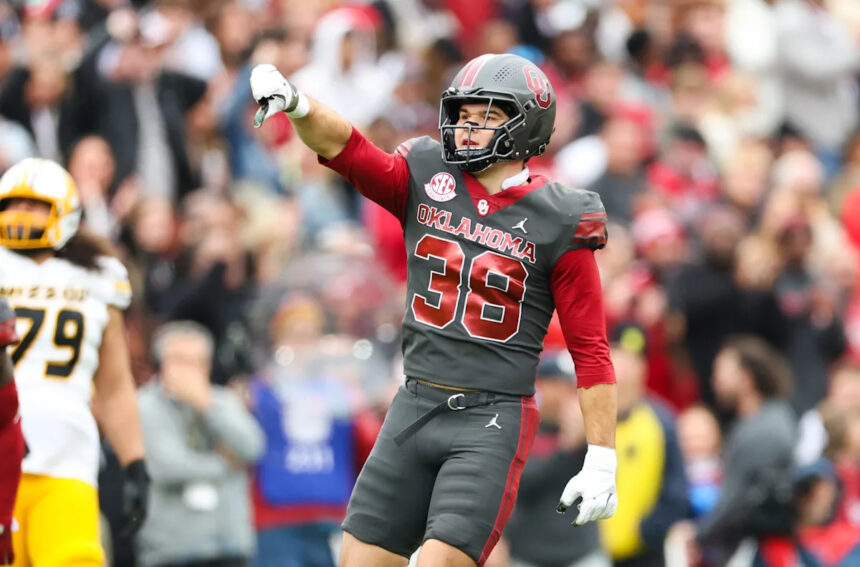
Oklahoma Sooners GM Jim Nagy Reveals NCAA Denies Owen Heinecke’s Eligibility Appeal
In the ever-fluid landscape of modern college football, where roster management is a year-round chess match, the Oklahoma Sooners received a jarring piece of news this week. General Manager Jim Nagy, a key architect in building the Sooners’ roster for the SEC, delivered a sobering update to the fanbase regarding the status of linebacker Owen Heinecke. The NCAA has denied Heinecke’s petition for an additional year of eligibility, a decision that has sparked immediate controversy and highlighted the often-Byzantine nature of the association’s rules. This ruling not only impacts the Sooners’ defensive depth chart but also casts a spotlight on the inconsistent application of eligibility standards across college sports.
The Crux of the Controversy: Lacrosse vs. Football
At the heart of this saga is a unique and, to many, confounding detail: three games of lacrosse. Before Owen Heinecke became a special teams stalwart for the Oklahoma Sooners, he briefly participated in lacrosse at Ohio State in 2021, totaling approximately 15 minutes of playing time. According to the NCAA’s current ruling, those minutes in a different sport are being counted against his five-year “clock” to complete four seasons of football eligibility.
Heinecke’s football timeline is clear:
- 2021: Enrolled at Ohio State, participated in lacrosse.
- 2022: Transferred to Oklahoma, did not see game action (redshirt year).
- 2023 & 2024: Played in all 26 games for the Sooners, primarily on special teams.
- 2025: Was a redshirt junior, utilizing his third season of football eligibility.
Despite having only three seasons of actual college football participation, the NCAA’s interpretation suggests his clock started with his initial enrollment at Ohio State, and the lacrosse participation counts as a “season of competition,” exhausting his time. This is the bureaucratic knot that Oklahoma is now attempting to untangle through an appeal.
Nagy’s Blunt Assessment and the Broader Eligibility Debate
Jim Nagy’s statement on X was more than just an update; it was a pointed critique of the NCAA’s process. His mention of players being granted “7th and 8th years of football” was a direct reference to the wave of medical hardship and COVID-19 eligibility waivers that have created a class of ultra-veteran players. Nagy’s framing positions Heinecke’s denial as a profound inequity.
“When other players are being granted 7th and 8th years of football, CFB governing body has ruled Owen won’t get a 4th year,” Nagy wrote. He emphasized the walk-on’s journey and character, concluding, “You stand for everything that is pure and great about college football.” This language is strategically powerful. It contrasts the perceived cold bureaucracy of the NCAA with the narrative of a dedicated, multi-sport athlete who has maximized his opportunities. The subtext is clear: the system is failing the very type of player it should be celebrating.
This case raises significant questions about the NCAA transfer portal and eligibility rules. As athletes move between schools and, occasionally, between sports, how should their “clocks” be managed? Is participation in a non-revenue sport for a handful of minutes truly commensurate with a full season of football? The inconsistency in waiver decisions has long been a source of frustration for programs, and the Heinecke case is a new, stark example.
Implications for the Sooners and Heinecke’s Future
The immediate football impact on the Oklahoma Sooners is tangible. Heinecke was projected to be a core leader on special teams and provide experienced depth at linebacker for the 2026 season. In the brutal week-to-week grind of the SEC, reliable, veteran players like Heinecke are invaluable. His potential absence creates a hole that must be filled through development of younger players or further dips into the transfer portal.
For Owen Heinecke himself, the path forward is two-fold, hinging entirely on the outcome of Oklahoma’s appeal.
- Scenario 1: The Appeal is Successful. Heinecke returns to Norman for the 2026 season. He would have a chance to compete for a larger defensive role and cement his legacy as a Sooner who persevered through an unprecedented eligibility battle.
- Scenario 2: The Appeal is Denied. His collegiate career is over. As Nagy alluded to, his next stop would be the 2026 NFL Draft. His performance at the Senior Bowl practices this week is now an even more critical audition. NFL teams value his profile: a standout special teamer with defensive upside, known for his work ethic and intangibles. Nagy’s “stud two-contract player” line is a not-so-subtle signal to professional scouts about Heinecke’s maturity and potential longevity.
Predictions and the Final Whistle
Predicting NCAA waiver decisions is a fool’s errand, given their opaque nature. However, the public pressure applied by a respected figure like Jim Nagy, combined with the compelling specifics of the case, certainly gives Oklahoma a fighting chance. The narrative of punishing a player for minimal participation in another sport is a difficult one for the NCAA to defend publicly. The appeal process will likely involve Oklahoma’s administration presenting a more detailed legal and factual argument, potentially highlighting similar cases where waivers were granted.
Regardless of the outcome, this episode reinforces several enduring truths about big-time college athletics. First, the role of the General Manager in college football is now crucial, encompassing not just talent evaluation but also complex roster and eligibility management. Nagy’s public advocacy is part of that job. Second, the individual stories of players can still cut through the noise, reminding us that behind every eligibility ruling is a young man’s dream and career trajectory.
The final chapter for Owen Heinecke at Oklahoma is yet to be written. The appeal represents one more play in a career defined by perseverance. Whether he lines up for the Sooners in 2026 or hears his name called in the NFL Draft, his journey has become a symbol of the ongoing tension between athlete, institution, and governing body. For the NCAA, this is another test of its ability to apply rules with both consistency and common sense. For Sooner Nation, it’s a hope that a valued soldier gets one more chance to run out of the tunnel. The ball, for now, is in the NCAA’s court.
Source: Based on news from Yahoo Sports.