Ole Miss QB Trinidad Chambliss’ Final NCAA Appeal Denied, Career Now Hinges on State Court
Trinidad Chambliss was braced for the blow. After a season where he authored one of college football’s most captivating stories, leading Ole Miss to the brink of a national championship, the NCAA delivered the final, formal word on his future. On Wednesday, the University of Mississippi confirmed what the star quarterback feared: his appeal for a sixth season of eligibility was denied. This decision, rooted in a procedural dispute over medical documentation, abruptly ends Chambliss’ collegiate career under NCAA jurisdiction and sets the stage for an unprecedented legal battle in Mississippi state court. The ruling closes one door on the field, but opens a complex, high-stakes fight off it, challenging the very mechanisms of athlete eligibility.
- The NCAA’s Final Ruling: A Matter of Paperwork Over Performance
- From Ferris State to Fiesta Bowl: The Meteoric Rise of Trinidad Chambliss
- The Legal Hail Mary: Chambliss’ Case Heads to State Court
- Implications and Predictions: A Watershed Moment for Athlete Eligibility?
- Conclusion: The Final Whistle Has Not Sounded
The NCAA’s Final Ruling: A Matter of Paperwork Over Performance
The saga of Trinidad Chambliss’ lost season is a tale of two timelines. On the field, his 2025 campaign was nothing short of spectacular. The transfer quarterback’s dynamic play propelled the Rebels to a 13-2 record and a College Football Playoff semifinal berth, cementing his legacy in Oxford. Off the field, a battle was being waged over a year far in the past—2022, his redshirt freshman season at Division II Ferris State.
Chambliss’ case hinged on obtaining a medical redshirt waiver for that season, arguing that persistent respiratory issues, including severe bronchitis and complications from a prior bout of pneumonia, physically prevented him from competing. The NCAA, however, remained unconvinced by the evidence presented. In its initial denial on January 9 and the subsequent appeal upheld this week, the association’s core finding was stark: adequate medical evidence from a treating physician was not sufficiently provided in the waiver request.
This highlights the often-criticized, Byzantine nature of NCAA eligibility processes. For athletes and universities, navigating waiver requests is a high-stakes game of bureaucratic precision where the burden of proof is immense. “The NCAA’s decision isn’t a judgment on whether Chambliss was ill,” notes a former Power 5 compliance officer we spoke with. “It’s a judgment that the specific, contemporaneous medical documentation from 2022, formatted and presented to meet their strict standards, was lacking. It’s a procedural cliff many athletes fall from.”
From Ferris State to Fiesta Bowl: The Meteoric Rise of Trinidad Chambliss
To understand the magnitude of the NCAA’s decision, one must appreciate the journey it cuts short. Chambliss’ path was unorthodox:
- 2022 (Ferris State): The lost season. While battling respiratory ailments, he did not see game action, preserving four years of eligibility.
- 2023-2024: After transferring, he developed into a force at the FCS level, showcasing the dual-threat talent that caught Ole Miss’s eye.
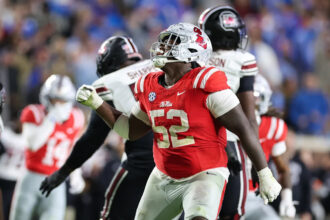
- 2025 (Ole Miss): Seizing the starting job, Chambliss became the heart of the Rebel offense. His poise in clutch moments and explosive playmaking were the catalysts for a historic season that ended just short of the national title game in a 31-27 Fiesta Bowl loss to Miami.
His single season in the SEC was enough to transform him from a transfer question mark into a program legend and a likely mid-round NFL draft prospect. The denial of a sixth year robs him of a chance to build on that legacy, refine his game further, and potentially elevate his professional stock—a tangible financial consequence of the ruling.
The Legal Hail Mary: Chambliss’ Case Heads to State Court
With the NCAA avenue exhausted, Chambliss and his legal team have signaled their next, dramatic move: filing suit in Mississippi state court. This strategy moves the battle from the NCAA’s internal administrative courts to a public, legal forum. The potential arguments are multifaceted and could set a significant precedent.
Legal experts suggest the case may focus on several key areas:
- Procedural Due Process: Arguing the NCAA’s waiver process was arbitrarily applied or that the standard for “adequate medical evidence” was unreasonably opaque or shifting.
- Breach of Contract or Duty: Contending that the NCAA, or potentially even Ferris State in its initial documentation, failed in a duty of care to the student-athlete.
- Injunctive Relief: The immediate goal would be for a judge to issue an injunction, potentially forcing the NCAA to grant temporary eligibility while the case is heard, a race against the clock of the 2026 season.
“This is no longer about sportsmanship; it’s about jurisprudence,” says a sports law attorney familiar with such cases. “The state court is not bound by NCAA bylaws. It will look at state contract law, administrative procedure, and equitable principles. Chambliss’s team will aim to make this about fairness and the tangible harm caused by denying him a year he believes he medically earned.”
Implications and Predictions: A Watershed Moment for Athlete Eligibility?
The fallout from the Chambliss decision extends far beyond Oxford. It strikes at the heart of the ongoing tension between collegiate athletic governing bodies and athlete advocacy.
For Ole Miss, the impact is immediate and profound. The Rebels must now accelerate their quarterback succession plan, turning to the transfer portal or a younger player on the roster to fill the void left by a transformative leader. A season with College Football Playoff aspirations now faces a major, unexpected variable under center.
For the NCAA, this is another public relations battle in an era defined by them. The image of a star player who led his team to the playoff being denied over documentation—while the multi-billion dollar enterprise of college football continues unabated—is a potent narrative of institutional indifference.
For future athletes, the precedent is crucial. A successful legal challenge by Chambliss could empower other players to seek judicial recourse for eligibility disputes, fundamentally altering the power dynamic. It could force the NCAA to clarify and standardize its medical waiver processes to withstand legal scrutiny.
Prediction: The Mississippi court will likely agree to hear the case on an expedited basis. While the outcome is uncertain, the pressure of a public legal fight may incentivize a settlement before a ruling—perhaps a last-minute eligibility compromise from the NCAA to avoid a damaging legal precedent. If it goes to a ruling, however, the decision could become a landmark case, referenced for years in eligibility battles.
Conclusion: The Final Whistle Has Not Sounded
The NCAA has spoken, but the story of Trinidad Chambliss is far from over. What was a quest for a sixth year on the gridiron has morphed into a pioneering legal challenge with implications that will ripple across college sports. The denial underscores the often-cold, procedural machinery of athlete eligibility, where compelling human narratives can be sidelined by paperwork. Yet, in taking his fight to the courts, Chambliss is switching the playbook. He is no longer just a quarterback appealing to a governing body; he is a plaintiff arguing for fairness before a judge. His legacy at Ole Miss, forged in a single brilliant season, is secure. His legacy for all college athletes, however, is now being written in legal briefs and court filings. The next snap in Trinidad Chambliss’ career won’t be called in a huddle—it will be called to order in a Mississippi courtroom.
Source: Based on news from Deadspin.
Image: CC licensed via www.flickr.com