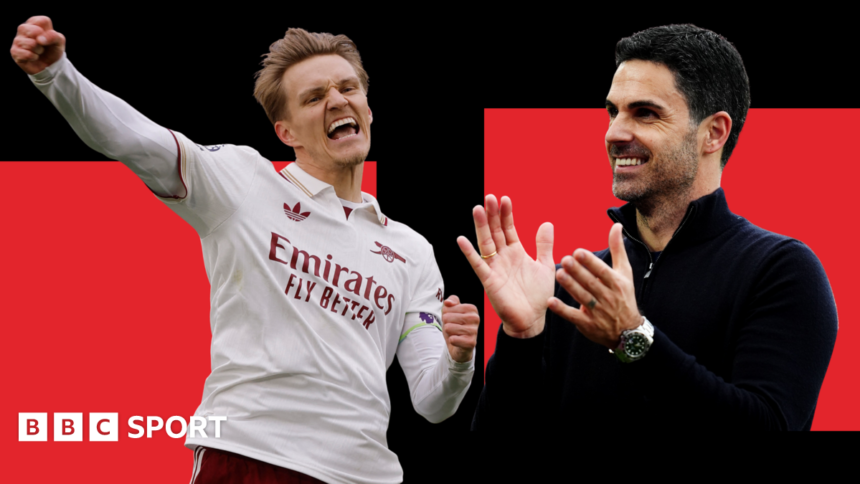
Only His Last Changes Worked: How Arteta’s High-Stakes Gambles Finally Paid Off
There is a fine line between tactical genius and reckless desperation. On a tense, rain-soaked evening at the London Stadium, Mikel Arteta walked that line like a tightrope artist. For 85 minutes, his Arsenal side looked disjointed, frustrated, and on the verge of dropping two critical points in the title race. Then, in a flurry of substitutions and a controversial VAR call, the narrative flipped. The final scoreline—a 2-1 victory over West Ham—tells only half the story. The other half is about a manager who, against the odds, saw his gambles finally pay off. But before we dive into the tactical chess match, we must address the elephant in the room: the disallowed goal that sent social media into a frenzy.
The VAR Verdict: Justice or Irony?
Before we get into any tactical analysis of Arsenal’s win over West Ham, we have to address the decision that saw the Hammers’ stoppage-time equaliser ruled out. In the 95th minute, Callum Wilson bundled the ball into the net, sending the home crowd into ecstasy. But the Video Assistant Referee (VAR) intervened. The reason? A clear grappling foul in the box—a shove on Gabriel Magalhães by a West Ham attacker. It was a call that left a bitter taste in many mouths, and for good reason.
Anyone who watches football regularly probably thinks the grappling we see at corners and set-plays has gone too far this season. We’ve seen defenders bear-hug attackers, attackers drag defenders to the ground, and referees wave play on. It has become a blight on the modern game. I think most people are up for punishing it more, because there does seem to be too many occasions where players get away with it. The irony is thick as London fog: for Callum Wilson’s 95th-minute goal to be disallowed by VAR because of exactly that kind of foul was a poetic twist. Why? Because we’ve seen Mikel Arteta’s side do that type of thing, unpunished, so often. Arsenal have built a reputation as set-piece masters, and part of that mastery involves borderline physicality that referees have historically let slide.
So, I know why only seeing the officials act now will frustrate a lot of people because it is Arsenal who have benefited, but in isolation it is the right decision. The rule exists for a reason. Consistency is the issue, not the call itself. If the Premier League is finally cracking down on wrestling in the box—starting with this match—then that is a step toward a cleaner, fairer game. Arsenal got lucky, yes, but they also earned the right to be in that position through sheer persistence.
The First 80 Minutes: A Tactical Muddle
Let’s rewind. For the bulk of the match, Arteta’s game plan looked like a ship without a rudder. West Ham, under Julen Lopetegui, set up in a compact 5-4-1 block, daring Arsenal to break them down. The Gunners struggled with their usual fluidity. Bukayo Saka was double-teamed, Martin Ødegaard was crowded out, and Declan Rice—facing his former club—was unusually subdued. The midfield trio of Rice, Thomas Partey, and Kai Havertz lacked the incisive passing to unlock the low block.
Arteta’s first major gamble came in the 62nd minute. He hauled off the ineffective Gabriel Jesus and introduced Leandro Trossard. A logical move, but the shape remained stagnant. Then, in the 72nd minute, he replaced Partey with Jorginho—a pass-first midfielder who could offer control but not dynamism. The crowd grew restless. Arsenal’s xG (expected goals) was barely above 0.8 after 75 minutes. The plan wasn’t working. It looked like a night where Arteta’s substitutions would be remembered as a failure.
But then came the masterstroke. In the 80th minute, with the score still 0-0, Arteta threw on Emile Smith Rowe and Reiss Nelson. This was the pivot. Suddenly, Arsenal had width, directness, and a willingness to run at defenders. Smith Rowe’s movement in the half-spaces created chaos, while Nelson’s pace stretched the West Ham backline. The goal came in the 83rd minute—a scrappy finish from Saka after a corner that was initially cleared, then recycled. It wasn’t pretty, but it was effective.
How the Late Changes Rewrote the Script
The beauty of Arteta’s final gambles was their simplicity. He abandoned the slow, possession-heavy approach and embraced chaos. Here is a breakdown of what changed in the final 15 minutes:
- Directness over possession: Arsenal stopped passing sideways. Smith Rowe and Nelson drove at defenders, forcing fouls and creating set-piece opportunities.
- Second-ball aggression: With Havertz pushed higher and Rice bombing forward, Arsenal won every second ball in the final third. This is where the winning goal originated.
- Set-piece ruthlessness: The goal itself came from a corner—a weapon Arsenal have honed to perfection. Gabriel’s flick-on found Saka, who smashed it home. It was a moment of pure, rehearsed execution.
West Ham’s equalizer, which was later disallowed, came from a similar set-piece scenario. But here’s the key: Arsenal’s defensive resilience after the 85th minute was night-and-day compared to earlier. David Raya made a stunning save from a Jarrod Bowen header. The back four, led by William Saliba, threw bodies on the line. Arteta’s gamble to leave Gabriel on the pitch—despite a yellow card—paid off. The Brazilian was immense in the air during those frantic final moments.
Expert Analysis: What This Win Means for Arsenal’s Season
Let’s be honest: this was not a performance that screams “title contenders.” For 80 minutes, Arsenal were second-best in terms of creative output. West Ham had the better chances on the counter. However, the hallmark of a champion is winning when you play poorly. Arteta’s willingness to change his approach late—to abandon the script and embrace risk—is a sign of a maturing manager.
Key tactical takeaways:
- Plan B exists: For too long, Arteta relied on a single system. Now, he has shown he can pivot to a more direct, physical style when needed. This is crucial for the run-in.
- Depth matters: Smith Rowe and Nelson are not starters, but they proved they can change a game. Their impact off the bench will be vital in the congested winter schedule.
- Set-piece vulnerability: While Arsenal scored from a corner, they also nearly conceded from one. The defensive organization at dead balls remains a concern, especially against teams like West Ham who target that area.
Predictions for the rest of the season: If Arteta can replicate this late-game adaptability against top-six sides, Arsenal will finish in the top two. However, the reliance on VAR bail-outs is unsustainable. The next few weeks—against Manchester United and Aston Villa—will be the true test. I predict Arsenal will drop points in one of those matches unless they fix their first-half lethargy.
Strong Conclusion: The Fine Margins of Genius
In the end, this victory was a microcosm of Mikel Arteta’s tenure. It was messy, controversial, and at times infuriating to watch. But it was also resilient, adaptive, and ultimately successful. The disallowed goal will dominate headlines, and the debate over consistency will rage on. Yet, if we strip away the noise, we see a manager who refused to accept a draw. He made changes that looked panicked in real-time but proved visionary in hindsight.
Only his last changes worked. That is the truth. And in the high-stakes world of Premier League football, sometimes that is enough. Arsenal are still in the hunt. The title race is alive. And Mikel Arteta, for all his flaws, has shown he can win ugly. The gambles paid off—just barely, just in time, and just enough. For Arsenal fans, that is all that matters.
Source: Based on news from BBC Sport.