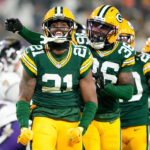
Green Bay Packers Cut Ties with Nate Hobbs After One Costly Season
In a move that underscores the brutal calculus of NFL roster management, the Green Bay Packers have released cornerback Nate Hobbs, just one season after signing him to a lucrative four-year, $48 million contract. The decision, confirmed on Wednesday, is a stark admission of a failed experiment and a significant financial misstep for General Manager Brian Gutekunst. By cutting Hobbs before a critical $6.25 million roster bonus was due, the Packers chose to swallow a massive dead money charge rather than commit more cash to a player who never found his footing in Green Bay. This release sends shockwaves through the organization and signals a decisive, if painful, pivot in the team’s defensive strategy.
A Square Peg in a Round Hole: The Failed Positional Experiment
The Packers’ vision for Nate Hobbs was clear from the moment they inked his deal last offseason. In Green Bay, he was not viewed as the slot specialist he had been for the Las Vegas Raiders, but as a potential solution on the boundary. This proved to be a catastrophic miscalculation. Hobbs, who thrived in the confined chaos of the slot, looked miscast and out of rhythm on the outside. His skill set—physicality in short areas and sure tackling—did not seamlessly translate to covering NFL wideouts in the vast expanse of the boundary.
Compounding the schematic issue was a season marred by inconsistency and injury. Hobbs appeared in just 11 games, starting only five, and was on the field for a mere 358 defensive snaps. When targeted, quarterbacks feasted. He allowed a passer rating of 111.1, recorded zero interceptions, and managed only two pass breakups. The player brought in to solidify a secondary instead became a liability, a glaring weak link in a unit that struggled for much of the 2024 season. The experiment was over almost before it began.
The Financial Fallout: A Post-June 1st Accounting Nightmare
While the on-field performance was poor, the off-field financial implications are staggering. Releasing Hobbs is not a simple case of wiping the slate clean; it’s an exercise in fiscal triage. By designating him a post-June 1st release, the Packers are opting for a longer, more complex salary cap penalty to gain immediate short-term relief.
- Immediate Hit: The Packers will carry Hobbs’ full $12.8 million salary cap charge until June 1st.
- Future Dead Money: After June 1st, the remaining $12 million from his original $16 million signing bonus accelerates. $4 million will apply to the 2026 cap, and a hefty $8 million will hit the 2027 cap.
- The Trigger: The urgency of this move was dictated by a $6.25 million roster bonus due on Friday. The Packers decided paying that bonus for a backup-level player was untenable.
This structure is a classic NFL maneuver: accept future pain to address a present problem. It creates “dead money” on the cap for years to come, a constant reminder of a deal gone wrong, but it frees up a roster spot and prevents further cash investment in a sinking asset.
The Roster Ripple Effect: Why Now?
Timing in the NFL is everything, and the Packers’ decision to cut Hobbs now was influenced by more than just his roster bonus. Two key developments made Hobbs expendable and gave Gutekunst the confidence to absorb the financial blow.
First, the emergence of 2024 second-round pick Javon Bullard at the slot corner position rendered Hobbs’ primary NFL skill redundant. Bullard’s improvement over his rookie season provided the Packers with a younger, cheaper, and more effective option in the slot, eliminating the fallback plan of moving Hobbs back to his natural position.
Second, Tuesday’s signing of veteran cornerback Benjamin St-Juste was the final piece of the puzzle. St-Juste, a bigger corner with extensive boundary experience in Washington, provides the specific depth the Packers lacked last season. He is a more natural schematic fit for the role they had hoped Hobbs would fill, making the expensive veteran an immediate luxury the team could no longer afford.
Gutekunst’s Gamble and the Path Forward
This move is a rare and public mea culpa from General Manager Brian Gutekunst. The Nate Hobbs contract will undoubtedly be a line item on his track record, a significant free-agent whiff in an otherwise strong tenure. It raises questions about the team’s evaluation process, specifically in projecting a player’s fit in a radically different role. The Packers bet $16 million in signing bonuses that they could redefine a player’s career; they lost that bet decisively.
Looking ahead, the Packers’ secondary now appears to be taking a clearer shape. Jaire Alexander and Eric Stokes are the presumed starters on the boundary, with St-Juste as key competition and depth. Bullard owns the slot. The message from the front office is clear: performance and fit trump past investment. The costly Hobbs chapter is closed, allowing the team to move forward with players they believe fit Defensive Coordinator Jeff Hafley’s system.
For Nate Hobbs, this is a chance to reset. At 28, he likely returns to the market seeking a team that values him for what he is: a proven, physical slot corner. A return to a system that maximizes his strengths could see him rebound quickly, while the Packers continue to pay for their miscalculation.
Conclusion: A Hard Lesson in Green Bay
The release of Nate Hobbs is a masterclass in the harsh realities of the NFL. It demonstrates that no contract is untouchable, no investment too large to walk away from if the fit is wrong. The Green Bay Packers prioritized roster construction and schematic integrity over pride and sunk cost, a difficult but necessary decision for a team with championship aspirations. While the financial repercussions will echo on their salary cap into 2027, the football decision is unequivocal. By cutting their losses now, the Packers have removed a square peg from a round hole, absorbed the financial shock, and cleared the deck for a defense built on clarity and cohesion. The lesson, though expensive, is one every NFL team learns eventually: it’s not just about acquiring talent, but about acquiring the *right* talent.
Source: Based on news from Yahoo Sports.