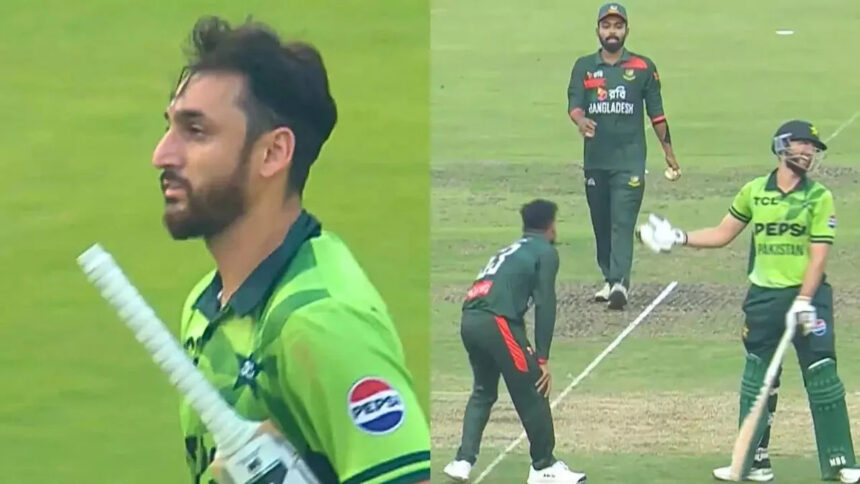
PAK vs BAN: Salman Ali Agha’s Reprimand Ignites Debate on Cricket’s ‘Spirit’ and Sharp Play
The timeless tension between the letter of the law and the spirit of the game erupted once again in Mirpur. During a tense second ODI between Pakistan and Bangladesh, a moment of sharp cricket and sharper frustration led to official disciplinary action, casting a spotlight on the fine lines that define modern professional sport. Pakistan’s Salman Ali Agha, after a brilliant 64, found himself at the center of a storm involving a controversial run-out, a pair of tossed gloves, and a subsequent reprimand that has fans and pundits debating fiercely.
The Incident: A Moment of Instinct and Controversy
The match was in a critical phase. Pakistan, batting first, was building a platform with Salman Ali Agha and Mohammad Rizwan at the crease. In the 39th over, bowled by Bangladesh captain Mehidy Hasan Miraz, Rizwan pushed a ball back towards the bowler. The sequence that followed was a blur of instinct:
- Miraz stopped the ball with his boot as Agha stood casually outside his crease.
- Seeing the ball slow near him, Agha bent, seemingly to pick it up and hand it back to the bowler—a common, courteous practice.
- In a flash, Mehidy Hasan Miraz reacted faster, snatched the ball, and with an underarm flick, shattered the stumps with Agha well short.
The appeal was immediate. On-field umpire Tanvir Ahmed referred the decision, and third umpire Kumar Dharmasena confirmed the dismissal, ruling the ball was never dead. Agha’s disbelief turned to visible anger. Walking off, he engaged in a verbal exchange with Litton Das and, most damningly, tossed his gloves in clear frustration. This act, captured for millions, triggered the formal disciplinary process.
The Fallout: A Reprimand and a Philosophical Divide
Match referee Neeyamur Rashid was left to adjudicate the aftermath. While the chat with Litton Das was deemed not punishable, the equipment abuse was. Agha was charged under Article 2.2 of the ICC Code of Conduct for “abusing cricket equipment on the ground.”
“He has no previous history of such behaviour. We have to maintain neutrality when we judge. Consequently, we have issued a reprimand and a demerit point,” Rashid told *The Daily Star*, emphasizing consultation with the ICC. The Level 1 breach carries a minimal penalty but a significant symbolic weight.
This decision sits at the heart of a classic cricket debate. Was Miraz’s act within the rules but against the spirit of cricket? Or was it simply brilliant, alert captaincy? Conversely, was Agha’s frustration, after believing he was acting in good faith, a understandable human reaction or an unacceptable show of dissent?
Expert analysis often splits here. Purists argue that Agha’s intent to return the ball should have been recognized with a warning, not a dismissal. Modernists counter that at the professional level, a batter’s fundamental job is to stay within their crease until the ball is dead, and Mehidy Hasan Miraz exploited a lapse in concentration with perfectly legal sharpness. The third umpire Kumar Dharmasena had only one question to answer: was the ball live? The answer was yes.
Broader Implications: The Evolving Ethos of Professional Cricket
This incident is not isolated. It follows a lineage of similar dismissals—from the infamous Mankading debates to batters being run out at the non-striker’s end. Each event forces a re-examination of cricket’s unwritten codes.
- The Professional Win-at-All-Costs Ethos: In today’s high-stakes environment, where margins are thin, players are coached to exploit every millimeter of advantage. Miraz’s action was the epitome of this.
- The Spectator and “Fair Play” Expectation: Fans often hold romanticized views of sportsmanship. Agha’s reaction resonated with those who felt the dismissal was “cheap,” even if legal.
- The ICC’s Tightrope Walk: The governing body, through referees like Neeyamur Rashid, must coldly enforce the codified laws to ensure consistency, even when emotions run high. The demerit point system is designed for exactly this: to curb visible dissent without overly punishing first-time offenders.
Agha’s mistake was two-fold: first, a lack of situational awareness; second, allowing his frustration to manifest visibly. In the age of omnipresent cameras, such reactions are guaranteed to become a narrative.
Looking Ahead: Predictions for the Decider and Beyond
Pakistan ultimately won the match comfortably, setting up a tantalizing series decider. The fallout from this incident will subtly influence the final ODI.
For Pakistan and Salman Ali Agha: The reprimand serves as a fiery lesson. Expect Agha to channel his frustration into his performance, potentially making a decisive contribution. The Pakistani camp will be more vigilant about crease discipline, turning a moment of controversy into a tactical focus. Team morale could be galvanized, using the incident as a unifying “us against the world” motivator.
For Bangladesh and Mehidy Hasan Miraz: The captain has stamped his assertive, clever leadership on the series. His team will be energized by his proactive captaincy. However, they must also be prepared for a charged atmosphere and possible heightened tensions on the field. Their challenge will be to maintain their sharp focus without crossing into provocation.
For the Series Decider: Expect a fiercely contested, emotionally charged match. The Sher-e-Bangla National Cricket Stadium will be electric. The “spirit of cricket” debate will linger, but once the first ball is bowled, professional instincts will take over. The team that better manages the emotional hangover from this incident will likely lift the trophy.
Conclusion: A Modern Cricket Parable
The Salman Ali Agha reprimand is more than a minor disciplinary note. It is a modern cricket parable. It underscores the irreversible shift from gentlemanly amateurism to cutthroat professionalism. While the laws of the game provide a clear framework, the spirit of cricket remains a fluid, debated concept, often defined by which side of the incident one supports.
Mehidy Hasan Miraz played within the rules to gain an edge. Salman Ali Agha’s emotional response, while penalized, was a raw testament to the passion and high stakes involved. Match referee Neeyamur Rashid’s neutral, by-the-book ruling was the necessary administrative response to maintain order. In the end, this single moment in Mirpur provided a perfect, messy snapshot of contemporary cricket: brilliantly competitive, emotionally charged, and forever wrestling with its own soul. The decider promises not just a series victory, but the next chapter in this ongoing conversation.
Source: Based on news from Yahoo Sports.