The Day Harry Brook Announced Himself as England’s New Leader
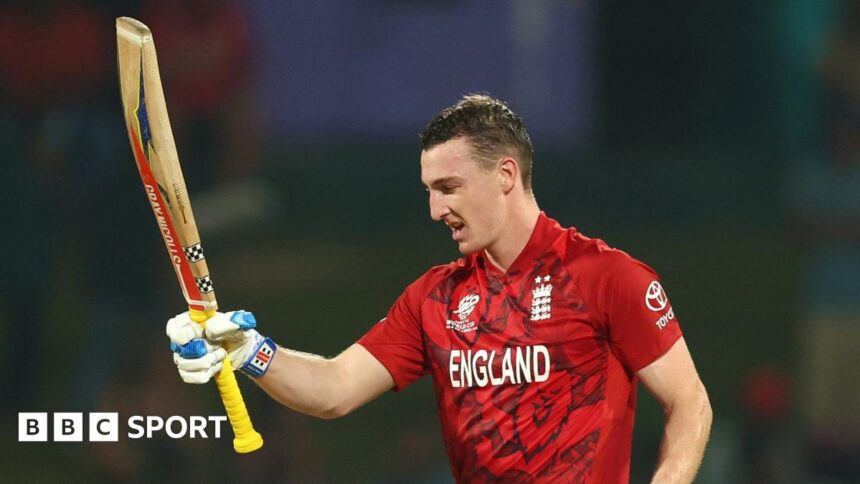
The roar that greeted the shot was one of pure catharsis. A blistering straight drive, a sprinted single, and a raised bat to a rapturous crowd. On a frenetic night, Harry Brook had just carved his name into the record books with his first T20 international century, a blistering 50-ball statement that transcended mere statistics. It was an innings of breathtaking audacity and chilling composure. But to view it solely as a personal milestone is to miss the profound narrative at its core. This was the day Harry Brook, the prodigiously talented batter, showed the cricketing world he possesses the intangible qualities of an England leader.
The Unlikely Forge of Leadership
Leadership in English cricket has never been a one-size-fits-all proposition. It is a mantle worn in strikingly different ways. Michael Vaughan was the charismatic man-manager, orchestrating the 2005 Ashes triumph with swagger. Sir Andrew Strauss was the meticulous strategist, architecting the path to world number one with a clipboard and a calm mind. We have seen the granite-like determination of Sir Alastair Cook, grinding opposition into the dust through sheer will, and the inspirational force of nature that is Ben Stokes, who leads from the visceral heart of the contest. Heather Knight has consistently embodied resilient, tactical acumen under pressure.
Harry Brook’s leadership credentials are not etched in team talks or field placements—not yet. They are forged in the heat of the battle itself, in the manner of his run-making. His century was not a composed, anchoring knock; it was a violent, elegant takeover. With England potentially wobbling, Brook’s response was not to consolidate, but to attack with a ferocity that reshaped the game’s entire momentum. This is a new breed of leadership: leadership by example in the age of aggression.
Deconstructing a Century of Authority
Brook’s innings was a masterclass in modern power-hitting, but its true worth lay in its context and execution. Let’s break down why this knock felt like a leader’s innings:
- Situational Awareness: He arrived not in a placid powerplay, but when the innings needed acceleration and direction. He read the match situation perfectly.
- Emotional Control: Despite the surrounding frenzy, Brook’s demeanor was ice-cool. There was no wild celebration until the hundred was reached; just a focused, almost surgical dismantling of the bowling.
- Tactical Ruthlessness: He identified weaknesses instantly and exploited them mercilessly, shifting gears seamlessly to keep the scoreboard at a dizzying rate.
- Clarity of Mind: In the T20 chaos, Brook’s thought process appeared strikingly simple: see ball, hit ball, with devastating precision and a complete lack of fear.
This was not a young player playing a cameo; this was a primary architect constructing an innings with the authority of a veteran. He didn’t just score runs; he dictated terms. He imposed his will on the bowlers, a trait seen in all great players who assume leadership through performance.
Beyond the Boundary: The Makings of a Future Captain
While the innings itself was a loud statement, Brook’s broader profile suggests the potential for a more formal leadership role in the future. Consider the evidence:
Cricket Intelligence: Those who have played with him speak of a sharp cricket brain, an innate understanding of formats and conditions. This strategic understanding is a crucial foundation.
Respect of Peers: In a dressing room filled with global superstars, Brook has earned respect not through seniority, but through the universal currency of performance. His game does the talking.
Proven Temperament: From succeeding in the Pakistani PSL pressure-cooker to delivering in an Ashes series, Brook seeks out and thrives under pressure—the non-negotiable for any captain.
He represents the fearless, data-driven, aggressive philosophy that defines England’s white-ball revolution. Who better to eventually steward that legacy than one of its most devastating products?
The Road Ahead: From Heir Apparent to Inevitable
The prediction is not that Brook will be handed the captaincy tomorrow. With Stokes, Jos Buttler, and Knight in place, the immediate structures are strong. The prediction is that his trajectory is now unmistakably pointing towards a leadership destiny.
In the next 2-3 years, we can expect to see:
- Increased Vice-Captaincy Roles: Tours or series where senior players are rested will offer the perfect opportunity to embed Brook into leadership discussions.
- Franchise Leadership Experience: It is almost certain he will be offered captaincy roles in major T20 leagues worldwide, honing his tactical and man-management skills.
- The “Go-To” Crisis Man: In tough situations across all formats, Brook will become the player team-mates look to, the one expected to produce the defining performance—a de facto leadership role.
The ultimate test may come in the Test arena. As the post-Stokes, post-James Anderson era dawns, England will need a figurehead who embodies the present and future. A batter of Brook’s calibre, with his growing aura, becomes a compelling candidate.
Conclusion: A Leader Forged in the Fire of Attack
Harry Brook’s century will be remembered for its breathtaking strokeplay and record-breaking pace. But history may well look back on it as the opening chapter of a leadership story. He represents a new paradigm: the leader as aggressor, the captain as the most potent weapon. He leads not with words from the front, but with actions from the crease that galvanize his team and demoralize the opposition.
On that day, with every clean strike into the stands, Brook did more than accumulate runs. He shouldered the burden of expectation, he steered the ship through turbulent waters with an iron will, and he showcased the temperament of a champion. The great leaders of English cricket—Vaughan, Strauss, Cook, Knight, Stokes—all had a moment where their destiny seemed to click into focus. For Harry Brook, that moment was a fifty-ball century. It was the day the prodigy showed he has the heart of a leader.
Source: Based on news from BBC Sport.