Patriots’ Robert Kraft Misses Out on Pro Football Hall of Fame: A Stunning Canton Snub for Dynasty’s Architect
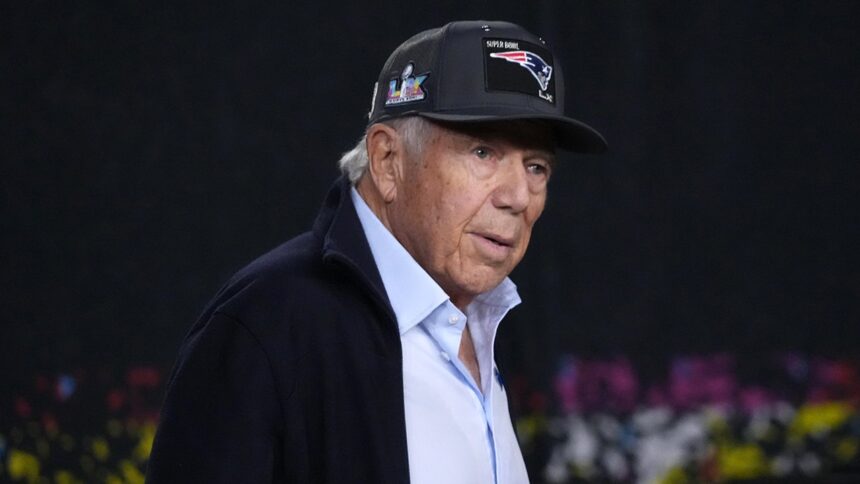
The road to Canton, Ohio, just took a surprising and contentious detour around two of the most consequential figures in NFL history. In a decision that has sent shockwaves through the football world, New England Patriots owner Robert Kraft and former head coach Bill Belichick were reportedly left out of the Pro Football Hall of Fame’s class of 2026, according to multiple reports on Tuesday. The snub, emanating from the Hall’s Seniors Committee, represents a staggering initial verdict on the architects of the league’s modern dynasty, forcing a complex debate about legacy, timing, and the very criteria for enshrinement.
The Committee’s Impossible Choice: A Stacked Category Leaves Titans Waiting
The mechanics of the reported decision reveal just how difficult the selection process can be. Kraft and Belichick were part of a deeply stacked Seniors Committee category that also included legendary Cincinnati Bengals quarterback Ken Anderson, San Francisco 49ers offensive weapon Roger Craig, and Pittsburgh Steelers defensive end L.C. Greenwood. Hall of Fame selectors were tasked with choosing only three of the five. The reported outcome suggests that the collective resumes of Anderson, Craig, and Greenwood—players whose candidacies have been debated for decades—were prioritized over the Patriots’ pair this cycle.
This creates an unprecedented scenario. While Belichick’s coaching candidacy was considered a foregone conclusion upon his retirement, and Kraft’s transformative ownership seemed destined for a gold jacket, they now find themselves in a holding pattern. The decision underscores the Hall of Fame’s logjam of qualified candidates, especially in the Seniors pool, where deserving players from earlier eras often wait years, if not lifetimes, for recognition. The inclusion of Kraft and Belichick in this particular group forced a direct comparison between different forms of football greatness: individual on-field excellence versus organizational building and sustained team success.
A Dynasty Denied? Weighing the Kraft and Belichick Legacy
To comprehend the magnitude of this snub, one must revisit the scale of their achievement. Before Robert Kraft purchased the team in 1994, the Patriots were a perennial also-ran with one Super Bowl appearance and a crumbling stadium. His stewardship transformed the franchise into a global sports brand and a model of stability. The on-field results, achieved in partnership with Belichick and quarterback Tom Brady, are the stuff of legend:
- Six Super Bowl Championships (XXXVI, XXXVIII, XXXIX, XLIX, LI, LIII)
- Nine AFC Championships
- 17 consecutive seasons with 10+ wins (2003-2019)
- A complete revitalization of the NFL’s economic and competitive landscape
Former San Francisco 49ers tight end and Super Bowl champion Brent Jones, speaking on the broader context of Belichick’s omission, captured the sentiment of many. “It’s hard to fathom,” Jones stated. “You’re talking about the greatest coach in the history of the sport. The wins, the championships, the defensive genius—it defines a generation. But the Hall process has its own rhythm, and sometimes, even the most obvious names have to wait.”
That waiting period now applies to Kraft, whose impact extends far beyond trophies. He was instrumental in the 2011 NFL lockout resolution, a driving force behind international games, and a key figure in league media negotiations. His candidacy is built on the owner’s contribution to the entire league, a category that has seen figures like Lamar Hunt and Dan Rooney rightly enshrined.
Analysis: Why the Delay, and What Does It Mean?
Several factors likely contributed to this unexpected outcome. First, the Seniors Committee often operates with a mandate to address historical oversights. Ken Anderson’ advanced statistical profile has been a cause célèbre for analysts, Roger Craig revolutionized the running back position, and L.C. Greenwood is the last member of the Steelers’ “Steel Curtain” front four not in Canton. There is a palpable urgency to honor these players while their peers and families can witness it.
Second, the sheer recency of Belichick’s coaching tenure and Kraft’s active ownership may have played an unspoken role. The Hall’s selection committees sometimes allow for a brief “cooling-off” period, especially for figures whose final seasons were not storybook endings. Belichick’s departure from New England and Kraft’s ongoing, hands-on role with the team keep them firmly in the daily NFL narrative, unlike the retired players from the 70s and 80s.
Finally, the unique, intertwined nature of the Patriots’ success presents a philosophical challenge. Do you enshrine the pieces simultaneously, or stagger them to highlight individual merit? With Tom Brady eligible for the 2028 class, some selectors may believe in a sequenced approach, creating separate “Patriots Nights” in Canton. However, this strategy risks undervaluing the synergistic partnership that made the dynasty possible.
Predictions and Path Forward for Patriots’ Architects
While Tuesday’s news is a setback, it is almost certainly a postponement, not a permanent denial. The pathway to Canton remains clear for both men.
For Bill Belichick: His enshrinement is a matter of “when,” not “if.” As a coach candidate, he will be eligible through the regular selection process. Given his record 302 regular-season wins (including playoffs) and six Super Bowl rings as a head coach, it is virtually inconceivable that he will be passed over when he becomes a first-ballot nominee in the coming years. This Seniors Committee route was merely one potential avenue.
For Robert Kraft: His path is through the Contributor Committee, which evaluates owners, executives, and league pioneers. The reported snub here will only amplify the scrutiny on his candidacy next cycle. The arguments for his impact—saving football in New England, fostering unprecedented parity, and building a championship culture—are overwhelming. The delay may even galvanize support, framing his eventual election as a correction of an oversight.
The most likely scenario is a staggered enshrinement: Belichick entering as soon as he is eligible via the coach/contributor category, followed by Kraft in a subsequent year, and ultimately Brady, creating a multi-year celebration of the Patriots’ era. This approach, while perhaps unsatisfying to fans who wish to see them together, would allow each man to receive his full due under the spotlight.
Conclusion: A Temporary Setback on the Inevitable Road to Canton
The reported exclusion of Robert Kraft and Bill Belichick from the Pro Football Hall of Fame’s class of 2026 is a stunning headline, but history suggests it is a temporary one. It speaks more to the agonizing choices forced by a crowded field of legends and the Hall’s duty to address historical debts than to any deficit in the Patriots’ duo’s resumes. Their legacies are immutable: they constructed, sustained, and defined a two-decade dynasty that changed the NFL forever.
Canton’s doors are not closed to them; the queue has simply grown longer. The wait will spark debate, fuel controversy, and perhaps even refine the appreciation for what they accomplished. When the call finally comes—as it inevitably will—the enshrinement of Kraft and Belichick will not just be about celebrating individual greatness, but about cementing the story of the most successful partnership the modern NFL has ever seen. For now, the architects of a football empire must wait, their gold jackets momentarily delayed, but their places in history forever secure.
Source: Based on news from Fox Sports.