Performance or Result? The Defining Dilemma for Wales Ahead of Italian Job
The final whistle in Cardiff this Saturday will signal more than just the end of a Six Nations campaign for Wales. It will punctuate a tournament of painful lessons, fleeting promise, and a solitary, nail-biting victory. As Italy arrive at the Principality Stadium, the question hanging in the Welsh air is not merely about the outcome, but the very currency of success itself. In a fixture where history screams a Welsh win, the present whispers a more complex narrative. For a nation in the throes of a generational rebuild, what holds greater value: the performance or the result?
A Historical Gavel vs. A Modern Reality Check
The weight of history bears down heavily on this fixture. The statistics are a stark, one-sided ledger: Wales have dominated this rivalry, winning 28 of the 34 past meetings, with Italy claiming just five victories and a single draw. For decades, this was the fixture that guaranteed respite, a five-point banker to steady the ship. That assumption has been eroded. Italy’s resurgence under Gonzalo Quesada, marked by a historic victory in Rome against Scotland and a thunderous performance against France, has shattered the old order. The gavel of history now feels like a relic.
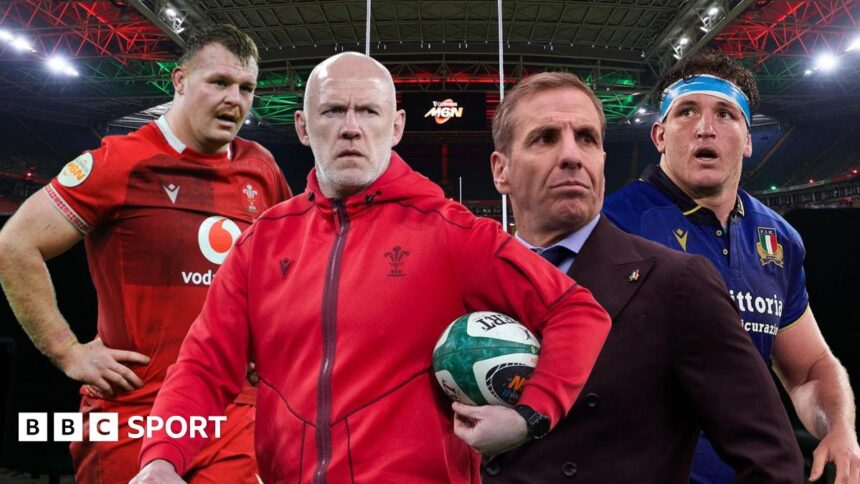
This shift frames the entire dilemma. Italy’s coach, Quesada, cut through any philosophical debate with a blunt assessment: Wales “must win”. For the Azzurri, chasing a first-ever top-half Six Nations finish, the result is an unambiguous, season-defining target. Their ambition is clear, quantifiable, and rooted in the present table. For Wales, mired at the bottom with only a draw against the also-winless side above them, the calculus is less straightforward.
The Dissonant Chorus: Coaches, Captain, and the Young Lock
When the question of performance versus result was put directly to the Welsh camp, the answers revealed a fascinating, and perhaps telling, dissonance.
- Steve Tandy (Defence Coach) and Captain Dewi Lake aligned firmly on the side of process. Their focus was on the performance—executing the game plan, improving discipline, and building the “foundations” for the future. This is the language of long-term projects, of accepting short-term pain for long-term gain. It’s a rational stance for a team blooding new caps and searching for an identity.
- Then came the voice of lock Dafydd Jenkins, the young leader deposed as captain mid-tournament. When asked what mattered more at international level, his answer was unequivocal: “winning”. This is the athlete’s raw, uncompromising truth. The scoreboard is the ultimate measure, the habit of victory a non-negotiable muscle memory. Jenkins’s stance cuts through the coaching rhetoric to the core competitive instinct.
This isn’t a conflict, but a spectrum of priority. The coaching staff are architects, looking at the blueprint. The players, especially those like Jenkins who have tasted victory at club level, are the builders who need to see the walls go up. The fans are the prospective homeowners, desperate for a habitable structure, tired of waiting for the plumbing to be perfected.
Why “Performance” Isn’t Just a Cop-Out
To dismiss the focus on performance as an excuse for potential failure is to misunderstand Wales’s current predicament. This season has exposed critical, result-costing flaws:
- Discipline: A torrent of penalties and yellow cards that have repeatedly derailed momentum.
- Game Management: Inability to close out matches from winning positions, as seen against Scotland and England.
- Set-Piece Inconsistency: A line-out that has faltered at crucial moments.
A “good performance,” therefore, is not merely about flashy attacks. It is a specific, measurable checklist: sub-10 penalties, 90%+ line-out retention, and clinical red-zone execution. If Wales deliver a performance that ticks these boxes, the result will almost certainly follow. In this context, focusing on performance is focusing on the direct causes of their results. It is a pragmatic, not a philosophical, choice.
The Unspoken Truth: The Result is the Performance’s Report Card
Ultimately, in the brutal economy of Test rugby, the result is the final, unarguable grade. A sparkling performance that ends in a narrow, heroic defeat—a theme this Championship—would be celebrated for its spirit but would still leave Wales with the Wooden Spoon. The tangible consequence of finishing last, regardless of promise shown, is a heavy psychological and reputational burden for a proud rugby nation.
For the fans, patience is wearing thin. They can appreciate development, but they crave validation. A loss to Italy, even in a “performance-rich” game, would represent a tangible step backward, undermining the very progress the coaches preach. It would confirm a worrying descent in the Northern Hemisphere hierarchy. The result, in this specific fixture, carries a symbolic weight that transcends the tournament points. It is about preserving a psychological edge and halting a dangerous narrative of decline.
Verdict and Prediction: A Synthesis Under Pressure
So, what do Wales want? They want, and desperately need, a synthesis. They require a performance of controlled aggression, tactical clarity, and hardened discipline that manifests as a clear, undeniable victory. The result cannot be divorced from the performance; it must be its direct product.
My prediction is that this understanding will fuel Wales on Saturday. The historical data, the fear of the Wooden Spoon, and the players’ innate desire to win—as voiced by Jenkins—will coalesce. Expect a tense, fraught affair, but one where Wales’s set-piece finds a rhythm and their breakdown discipline improves just enough. Wales will scrape a victory, but it will be a result built on a performance that addresses their key flaws, not one that papers over them. It will be a win of necessity, not of flair, securing fifth place and providing the fragile platform this new team so desperately requires. The performance will grant hope; the result will grant relief. In Cardiff this weekend, both are non-negotiable.
Source: Based on news from BBC Sport.