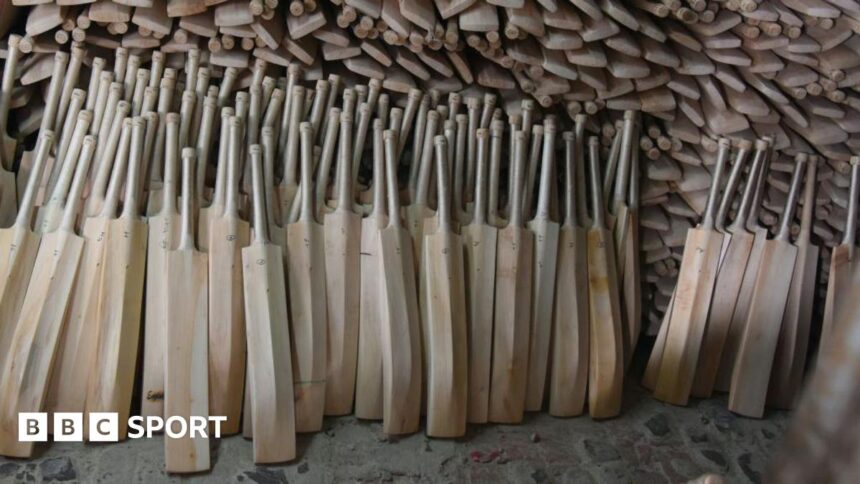
MCC Rewrites the Rulebook: The Laminated Bat Revolution Comes to Recreational Cricket
For generations, the soul of a cricket bat has been a single, whispering piece of English willow. The sound of leather on that unique wood is the game’s signature soundtrack. But now, in a move that balances tradition with stark economic reality, the game’s guardian is changing its tune. The Marylebone Cricket Club (MCC) has announced a historic amendment to the Laws of Cricket, set to take effect in October 2026, that will permit laminated bats—previously outlawed for adult play—in all levels of recreational cricket. This isn’t a tweak; it’s a fundamental shift designed to keep the game affordable and accessible for the millions who play it globally.
The Root of the Change: A Willow Crisis and Soaring Costs
The driving force behind this landmark decision is as practical as a forward defensive. The price of premium English willow has been climbing at an alarming rate, pushed by a perfect storm of factors: climate change affecting growth, increased demand from a globalizing sport, and the simple economics of a finite resource. For the weekend warrior, the club stalwart, or the aspiring junior, the cost of a quality bat has become a significant barrier to entry.
The MCC’s Law 5.8, which defines the categories of legal bats, has been rewritten to formally introduce Type D bats into open-age recreational cricket. Previously confined to junior formats, these laminated bats are constructed from up to three pieces of wood bonded together. This construction method allows batmakers to use smaller sections of willow that would otherwise be waste, dramatically improving efficiency and reducing cost. The MCC has been clear: this is a direct, proactive intervention to slow the rising costs of bats and safeguard the game’s grassroots.
- Key Driver: Skyrocketing price of traditional English willow.
- Law Amended: Law 5.8 – ‘Categories of bat’.
- New Allowance: Type D (laminated) bats permitted in all recreational cricket from 1 October 2026.
- Primary Goal: Improve affordability and accessibility for amateur players worldwide.
Tradition vs. Innovation: What Does a Laminated Bat Mean for the Game?
Purists may hear “laminated” and envision a composite, alien object. The reality is more nuanced. These Type D bats are still entirely wooden—no carbon fibre or metal here—just intelligently assembled using advanced adhesives. The craftsmanship shifts from sourcing a single perfect cleft to engineering a high-performance blade from multiple pieces. This offers several potential benefits beyond cost.
From a performance perspective, laminates can offer greater consistency in ping and durability. By selecting and orienting wood pieces, manufacturers can potentially create a more balanced profile with a larger sweet spot. However, the MCC and batmakers will be keen to ensure these bats do not upset the traditional balance between bat and ball. The regulations strictly control dimensions and material, so we are not looking at a power surge akin to the introduction of aluminum in baseball. The change is about making the game affordable, not tilting its competitive balance.
The psychological hurdle may be the biggest. Will club cricketers embrace a “patchwork” bat? The history of sports equipment is a history of such adaptations. Tennis moved from wood to graphite, hockey sticks from wood to composite. The sound and feel may differ subtly, but when the alternative is pricing out a generation of players, adaptation becomes the truer form of preserving the game’s spirit.
The Wider Impact: From Factory to Front Foot
The ripple effects of this law change will be felt across the cricket ecosystem. For bat manufacturers, especially smaller artisans, this opens new avenues for innovation and product lines. It could revitalize a segment of the industry struggling with raw material scarcity. Sustainability is another under-discussed benefit; utilizing more of the willow tree reduces waste and improves the environmental footprint of bat production.
At the club level, the impact will be measured in pounds and participation. Affordable bats for amateur players mean more youngsters can be equipped properly, more adults can replace worn-out gear without hesitation, and cricket can remain a viable option in diverse socioeconomic communities. This is particularly crucial in emerging cricket nations where equipment cost is a monumental hurdle. The MCC’s global perspective is evident here—this is a change for the world’s cricketers, not just those in traditional heartlands.
It’s critical to note what this change does *not* affect: professional cricket. The Laws for First-Class and international cricket remain unchanged, preserving the sanctity of the traditional, single-cleft bat at the sport’s pinnacle. The boundary between professional and recreational equipment is now more clearly defined than ever.
The Future of the Willow: Predictions for a New Era
Looking ahead to 2026 and beyond, this amendment is likely just the beginning of a new chapter in bat technology. We can predict several developments:
- Rapid Technological Advancement: Batmakers will race to perfect laminated construction, leading to high-performance, budget-friendly bats that could rival traditional ones in feel.
- A Two-Tier Market: A clear market split will emerge: premium, single-cleft “pro-style” bats for purists and professionals, and high-tech, affordable laminates for the masses.
- Potential for Material Science: While currently restricted to wood, the success of laminates may eventually lead to conversations about other sustainable, wood-like materials in recreational play.
- Grassroots Resurgence: The ultimate goal—a measurable increase in participation as financial barriers to entry are lowered.
The MCC, often perceived as a bastion of conservatism, has shown pragmatic leadership. They have identified an existential threat to the game’s grassroots—cost—and have adapted the hallowed Laws to address it directly. This is not abandoning tradition; it is protecting the ecosystem that feeds that tradition.
Conclusion: A Necessary Evolution for the Love of the Game
The crack of willow on leather will endure. But from October 2026, that crack may sometimes emanate from a bat built from three pieces of wood instead of one. The MCC’s decision to legalize laminated bats is a profound acknowledgment that for cricket to thrive, its tools must be within reach of all who wish to play. It is a decision that prioritizes people over dogma, accessibility over archaic specification. By safeguarding the affordable bat, the MCC is ultimately safeguarding the club cricketer, the street game, and the future stars who first learn to swing in a backyard. In changing the Laws to protect the spirit of the game, they have proven that sometimes, the most traditional move of all is to adapt.
Source: Based on news from BBC Sport.