The Footballing Picasso: Remembering John Robertson, the Unassuming Genius of Nottingham Forest
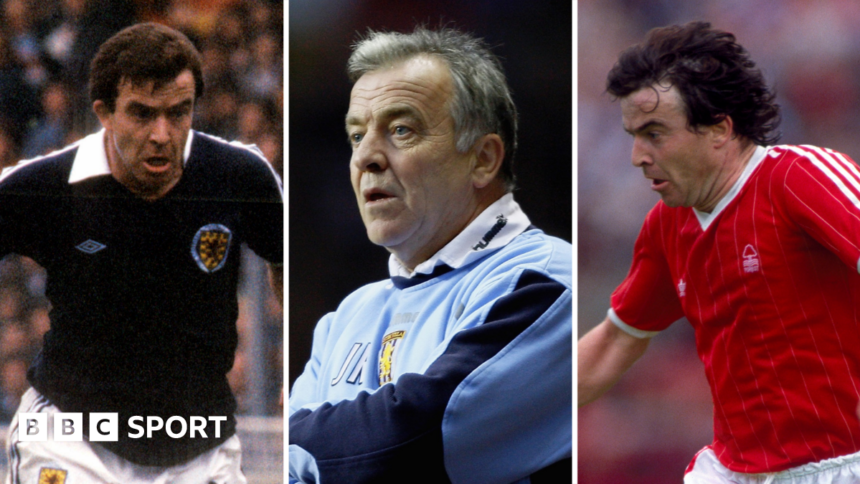
The world of football has lost one of its most understated artists. John Robertson, the winger whose wand of a left foot painted masterpieces for club and country, has died at the age of 72. To a generation, he was the quiet, stocky figure on the flank for Brian Clough’s legendary Nottingham Forest, a player whose unassuming demeanor belied a breathtaking, match-winning talent. It was Clough himself, never one for understatement, who bestowed upon Robertson the ultimate creative compliment, calling him “the Picasso of our game.” In an era of flamboyant stars, Robertson’s genius was in its elegant simplicity: a drop of the shoulder, a feint, and the unerring delivery of a cross or shot that would decide the biggest games in world football.
The Unlikely Architect of European Glory
John Robertson’s legacy is forever etched into the most improbable chapter of English football history. When Brian Clough took Nottingham Forest from the old Second Division to the summit of Europe, Robertson was his most vital on-field lieutenant. He was not a flying winger in the traditional sense, but a playmaker stationed wide, dictating tempo with his intelligence and lethal left foot. His contribution to Forest’s back-to-back European Cup triumphs was decisive and defining.
In the 1979 European Cup final against Malmo, it was Robertson’s moment of magic that created immortality. In a tight, tense match, he received the ball on the left, looked up, and with unerring precision, floated a perfect cross onto the head of Trevor Francis, who nodded in the only goal. A year later, in the 1980 final against Hamburg, Forest sought to retain their crown. Once more, with the game in the balance, the ball found its way to Robertson. Cutting inside from the left, he unleashed a low, driven shot that skidded past the German keeper. It was the only goal of the game. Robertson had not just assisted a winner; he had scored one. He was the constant, the creative heartbeat in a team that conquered Europe.
- 1979 European Cup Final: Provided the iconic assist for Trevor Francis’s winning goal.
- 1980 European Cup Final: Scored the match-winning goal to retain the trophy.
- Defining Skill: Renowned for his immaculate crossing, set-piece delivery, and composure in big moments.
A Scottish Hero and a Prolific Partnership
While his club achievements are the stuff of folklore, Robertson also carved out a significant international career with Scotland. Earning 28 caps, he saved some of his most cherished strikes for the dark blue jersey. In 1981, he scored the only goal in a famous 1-0 victory over England at Wembley, a moment that cemented his hero status north of the border. He also represented Scotland at the 1982 World Cup finals in Spain, scoring in a 5-2 victory over New Zealand. His club partnership with Martin O’Neill, first on the pitch at Forest and later in the dugout, was another hallmark of his career. Their understanding was intuitive, a bond that would later translate into a highly successful managerial collaboration.
Robertson’s club journey also included a successful spell at Aston Villa, where he added a First Division title and a European Super Cup to his medal collection, proving his class was no fluke within the Clough ecosystem. He later returned to Forest before concluding his playing career with Derby County, demonstrating his enduring quality and football intelligence.
The Quiet Lieutenant: From Picasso to Trusted Assistant
Robertson’s football brain and calm temperament made his transition into coaching a natural progression. He reunited with his old Forest teammate Martin O’Neill, becoming his trusted assistant manager for over a decade. Together, they formed a formidable duo, achieving remarkable success at every stop. Their journey took them from Wycombe Wanderers to Norwich City, and then to the pinnacle of their partnership at Leicester City, where they won two League Cups and established the Foxes as a top-flight force. The success continued at Celtic, where they broke the dominance of Rangers, winning multiple trophies and thrilling fans with a run to the 2003 UEFA Cup Final. They later worked together at Aston Villa, guiding the club to League Cup finals and consistent top-six finishes.
This phase of Robertson’s career revealed a different kind of artistry. If his playing days were about individual brushstrokes of genius, his coaching was about helping O’Neill compose the entire picture. He was the steadying influence, the tactically astute confidant, and a brilliant bridge between the manager and the dressing room. His success in this role underscored the deep understanding of the game that had always underpinned his playing style.
Legacy and the Modern Game’s Lost Art
John Robertson’s passing prompts a reflection on a specific, perhaps fading, type of footballer. In today’s game, dominated by athleticism, pressing systems, and inverted wingers, the classic, touchline-hugging provider like Robertson is a rarer breed. His game was built on vision, technical precision, and lethal final-ball delivery rather than explosive pace. He was proof that football intelligence and unerring quality could overcome any physical preconception.
Looking forward, Robertson’s legacy offers a timeless lesson for developing players. In an age obsessed with metrics and physical output, his career screams the enduring value of pure skill, decision-making in the final third, and the courage to take responsibility when it matters most. The “Picasso” moniker was not about flamboyance, but about creativity, economy of movement, and the ability to produce a masterpiece with a single, perfect stroke.
The modern equivalents are perhaps players like Kevin De Bruyne—architects who dictate games with their passing range and vision from wide areas. Robertson’s story suggests that while the game evolves, the fundamental appreciation for a player who can unlock a defense with a moment of sublime quality will never go out of style. Coaches would do well to remember that amidst the high-intensity training, there must always be room to nurture the player with the golden left foot.
Conclusion: An Enduring Masterpiece
John Robertson was a contradiction: an unassuming legend, a quiet man who thrived in the loudest moments, a player whose physical profile defied his monumental impact. For Nottingham Forest, he is immortal—the man whose left foot delivered the club to the very peak of world football and kept them there. For Scotland, he was a Wembley hero. For the football purist, he was Clough’s Picasso, an artist in a muddy shirt whose canvas was the left wing and whose brush was that magical left foot.
His legacy lives on in the history books, in the memories of those who saw him play, and in the continued success of the managers and players he influenced. In a sport that often shouts, John Robertson’s genius was a whisper—a deft touch, a looked-up cross, a driven finish. And as with all great art, its power and beauty only grow with time. He was, and will forever remain, a true master of the game.
Source: Based on news from BBC Sport.