Reece Prescod Draws a Line in the Sand: Technique Over Testosterone for Enhanced Games
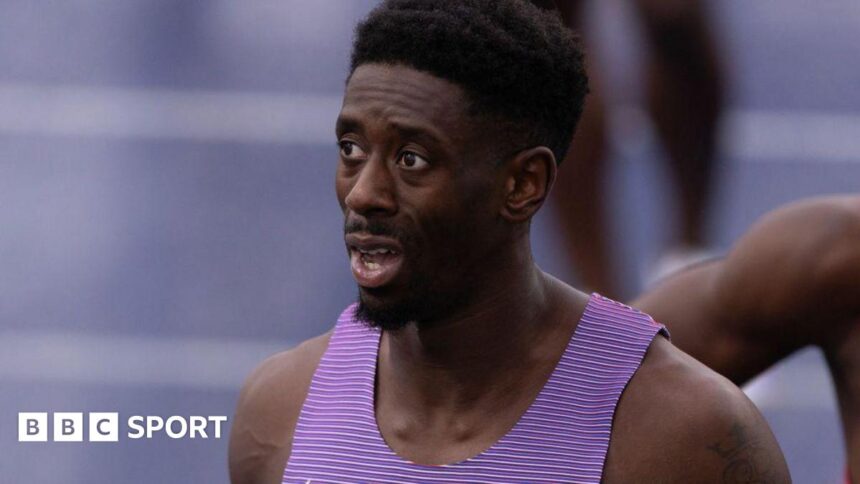
The world of elite athletics is bracing for a seismic shift with the impending arrival of the Enhanced Games, a competition that explicitly allows performance-enhancing drugs under medical supervision. In the eye of this gathering storm stands Reece Prescod, the retired British sprint star with a blistering 9.93-second personal best. His decision to compete has raised eyebrows, but his recent declaration is what truly reverberates: he is putting preparation and technique ahead of pharmaceuticals, emphatically stating he is “not taking drugs.” In a movement built on chemical enhancement, Prescod is betting on the purity of his craft, setting up a fascinating philosophical and physical clash on the Las Vegas strip.
The Enhanced Games: A Radical Reimagining or a Dangerous Precedent?
Scheduled for May in Las Vegas, the Enhanced Games positions itself as a disruptive, athlete-centric alternative to what it deems the “hypocrisy” of traditional sports governance. Its core tenet is radical transparency: substances banned by the World Anti-Doping Agency (WADA) are permitted, provided they are administered under medical oversight. Proponents argue it creates a level playing field of “open enhancement,” prioritizes athlete autonomy, and pushes the boundaries of human performance in a controlled setting.
Critics, however, view it as a perilous spectacle that glorifies doping, undermines decades of anti-doping efforts, and poses significant health risks. The event forces uncomfortable questions about the future of sport, the nature of fairness, and the very definition of an athlete’s achievement. Into this ideological minefield steps Reece Prescod, not as a poster boy for chemical enhancement, but as a potential paradox.
Prescod’s Pledge: A Sprinter’s Faith in Foundational Craft
At 29, Prescod is no stranger to the pinnacle of clean sport. A former European silver medalist and the fourth-fastest British man in history, his retirement in 2023 was attributed to a loss of passion for the conventional circuit. His signing for the Enhanced Games was seen by many as an endorsement of its philosophy. Yet, in an interview with BBC Radio 4’s World at One, he drew a stark personal boundary.
When asked directly if he had taken any substances for the Games, his reply was a simple, definitive “no.” He elaborated that his focus remains on the bedrock of sprinting: “preparation and technique.” This stance is remarkable. It suggests Prescod views the Enhanced Games not solely as an arena for pharmaceutical experimentation, but as a high-profile platform—free from the constant shadow of doping suspicion—where he can test his honed skills against the absolute physical limits of others, enhanced or not.
His approach highlights several key principles:
- Technical Mastery as an Edge: In a field where competitors may be chemically supercharged, Prescod is betting that flawless block clearance, optimal force application, and pristine running form can bridge the gap.
- The Psychological Gambit: Competing clean against enhanced athletes could be framed as a purer, perhaps morally superior, challenge—a potent narrative.
- A Legacy Play: For an athlete of his caliber, posting a fast time in Las Vegas, under any rule set, reinforces his inherent talent and could redefine his legacy on his own terms.
Expert Analysis: Can Clean Technique Compete With Chemical Enhancement?
Sports scientists and ethicists are divided on the viability of Prescod’s strategy. Dr. Alistair Brown, a sports physiologist, notes, “The potential performance gains from certain banned substances, particularly in power and recovery, are well-documented. In a short, explosive event like the 100m, the margins are so thin that even a 1-2% advantage from pharmacology can be the difference between first and sixth. Prescod’s reliance on technique assumes his competitors are neglecting theirs, which is unlikely. They will be enhancing and training optimally.”
Conversely, Emma Collins, a former Olympic coach, argues for the intangible. “What Prescod is banking on is the chaos factor. This is an unprecedented experiment. We have no data on how a body loaded with these substances will perform under the extreme neural and muscular demands of a championship final. Will they tighten up? Will technique break down under newfound, unfamiliar power? Reece’s consistency and years of clean training could provide a stability that others lack.”
The medical oversight promised by the Games is another critical unknown. While designed to mitigate risk, the combination of multiple substances—”stacking”—in a high-stress competitive environment ventures into uncharted medical territory, adding a layer of unpredictability that could benefit a clean athlete.
Predictions and Implications for the Future of Sport
The Prescod Conundrum presents several likely outcomes for the inaugural Enhanced Games and beyond:
- The Moral Victor Narrative: Should Prescod medal or run a competitive time, he will be heralded as the athlete who triumphed through skill alone, potentially overshadowing the chemically-enhanced winners in the public eye.
- A Reality Check for Clean Sport: If he is decisively and overwhelmingly beaten by enhanced athletes, it could serve as a stark, public demonstration of the efficacy of PEDs, potentially damaging the credibility of clean world records.
- The Fracturing of Athletics: The Games may catalyze a formal split in track and field, creating two distinct codes: “governed” and “enhanced.” Athletes like Prescod could become hybrids, crossing between them based on personal ethos and career phase.
- Increased Scrutiny on “Natural” Limits: Prescod’s performance will act as a crucial data point, a benchmark of elite human performance without modern PEDs, against which the “enhanced” results are measured.
Conclusion: A Defining Stand at the Crossroads
Reece Prescod has done more than just enter a controversial competition. By entering with a steadfast commitment to competing clean, he has transformed himself into a living, breathing argument at the heart of sport’s greatest modern debate. His participation is no longer just about the 100 meters in Las Vegas; it is a high-stakes experiment in the value of foundational athletic virtue in an age of chemical potential.
Whether his faith in preparation and technique proves to be a triumphant philosophy or a quixotic pursuit will be revealed under the lights in May. But one thing is certain: in an event designed to showcase the power of science over the body, Prescod is making a powerful stand for the enduring power of the human spirit, discipline, and craft. The starting gun in Las Vegas will not just begin a race; it will fire the first shot in a battle for the soul of athletic competition itself, with a reluctant but resolute British sprinter standing squarely on the front line.
Source: Based on news from BBC Sport.