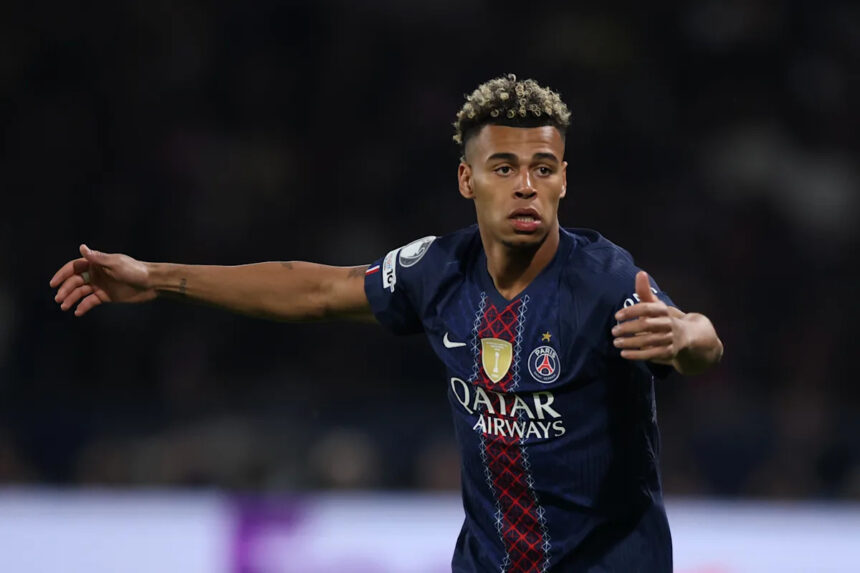
PSG v Bayern: A Record-Breaking Night That Rewrote the Champions League History Books 🤯🔥
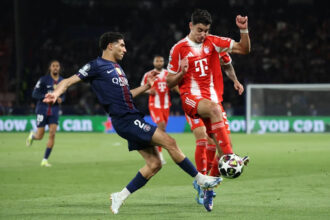
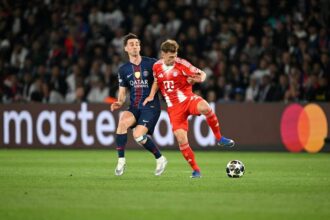
Football is often called the beautiful game, but every so often, it transcends that label to become something else entirely—an opera, a thriller, a chaotic masterpiece. On Wednesday night, the Parc des Princes was the stage for exactly that. Paris Saint-Germain and Bayern Munich delivered a nine-goal epic in the first leg of their Champions League semi-final, a 5-4 slugfest that left fans breathless and statisticians scrambling for the record books. This wasn’t just a match; it was a historical anomaly. Let’s break down the numbers, the drama, and what it all means for the second leg in Munich.
The First Half For the Ages: Five Goals in 45 Minutes
When the teams walked off at halftime, the scoreboard read 3-2 to PSG. But the context behind that scoreline is what makes it historic. For the first time in the 68-year history of the Champions League semi-finals, five goals were scored in the first half alone. That’s not a typo. Five goals in 45 minutes of knockout football against two of the most decorated clubs in the world.
Let’s put that into perspective. The UEFA Champions League has seen countless great semi-final ties—Milan vs. United, Barcelona vs. Chelsea, Real Madrid vs. Juventus—but never has a first half been so explosive. The pace was relentless from the first whistle. PSG’s press was suffocating, and Bayern’s counter-press was equally aggressive. The result? A whirlwind of transitions, defensive errors, and clinical finishing.
- Goal 1 (PSG): A lightning counter-attack finished with a curled effort from the edge of the box.
- Goal 2 (Bayern): A set-piece header that exposed PSG’s zonal marking.
- Goal 3 (PSG): A solo run through the heart of Bayern’s midfield, nutmegging two defenders before slotting home.
- Goal 4 (Bayern): A long-range thunderbolt from 25 yards that the keeper could only palm into the net.
- Goal 5 (PSG): A penalty awarded after a VAR review for a handball that was as controversial as it was decisive.
The sheer volume of goals in that first half shattered the previous record for a semi-final. It wasn’t just about quantity; the quality was staggering. We saw world-class finishing, tactical naivety, and pure, unfiltered emotion. This was the kind of half that makes you remember exactly where you were when it happened.
Expert analysis: The high line from both defenses was suicidal. Neither team respected the other’s pace. In the modern game, where possession is often king, this was a throwback to the 1990s—a pure, end-to-end brawl. The midfield was a ghost town for long stretches, with both teams bypassing it entirely to get the ball to their forwards. It was chaotic, but it was glorious.
Nine Goals: A Return to the 1960s
The final whistle blew with the score at 5-4. Nine goals. To find a semi-final with that many strikes, you have to travel back in time. Specifically, to May 8, 1960, when Eintracht Frankfurt defeated Glasgow Rangers 6-3 in the semi-final of the European Cup (the predecessor to the Champions League). That match, played at Hampden Park, was a legend in its own right. But for 64 years, no other semi-final had matched its goal tally.
Until Wednesday night.
This is not just a statistical quirk; it’s a statement. The modern Champions League is often criticized for being too tactical, too sterile, too reliant on the defensive block. PSG vs. Bayern laughed in the face of that criticism. They gave us nine goals, a red card (almost), and enough drama to fill a season of a Netflix documentary.
Key stats from the night:
- Total goals: 9 (5-4) – Highest in a Champions League semi-final since 1960.
- First-half goals: 5 – A new record for any semi-final in the competition’s history.
- Shots on target: 18 combined – A testament to the attacking intent from both sides.
- Expected Goals (xG): Over 6.5 – The data models predicted a high-scoring game, but even they underestimated the carnage.
- Lead changes: 3 – The lead swung back and forth, with neither side able to hold a two-goal advantage.
The second half was slightly more controlled, but only slightly. Bayern pulled one back to make it 4-4, only for PSG to score a heartbreaker in the 88th minute via a deflected free-kick. That final goal sealed the 5-4 win, but it also left the tie wide open. Bayern will feel they can score at home. PSG will feel they can absorb pressure and counter. The second leg is now a must-watch event.
What This Means for the Second Leg: Predictions and Tactical Adjustments
Now, the real question: Who advances to the final? Based on the first leg, predicting a winner is almost impossible. But we can look at the tactical adjustments each manager is likely to make. Bayern Munich will be furious with their defensive display. They conceded five goals at home? No, wait—they conceded five goals away. That means they need to win the second leg by at least two goals to force extra time, or by one goal to win on aggregate (assuming a 5-4 win for Bayern would mean 9-9 on aggregate, but PSG would win on away goals? Actually, away goals rule is gone now. Let’s clarify: In the new format, aggregate goals are all that matter. If Bayern win 2-0, they advance 6-5. If they win 3-1, they advance 7-6. It’s simple: Bayern must win by any margin to avoid extra time, but a one-goal win sends the tie to extra time if PSG don’t score. The point is, Bayern’s defense is a mess.)
Bayern’s adjustments: They will likely drop their defensive line deeper. Their full-backs were caught out of position repeatedly. Look for a more conservative approach in the first 20 minutes of the second leg. They cannot afford to play a high line against PSG’s speed. Additionally, their midfield needs to protect the back four better. The gap between the midfield and defense was a yawning chasm in Paris.
PSG’s adjustments: They will sit deeper and counter. Why would they change a winning formula? They proved they can score from anywhere. However, their own defense was leaky. Conceding four goals at home is unacceptable at this level. Their goalkeeper had a poor night, and the center-backs were too slow to react. They will need to be more compact, especially on set pieces, where Bayern scored twice.
My prediction: This tie is not over. In fact, it’s just beginning. I expect another high-scoring affair in Munich, but with fewer goals. Bayern 3-2 PSG would send the tie to extra time (6-6 on aggregate). If I had to pick a winner, I’d lean slightly toward PSG because of their away goals from the first leg. But in this tie, logic is irrelevant. The only safe bet is that we will see more goals, more drama, and more history.
The Verdict: A Night That Will Be Remembered for Decades
Wednesday night was a reminder of why we love this sport. In an era of data, analytics, and conservative football, PSG and Bayern Munich gave us pure, unadulterated chaos. The record books will show 5-4. The history books will show that this was the first semi-final with five first-half goals and the first with nine total goals in 64 years. But the memory—the memory of those 90 minutes—will last forever.
For fans of the beautiful game, this was a gift. For neutrals, it was a masterpiece. For the players, it was a war. And for the rest of us, it was a reminder that in the Champions League, anything is possible. The second leg in Munich is now one of the most anticipated matches in recent memory. Buckle up. The record-breaking night in Paris was just the appetizer. The main course is coming.
Final thought: If you missed this match, you missed history. But don’t worry—the return leg promises to be just as insane. Mark your calendars. This is what the Champions League is all about.
Source: Based on news from Yahoo Sports.