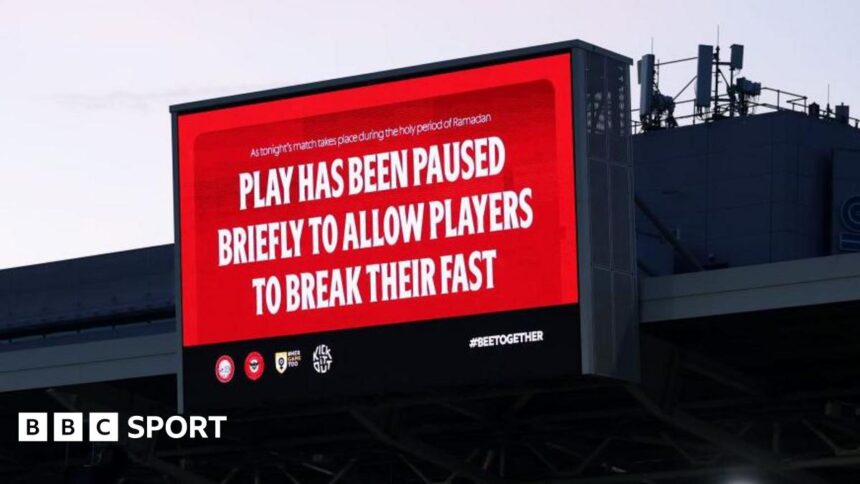
Ramadan Breaks Return: English Football Embraces In-Game Pauses for Fasting Players
As the sun sets over stadiums across England this weekend, a unique and powerful moment of unity will briefly pause the frantic pace of the beautiful game. The Premier League and English Football League (EFL) have confirmed the return of their formal procedures to accommodate players observing Ramadan, a practice that has evolved from ad-hoc understanding to a celebrated part of the football calendar. With the holy month beginning this week, the leagues’ proactive approach underscores a significant shift in the sport’s cultural inclusivity, ensuring Muslim athletes can fulfill their religious duties without compromising their professions. This initiative is more than a logistical note; it’s a testament to football’s growing role as a mirror for modern, multicultural society.
The Mechanics of the Pause: How Football Adapts
The implementation of Ramadan breaks is a finely tuned operation, built on communication and respect rather than a rigid, disruptive stoppage. The process is elegantly simple. For matches with kick-off times that coincide with sunset—specifically Saturday’s 17:30 GMT slot and Sunday’s 16:30 GMT kick-off—club captains from both teams will consult with the match official ahead of the game. Together, they will identify a natural break in play, such as a goal kick, throw-in, or after treatment for an injury, shortly after the sun has set. At that moment, the referee will signal for the brief pause.
This system prioritizes the flow of the contest while honoring the commitment of fasting players. It’s a collaborative effort that involves:
- Pre-match dialogue: Captains and the referee agree on the signal and likely moment for the pause.
- Natural interruption: Play stops only at a neutral, non-advantageous moment.
- Quick refreshment: Players can take on liquids and energy gels, often prepared by club nutritionists, at the touchline.
- Immediate resumption: The pause lasts only seconds before the game continues.
This procedure, now in its third consecutive year, has moved from a novel headline to an established and respected protocol, showcasing the sport’s ability to adapt its traditions for its participants.
Beyond the Gesture: The Performance and Cultural Impact
While the in-game pause is the most visible sign of accommodation, the support for Muslim players runs much deeper within club infrastructures. Top-flight nutritionists and sports scientists work meticulously with fasting athletes to tailor their energy and hydration strategies. Training schedules are often adjusted, with heavier sessions taking place after Iftar (the evening meal) or before Suhoor (the pre-dawn meal). This scientific and holistic support is crucial, as players must balance the physical demands of elite sport with a month of spiritual reflection and discipline.
The impact, however, transcends physiology. The public acknowledgment of Ramadan on the pitch sends a profound message. For young Muslim fans, seeing their heroes openly practice their faith in the heart of British culture is incredibly powerful. It normalizes diversity and fosters a sense of belonging. Furthermore, it educates a global audience of millions about Ramadan in an organic, non-didactic way. The brief pause becomes a moment of shared understanding, a silent nod to the dedication required by the players. This cultural integration is perhaps the most significant legacy of the policy, turning stadiums into spaces of wider social cohesion.
Expert Analysis: A Benchmark for Global Sport
From a sports management perspective, the English football’s formalized approach sets a global benchmark. “This isn’t just about being politically correct; it’s about operational excellence and player welfare,” notes Dr. Amira Patel, a sports sociologist specializing in faith and athletics. “By creating a clear, player-led protocol, the leagues have removed uncertainty and potential conflict. They’ve empowered captains and officials to manage the situation on the pitch, which in turn fosters mutual respect between opponents.”
The move also has tangible performance benefits. Allowing a player to break their fast the moment it is permissible prevents a period of unnecessary physical depletion that could affect performance and increase injury risk. Clubs like Liverpool, with Mohamed Salah, and Chelsea, with Ngolo Kanté, have been at the forefront of this player-centric model, proving that sporting ambition and religious accommodation are not just compatible, but can be synergistic. The player welfare precedent set here extends beyond Ramadan, reinforcing the principle that an athlete’s holistic well-being is paramount to peak performance.
Predictions and The Future of Inclusivity in Football
Looking ahead, the normalization of Ramadan breaks is likely to inspire further inclusive practices across English and European football. We can predict several key developments:
- Wider Adoption: UEFA and other European leagues will face increasing pressure to implement similar formal guidelines for Champions League, Europa League, and domestic matches.
- Nutritional Innovation: Sports science will continue to evolve specific strategies for fasting athletes, potentially influencing training regimens for all players in terms of energy management.
- Bronder Faith Accommodations: This framework paves the way for discussions around accommodating other religious observations, such as prayer times during long tournament stays or religious holidays.
- Commercial Recognition: Brands and broadcasters will become more adept at sensitively and knowledgeably covering this period, further mainstreaming the conversation.
The ultimate prediction is that these pauses will soon become an unremarkable, yet deeply respected, part of the late-season fixture list. The story will shift from “football stops for Ramadan” to “football continues, respectfully, during Ramadan.”
A Strong Conclusion: Unity in the Beautiful Game
The return of Ramadan breaks across English football is a powerful symbol of progress. It moves beyond tokenism to establish a practical, respectful, and normalized practice. It acknowledges that the players on the pitch are not just athletes, but individuals with deeply held beliefs, and that the sport is strong enough to embrace that totality. In a world often divided, the image of rival captains agreeing to a brief pause, of players taking a moment for a date and water at sunset, is a poignant reminder of our shared humanity. English football, through this simple act of consideration, is not just scoring goals; it is championing a form of inclusivity that resonates far beyond the final whistle. The beautiful game, in this instance, is also a profoundly unifying one.
Source: Based on news from BBC Sport.