The Sponsorship Paradox: A World Cup Broke Records, So Why Can’t England’s Women’s League Land a Title Partner?
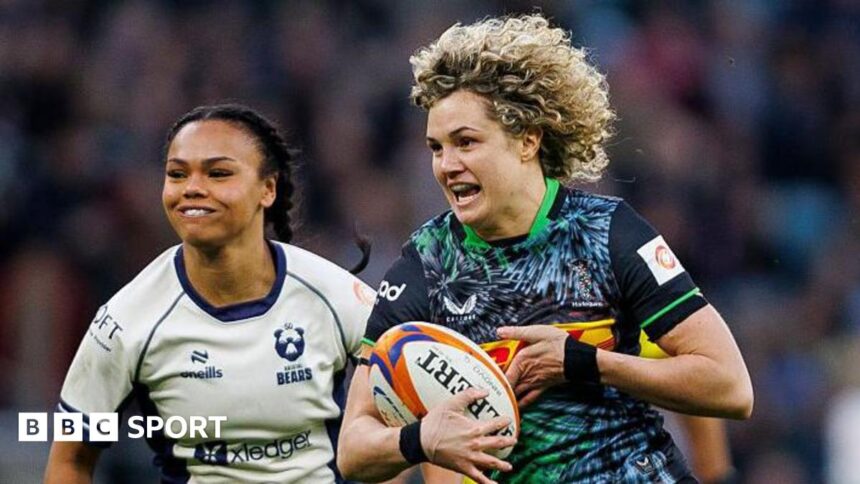
The roar was deafening. On a historic September evening at Twickenham, 81,885 fans – a world record for a women’s rugby match – watched England lift the 2025 World Cup trophy. Stars like full-back Ellie Kildunne, whose electric breaks defined the tournament, became household names overnight. The narrative was one of unstoppable momentum: sold-out stadiums, soaring TV ratings, a nation captivated. Yet, as the domestic engine of that success, Premiership Women’s Rugby (PWR), returns from its winter break this Friday, it faces a glaring contradiction. The league that produces these heroes operates without its most significant commercial asset: a title sponsor.
A Chair’s Frustration: 90% of the Battle for Credibility
Genevieve Shore, the executive chair of Premiership Women’s Rugby, does not mince words. “I am very disappointed,” she states, reflecting a sentiment felt across the sport. The disappointment is rooted in potential unfulfilled. Following the World Cup bounce, which saw club attendances and broadcast numbers climb, the logic seemed irrefutable: capitalise on this surge, secure a major brand, and accelerate growth. Instead, Shore reveals a sobering reality: “I will be more than disappointed if we go into the fourth season without a title partner.”
Perhaps more telling is where her focus is forced to lie. “90% of my time is spent on seeking such a backer,” Shore admits. This is time diverted from strategic development, from deepening community ties, from innovating the fan experience. The search for a title sponsor isn’t just a revenue line; it’s a resource-intensive struggle for the league’s very stability and future-proofing.
Unpacking the Paradox: Why the Hesitation?
On the surface, the value proposition seems clear. The PWR offers access to a passionate, growing, and commercially attractive demographic. It provides association with world-class athletes and narratives of empowerment and excellence. The post-World Cup metrics are strong. So, what’s holding brands back? Industry analysts point to a complex blend of lingering perceptions and market mechanics.
- The “Event vs. Season” Commercial Mindset: Brands are adept at sponsoring major tournaments like the World Cup—a finite, high-impact moment with guaranteed global attention. Committing to a domestic league requires a longer-term view, betting on weekly engagement and narrative building. Some sponsors remain in “event mode,” not yet transitioning to seeing the league as a perennial platform.
- Measurement and Media Scrutiny: While TV audiences are up, they start from a smaller base than men’s sports. Some traditional sponsors may still overly focus on raw peak viewer numbers rather than engagement rates, community impact, and the quality of association. The narrative needs to shift from comparison to the men’s game to the unique and powerful value of the women’s game itself.
- The “Crowded Marketplace” Theory: Women’s sport is booming, from football to cricket. This is a positive, but for sponsorship teams, it means more options. The PWR must cut through not just other sports, but other women’s leagues, each vying for the same corporate budgets.
- Seeking the Perfect Fit: Shore and the PWR are likely being strategically patient, seeking a partner that aligns with the league’s values and ambitions, not just the highest bidder. A mismatched sponsor could be damaging. This search for a true strategic partnership, rather than just a cheque, takes time.
The Tangible Cost of a Missing Partner
The absence of a title sponsor isn’t an abstract boardroom issue; it has direct, on-the-ground consequences for the sport’s growth.
First and foremost is financial investment. A multi-million pound title partnership would flow directly into enhancing the product. This means better resources for clubs: improved training facilities, more full-time professional contracts beyond the star names, greater investment in marketing and fan outreach. It funds the infrastructure that allows players like Kildunne to thrive week-in, week-out.
Secondly, it provides stability and credibility. A major brand signing a multi-year deal sends a powerful signal to the market: this league is here for the long haul, it’s a safe bet, and it’s a premier property. This attracts further investment, better broadcast deals, and more commercial partners. It creates a virtuous cycle of growth.
Without it, the league operates with a hand tied behind its back, relying more heavily on the resources of its constituent clubs and the RFU, and potentially growing at a slower pace than the post-World Cup enthusiasm warrants.
The Path Forward: Predictions and the Final Whistle
Despite the current frustration, the trajectory points toward a resolution. The fundamental drivers are too strong to ignore.
Prediction 1: A Deal Will Land Before Season 4. The pressure of Shore’s timeline, combined with the sustained “proof of concept” from strong post-World Cup league attendances, will likely culminate in an announcement. The risk of the league entering another season without a partner, and the negative story that would generate, is a powerful motivator for all parties.
Prediction 2: It Will Be a “Non-Traditional” Partner. The sponsor may not come from the traditional ranks of beer, betting, or automotive. Look towards technology firms, financial services brands focusing on women’s wealth, apparel companies beyond incumbents, or consumer health and wellness giants. These sectors align closely with the audience and values of the PWR.
Prediction 3: The Narrative Will Shift to Ownership. The eventual partnership will be framed not as a rescue, but as a savvy, forward-thinking move. The sponsor will be positioned as an enabler of a movement they believed in early, reaping the rewards of association with a league on an undeniable upward curve.
Conclusion: Beyond the Quick Try, Building the Stadium
The story of Premiership Women’s Rugby and its missing title sponsor is the story of modern women’s sport in microcosm. It captures the exhilarating highs of viral moments and packed stadiums, juxtaposed with the gritty, behind-the-scenes marathon of building sustainable commercial foundations. The World Cup was a spectacular, record-breaking try. But securing a title partner is about building the stadium—the permanent, revenue-generating infrastructure that ensures the sport thrives for generations.
The case is compelling. The audience is growing. The stars, from Ellie Kildunne to a host of other internationals, are present and performing. Genevieve Shore’s dedicated 90% pursuit is a testament to its importance. The coming months will be critical. When the deal is finally struck, it will be more than a financial injection; it will be the moment the market fully validated what the fans already know: that Premiership Women’s Rugby isn’t just riding a wave, it is the wave. And for any brand wanting to be associated with resilience, growth, and sporting excellence, that is the ultimate platform.
Source: Based on news from BBC Sport.