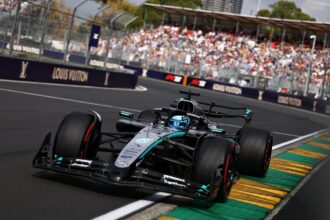
End of an Era: Helmut Marko to Depart Red Bull After 20 Defining Years
The walls of the Red Bull motorhome have absorbed two decades of whispered strategies, fiery rebukes, and triumphant celebrations, much of it emanating from one formidable figure. That era now has an expiration date. In a move that sends seismic waves through the Formula 1 paddock, Red Bull has announced that Helmut Marko, the team’s influential and often controversial motorsport adviser, will conclude his tenure at the end of the 2025 season. At 82, the Austrian architect, who has been the singular constant from the team’s inception to its current dominance, will step away, closing a chapter that fundamentally reshaped the sport’s landscape.
The Architect of a Dynasty: Marko’s Unparalleled Legacy
To understand Helmut Marko’s departure is to comprehend the very DNA of the Red Bull Racing team. Recruited by Dietrich Mateschitz not merely as an adviser but as a visionary, Marko’s mandate was to build a winning culture from the ground up. His philosophy was ruthless and clear: identify raw, often unproven talent, and forge them into world champions under the intense pressure of his exacting standards. This approach yielded an astonishing record: six constructors’ championships and eight drivers’ titles, transforming a fledgling outfit into the most dominant force of the modern era.
Marko’s legacy is most vividly etched in the careers of the drivers he shepherded. He famously plucked a teenage Sebastian Vettel from relative obscurity, guiding him to four consecutive world championships and establishing Red Bull’s first dynasty. Later, he identified a similarly precocious talent in a 16-year-old Max Verstappen, fast-tracking him into a Toro Rosso (now RB) seat and then the senior team with a decisiveness that shocked the grid. His relationship with Verstappen, built on mutual respect and a shared, uncompromising will to win, has been the cornerstone of the team’s recent supremacy.
- Driver Development Mastermind: Overseen the careers of approximately 20 drivers, creating a unique and feared pipeline of talent.
- Ruthless Decision-Making: Known for swift, often coldly logical personnel changes to optimize performance.
- Cultural Cornerstone: Embodied the team’s aggressive, no-excuses mentality, acting as its moral and competitive compass.
Navigating the Storm: The Context of a Departure
While framed as a planned conclusion, Marko’s exit cannot be divorced from the period of unprecedented internal turbulence Red Bull has endured in 2024. The investigation into team principal Christian Horner earlier this year exposed significant fractures within the organization’s leadership. Marko found himself at the center of the storm, with reports suggesting he was briefly suspended before being reinstated, and his close ally Max Verstappen publicly stating his loyalty to the adviser. This power struggle highlighted the delicate balance of power at Red Bull and Marko’s immense influence, particularly over the team’s star asset.
Team principal Laurent Mekies’ statement, “It is very sad news that Helmut is leaving us,” carries the weight of this complex history. It acknowledges the profound loss while perhaps also hinting at a necessary evolution for a team seeking stability. Marko’s departure at the end of 2025 suggests a carefully managed transition, allowing for a gradual transfer of his vast institutional knowledge and responsibilities, particularly concerning the junior driver program, which has been his personal fiefdom.
The Verstappen Factor and the Future of Red Bull’s Dominance
The most immediate and critical question arising from this news concerns the future of Max Verstappen. The three-time champion’s contract runs through 2028, but it is widely understood that his commitment is as much to the environment and people as it is to the brand. Marko has been a father figure and fierce protector for Verstappen; his presence a key pillar of the Dutchman’s comfort and confidence within the team.
Will Verstappen’s long-term outlook change with Marko’s exit? While a sudden departure seems unlikely, the dynamic within the team will irrevocably shift. The management must now work assiduously to ensure Verstappen feels the core competitive philosophy remains intact. Furthermore, Marko’s absence leaves a void in the driver development structure. Who will have the final, fearless say on promoting the next phenom from the junior ranks? This uncertainty could ripple through the careers of aspiring Red Bull juniors for years to come.
Predictions: A New Power Structure and a Softer Red Bull?
As the 2025 season becomes a long farewell tour for Helmut Marko, the F1 world will watch closely for signs of Red Bull’s future shape. We predict several key developments:
A Formalized “Driver Development” Role: Red Bull will likely create a new executive position to oversee the junior program, but it will lack Marko’s unique blend of absolute authority and personal relationships. This could lead to a more corporate, less instinct-driven approach.
Consolidation of Power: With Marko’s towering influence removed, the path is cleared for a more conventional team hierarchy. Christian Horner’s position as the singular team principal will be solidified, and figures like Laurent Mekies and technical director Pierre Waché may gain broader influence.
The Evolving Team Culture: For two decades, Marko was the sharp, public edge of Red Bull’s competitive blade. His departure may result in a team that presents a softer public image. However, the relentless will to win he helped instill is now baked into the organization’s DNA. The true test will be whether that intensity can be maintained without its most zealous enforcer.
Conclusion: The Last of the Old Guard
Helmut Marko’s exit signifies more than a high-profile retirement. It marks the departure of the last true old-school operator from a position of supreme power in Formula 1. In an era increasingly dominated by corporate PR, financial regulations, and political correctness, Marko was a thrilling anachronism—a man who spoke his mind without filter, made decisions based solely on winning, and whose loyalty was as fierce as his criticism. His methods were divisive, but his results are immortal.
As he prepares to leave the pit wall for the final time in 2025, the sport loses one of its most compelling characters and Red Bull loses its foundational pillar. The team’s challenge is monumental: to honor the ruthless, winning culture he built while navigating a future without its most ruthless architect. The post-Marko era will define Red Bull Racing for the next generation. One thing is certain: the grid will be a quieter, and perhaps less interesting, place without him.
Source: Based on news from BBC Sport.