Goodell and Bunny: The Viral Embrace That Upstaged the Super Bowl’s First Half
The narrative of Super Bowl XLIX was supposed to be clear-cut: a defensive masterclass by the Seattle Seahawks, a legendary unit known as the “Legion of Boom,” stifling the methodical offense of the New England Patriots. For two quarters, that script held, with Seattle taking a 9-0 lead in a game defined by punishing hits and tactical gridlock. Yet, in a stadium known for its technological innovation, the most disruptive force of the night wasn’t a blitzing safety. It arrived at halftime, in the form of a Puerto Rican superstar, and culminated in a backstage moment so unexpectedly genuine it threatened to steal the entire show’s buzz.
The Calm Before the Storm: A Defensive Slugfest Sets the Stage
Levi’s Stadium in San Francisco was electric with anticipation, but the first half was a tense, low-scoring affair. The Seahawks’ defense, a historically great unit, lived up to its billing, completely neutralizing Tom Brady and the Patriots’ attack. Every yard was a battle. The scoreboard reflected a grueling, physical contest—a 9-0 lead for Seattle built on field goals and defensive stands. While purists appreciated the chess match, a palpable sense awaited a spark, a release from the defensive stranglehold. The game needed an injection of pure, unadulterated energy. Enter Bad Bunny.
The Grammy-winning artist, whose genre-fusing sound had taken global music by storm, didn’t just perform a halftime show; he executed a cultural takeover. From the opening notes, the stadium’s defensive tension melted away, replaced by a pulsing, unified rhythm. The sea of team jerseys momentarily transformed into a swaying concert crowd. Bad Bunny’s halftime performance was more than an intermission; it was a reset, proving the unifying power of music within the sporting spectacle.
The Viral Embrace: Commissioner and Icon, a Moment of Pure Connection
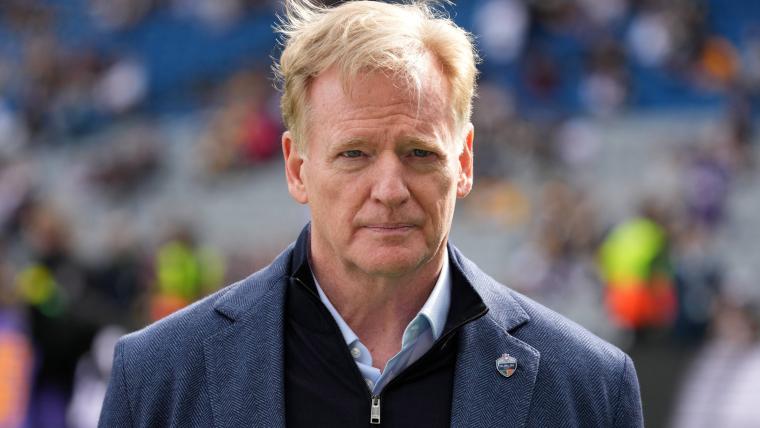
As the final pyrotechnics faded and the crews scrambled to prepare the field for the second half, a different kind of moment unfolded in the controlled chaos backstage. NFL Commissioner Roger Goodell, the often-polarizing steward of the league’s business and discipline, was awaiting the performer. What happened next was captured in a fleeting, unguarded clip that would rocket across social media.
Bad Bunny, still buzzing from the adrenaline of performing for millions, approached. Goodell, typically a figure of reserved formality, opened his arms. The resulting embrace was not a standard, polite handshake or a stiff photo-op shoulder pat. It was a full, hearty, back-slapping viral moment with Roger Goodell that radiated mutual respect and authentic joy. Goodell’s usually inscrutable expression broke into a wide, unreserved smile. In that instant, the commissioner wasn’t managing a global brand; he was a fan thanking an artist for elevating the event.
This single interaction became a masterclass in non-verbal communication and public relations. It highlighted several key points:
- Cultural Relevance: Goodell’s embrace signaled the NFL’s acute awareness of Bad Bunny’s immense value in reaching younger, broader, and particularly Latino audiences.
- Humanizing the Brand: For a commissioner often shrouded in controversy, the moment was a rare, successful humanization, showing appreciation for artistry.
- The Power of Crossover Appeal: It visually cemented the symbiotic relationship between top-tier sports and top-tier music, where each elevates the other’s platform.
Expert Analysis: Decoding the Impact of the Halftime Handshake
From a sports business and media perspective, this viral handshake was arguably as strategically significant as any play in the first half. The Super Bowl halftime show has long been the most-watched musical event of the year, but its aftermath is usually confined to performance reviews. This moment created a secondary, powerful story.
“What we witnessed was the deliberate and savvy bridging of two empires,” notes Dr. Elena Rodriguez, a professor of sports marketing and media. “Goodell, representing the established, traditional powerhouse of American sports, openly celebrating Bad Bunny, the vanguard of a new, global, and digitally-native cultural movement. That embrace wasn’t just personal; it was a strategic acknowledgment. It told a story of a league looking forward, understanding that its growth is tied to these moments of authentic cultural integration.”
The analysis extends to fan engagement. The moment gave the massive halftime audience—many of whom may have been casual football viewers—a relatable postscript. It created a shareable, positive story that dominated timelines alongside game analysis, effectively doubling the social media impact of the halftime investment.
Predictions: How This Moment Reshapes Future NFL Collaborations
The resonance of this viral embrace will undoubtedly influence the NFL’s playbook for future events. We can anticipate several strategic shifts:
- Deepened Artist Integration: Future halftime performers may be woven more intricately into the Super Bowl week fabric, with more behind-the-scenes access and collaborative content with league officials, moving beyond just a stage performance.
- Prioritizing Global Megastars: The league will likely continue to prioritize artists with colossal, worldwide followings like Bad Bunny, who can guarantee cross-cultural engagement and viral potential that extends far beyond the football field.
- The “Moment” Beyond the Music: League PR teams will now actively plan for and cultivate potential backstage or interactive moments between performers and league figures, understanding their power to generate positive buzz.
- Expanding the Cultural Playbook: This success reinforces the NFL’s push into broader entertainment, from international games to documentary series, solidifying its status as a 365-day-a-year content engine.
Conclusion: A Legacy Beyond the Final Score
While the second half of Super Bowl XLIX would deliver one of the most dramatic finishes in history, with Malcolm Butler’s goal-line interception sealing a Patriots victory, the first half’s legacy is uniquely tied to that backstage encounter. The Seattle Seahawks’ dominant defense set the competitive tone, but the bridge between the sport’s gritty reality and its entertainment future was built in the minutes after the music stopped.
The viral embrace between Roger Goodell and Bad Bunny transcended a simple greeting. It was a symbolic passing of the torch to a new era of sports entertainment, where cultural currency is as valuable as television ratings. It reminded us that at the heart of the NFL’s colossal machine are human moments of celebration, respect, and shared success. Long after the confetti is swept from the field, it is these moments of genuine connection—the commissioner’s surprised smile, the artist’s triumphant embrace—that often resonate the loudest in the digital age, proving that sometimes, the most impactful play of the game happens when the clock isn’t running.
Source: Based on news from Yahoo Sports.