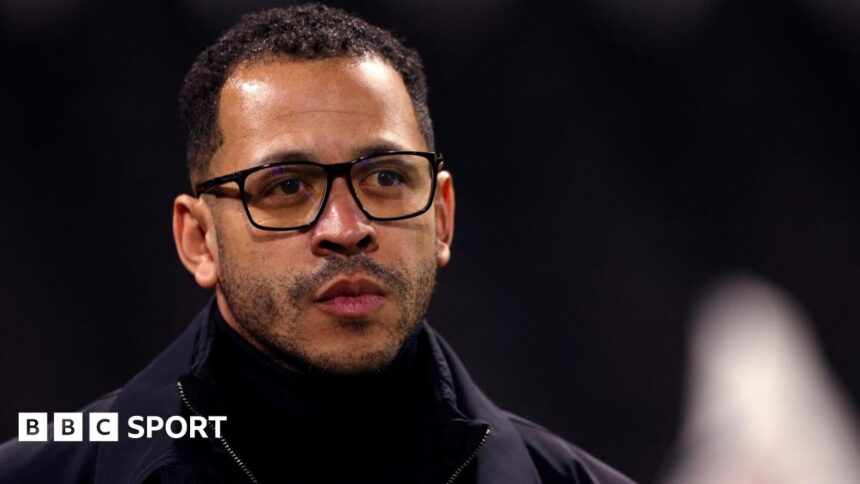
Liam Rosenior Vows to Ignore the ‘Noise’ and Forge His Own Path at Chelsea
The Stamford Bridge hotseat, one of the most scrutinized and volatile positions in world football, has a new occupant. In a move that surprised many, Chelsea have appointed Liam Rosenior as their new head coach on a staggering eight-year contract, tasking the 41-year-old Londoner with bringing stability and success to a club in constant flux. Stepping into the void left by Enzo Maresca’s departure, Rosenior’s first public message was a clear statement of intent: he will be his own man, and he will ignore the “noise.”
This is not just another managerial appointment; it’s a profound philosophical gamble. Chelsea, synonymous with superstar signings and instant-demand success, have turned to a thoughtful, progressive coach whose reputation was built on structured, possession-based football at Hull City in the Championship. The disconnect between his profile and the club’s recent identity is stark, making his introductory press conference a masterclass in calm, assertive clarity. Rosenior spoke not of revolution, but of evolution, seeing “limitless” potential where others see a chaotic project. The football world is watching, intrigued and skeptical in equal measure.
A Calculated Departure from the Chelsea Blueprint
For years, the Chelsea model has been relatively transparent: acquire high-ceiling talent, hire a tactician to mold them, and demand immediate trophies. The appointments of Thomas Tuchel and Antonio Conte, while successful, fit a certain win-now pedigree. Liam Rosenior’s appointment represents a sharp, deliberate pivot. This is not a manager with a cabinet full of elite-level silverware. Instead, Chelsea’s hierarchy has bet on potential, on philosophy, and on a long-term vision encapsulated by that 2032 contract.
Rosenior’s journey is key to understanding this bet. His interim spell at Derby County showcased resilience in crisis. His tenure at Hull City, though ending controversially after just missing the playoffs, was praised for implementing a clear, attractive style with a young squad—a Chelsea hallmark in the making. His subsequent two-year education in France with Strasbourg, navigating a different football culture and pressure, completed a unique apprenticeship. He arrives not as a finished product, but as a modern coach schooled in building projects, which is precisely what Chelsea’s sprawling squad needs.
Defining the “Noise” Rosenior Must Silence
When Rosenior speaks of ignoring the “noise,” he is identifying the core challenge of the job. At Chelsea, the noise is a cacophony:
- Transfer Market Scrutiny: Every window brings galactic spending and intense debate over player value.
- Impatience for Success: A fanbase and ownership accustomed to constant winning, with little tolerance for transitional seasons.
- Media Magnification: Every team selection, every dropped point, is analyzed as a crisis or a triumph.
- Legacy Shadows: The enduring ghosts of Mourinho, Ancelotti, and the club’s legendary past managers.
Rosenior’s calm, articulate demeanor is his first line of defense. His insistence on being his “own man” is a direct message that he will not be swayed by external narratives or compare himself to predecessors. His focus, he stated, is solely on the grass at Cobham and the players in his dressing room. This psychological framing is perhaps his most crucial early tactic.
Tactical Vision: The Rosenior Blueprint at Stamford Bridge
The pressing question is how Rosenior’s football will translate to the Premier League and this specific squad. At Hull, his teams were defined by:
- Possession Dominance: Building patiently from the back, with a focus on controlling the game’s rhythm.
- Structural Discipline: A well-organized 4-2-3-1 or 4-3-3 that provided a platform for creative players.
- Developing Youth: A proven ability to improve young players and give them clear tactical roles.
This philosophy aligns intriguingly with Chelsea’s squad composition. The Blues possess a treasure trove of technically gifted, young players like Enzo Fernández, Moisés Caicedo, and Cole Palmer who should thrive in a possession-heavy system. The challenge will be adding the defensive solidity and ruthless edge that Championship football demanded of his Hull side, but which is exponentially more critical in the Premier League.
Key to his success will be his man-management of established stars and burgeoning talents alike. Can he command the respect of a dressing room filled with big personalities and bigger price tags? His first job in the Premier League as a manager is a monumental leap, but his career as a top-flight player and his measured approach suggest he understands the ecosystem he is entering.
Predictions and Challenges: The Rocky Road Ahead
The path for Rosenior is fraught with both opportunity and peril. The eight-year contract is a vote of confidence, but also a potential anchor if results sour quickly. Our expert analysis points to several key predictions for his first season:
Early Patience Will Be Tested: Chelsea’s opening fixtures will be dissected for immediate signs of “Rosenior-ball.” A stylish win will be hailed; a sluggish loss will trigger immediate doubt. His ability to steady the ship during inevitable rough patches will define his early tenure.
Integration Over Recruitment: Expect Rosenior to focus more on coaching existing players into his system than demanding a slew of new signings. His project will be judged on elevating the performance of the club’s immense investment.
The “Limitless Potential” Quotient: His comment about the club’s potential is telling. He sees a canvas. Success will be measured on how quickly he can transform that potential into a coherent, winning picture. A top-six finish and a deep cup run would constitute a successful first campaign, re-establishing a foundation for the club.
Conclusion: A Bold New Dawn or Another False Start?
Liam Rosenior’s appointment is the clearest signal yet that Chelsea’s ownership is attempting to forge a new identity, one built on long-term vision and philosophical consistency rather than reactive hiring and firing. It is a monumental risk. By ignoring the “noise,” Rosenior is not being dismissive of the club’s stature or expectations; he is demonstrating the single-minded focus required to meet them.
He walks into Stamford Bridge as a modernizer, a thinker, and a builder. The weight of the badge, the glare of the spotlight, and the sheer scale of the task are undeniable. But in his calm conviction and clear tactical identity, there lies a genuine hope for a new, more stable chapter. The FA Cup tie at Charlton this weekend is more than a curtain-raiser; it is the first step in a long journey. For Chelsea and for Rosenior, the message is clear: the talk is over, the work begins now. The football world waits to see if this unique marriage of club and coach can silence the skeptics and finally unlock that “limitless” promise.
Source: Based on news from BBC Sport.