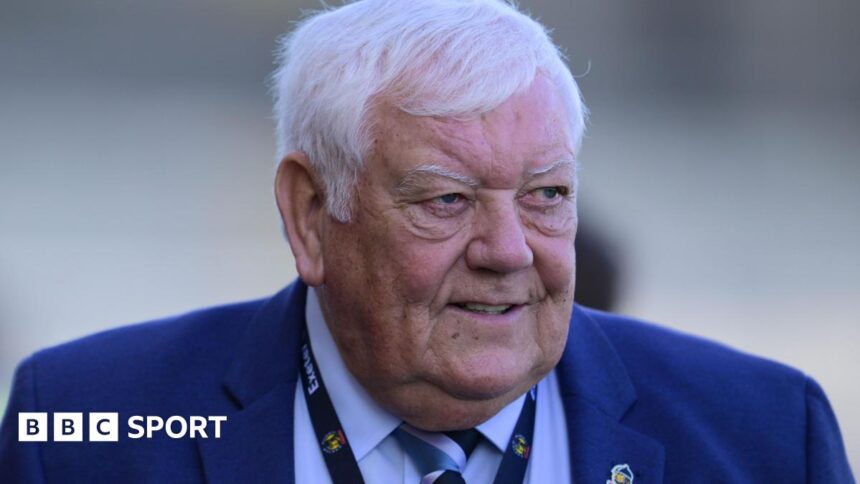
Rowe Seeks Fresh Investment as Exeter Chiefs Post £10.3m Loss
The story of Exeter Chiefs is one of modern rugby’s most remarkable fairy tales. From the pastoral fields of the lower leagues to the pinnacle of European glory in 2020, their ascent was built on local grit, visionary leadership, and a unique community spirit. Today, however, the club faces a formidable new opponent: financial reality. As the company behind the Chiefs reports a staggering £10.3m annual loss, the architect of their rise, Chief Executive Tony Rowe, is embarking on a critical new mission—securing major investment to secure the club’s future.
A Stark Financial Picture: Unpacking the £10.3m Loss
The recently filed accounts for Exeter Rugby Group paint a sobering picture of the challenges facing even the best-run clubs in the post-pandemic rugby landscape. The after-tax loss of £10.3m for the 2022/23 season is a dramatic figure, compounded by a disappointing ninth-place finish in the Gallagher Premiership. While the club’s on-field struggles contributed, the financial wounds run deeper and are emblematic of systemic issues within the professional game.
A significant portion of the loss, £6.2m, stems from the write-off of a loan associated with the Sandy Park hotel. This complex financial maneuver is intrinsically linked to Rowe’s previous efforts to steady the ship. In December 2022, Rowe personally purchased the hotel from the club, injecting crucial cash to help repay Covid-19 related debts. The loan write-off in these latest accounts effectively closes that chapter but underscores the severe financial hangover from the pandemic era, when matches were played behind closed doors and revenue streams evaporated.
Key Factors Behind the Loss:
- £6.2m Loan Write-Off: Directly related to the Sandy Park hotel transaction, a necessary but costly step.
- Residual Pandemic Debt: The club still carries significant loans taken out to survive the lockdown period.
- Underperformance On-Field: A ninth-place finish impacts prize money, sponsorship appeal, and matchday revenue.
- Rising Operational Costs: Inflationary pressures on salaries, energy, and travel across the sport.
Tony Rowe’s Dual Legacy: Architect and Guardian
To understand Exeter’s current crossroads, one must appreciate the monumental role of Tony Rowe. His leadership transformed the Chiefs from a quaint Championship side into a European champion and perennial English powerhouse. The development of Sandy Park from a modest ground into a thriving stadium and business complex is a testament to his ambition. However, this latest financial chapter reveals Rowe in a different light: not just as an architect, but as a guardian using his own resources to protect the club.
The hotel purchase was a classic Rowe move—pragmatic, personal, and aimed at ensuring survival. It highlights a model that is increasingly rare in modern sports: owner-as-custodian. Yet, the subsequent loan write-off and the scale of the current loss signal that this model may have reached its limit. Rowe’s search for a new investor is an acknowledgment that the next phase of Exeter’s evolution requires capital and perhaps a new partnership structure that the current framework cannot provide.
“We are in talks with a number of potential investors and I am hopeful we will have something in place this year,” Rowe stated. This is not a fire sale, but a strategic pivot. The goal is likely to find a partner who believes in the Chiefs’ unique identity and can provide the financial muscle to compete in an era dominated by well-funded rivals, without sacrificing the club’s soul.
The Wider Premiership Context: A League Under Pressure
Exeter’s financial results are a microcosm of the turbulence shaking the entire Gallagher Premiership. The collapses of Worcester Warriors, Wasps, and London Irish in recent seasons serve as a dire warning. The league is grappling with a dangerous cocktail of unsustainable wage inflation, volatile revenue streams, and significant debt burdens accrued during the pandemic.
Exeter’s situation, while serious, differs in crucial ways. The club owns its stadium and its valuable surrounding assets, like the conference centre, which provide alternative revenue. The £10.3m loss is partly a result of confronting past debts head-on through accounting measures, rather than ignoring them. This painful transparency might position them more favorably for investment than clubs with more obscured balance sheets. The challenge is convincing an investor that professional rugby club ownership, with its current economic model, can offer a return or at least a sustainable passion project.
Predictions for the Road Ahead
The coming months will be defining for the Chiefs. Based on the current trajectory, several outcomes seem plausible:
- Strategic Minority Investment: The most likely outcome is Rowe securing a minority partner. This would bring in fresh capital for squad investment and debt reduction while allowing Rowe to maintain control and protect the club’s culture.
- Enhanced Commercial Focus: Expect an even greater push to monetize the Sandy Park brand—more conferences, events, and non-rugby revenue—to insulate the rugby side from volatility.
- Squad Evolution Continues: The era of retaining all homegrown stars may be over. The focus will be on a leaner squad, blending academy talent with strategic signings, as seen in the recent departure of some high-profile players.
- A Model for Others: How Exeter navigates this could provide a blueprint for other clubs: confronting debt transparently, leveraging fixed assets, and finding investment that aligns with core values.
Conclusion: A Pivotal Moment in the Chiefs’ Saga
The headline of a £10.3m loss is stark, but it tells only part of the Exeter Chiefs story. It is a story of necessary financial surgery, of a loyal owner stepping in, and now, of a pragmatic search for a new chapter. Tony Rowe’s legacy is not tarnished by these figures; it is contextualized by them. He built a champion and then used his own means to shield it from an existential storm.
The quest for a new investor is the next logical step in the club’s maturation. It is a move from a model of personal patronage to one of modern, sustainable partnership. The core challenge will be to find capital without compromising the very identity—the “Chiefs Way”—that made Exeter so special. If Rowe can successfully guide this transition, securing investment that believes in the project as much as the profit, then this period will be remembered not as a crisis, but as the difficult yet necessary evolution that secured Exeter Chiefs’ future for the next generation. The fairy tale isn’t over; it’s simply entering a new, more complex chapter.
Source: Based on news from BBC Sport.