Beyond the Podium: The Complex Calculus Behind Russia and Belarus’s Paralympic Return
The Paralympic stage has long been a beacon of human resilience and the unifying power of sport. Yet, as the world prepares for the Milan-Cortina 2026 Winter Paralympics, a shadow of geopolitical conflict looms over the snow-covered venues. The decision to allow athletes from Russia and Belarus to compete, confirmed by a recent Court of Arbitration for Sport (CAS) ruling, is a development mired in legal, ethical, and political complexity. As Johan Eliasch, President of the International Ski and Snowboard Federation (FIS), somberly noted, this path “has not been easy.” This sentiment underscores a profound tension within the sporting world: a struggle to balance the principle of athlete inclusion against the stark realities of war and international law.
A Timeline of Turbulence: From Sochi to Sanctions
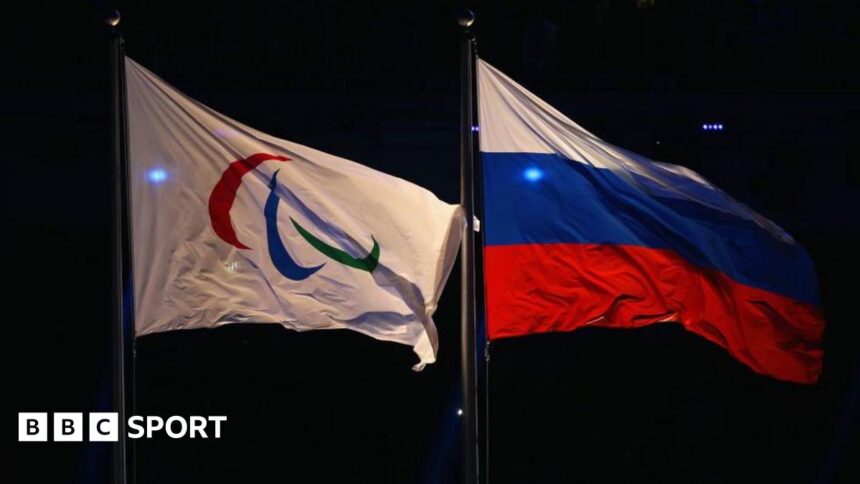
To understand the gravity of the current moment, one must look back. The Russian flag has been conspicuously absent from Paralympic ceremonies for a decade. Its last appearance was at its home Games in Sochi 2014, which were later shrouded in a state-sponsored doping scandal. The nation faced blanket bans in the subsequent Summer and Winter Games. The full-scale invasion of Ukraine in February 2022 prompted a new wave of sanctions, with the IPC initially banning Russian and Belarusian athletes before allowing them to compete as neutrals in Beijing—a decision swiftly reversed under intense global pressure.
The landscape shifted again in September 2023 when the International Paralympic Committee (IPC) voted to partially reinstate both nations, contingent on athletes competing as neutrals under a strict set of conditions. However, a critical twist emerged: the IPC does not govern the individual winter sports. This meant that international federations like FIS had to lift their own bans. When they refused, citing the ongoing conflict, the stage was set for a legal showdown.
- 2014: Russia hosts Paralympics in Sochi; doping scandal later emerges.
- 2022: IPC issues full ban, then briefly allows neutrals before reversing course for Beijing Winter Games.
- September 2023: IPC General Assembly votes to conditionally reinstate Russia and Belarus for future Games.
- 2024: FIS maintains its ban; Russia and Belarus appeal to the Court of Arbitration for Sport (CAS).
- Present: CAS rules in favor of the athletes, compelling FIS to allow their participation in Milan-Cortina.
The Legal Mandate vs. Moral Quandary
The core of this conflict lies in the clash between sports governance and international law. The CAS panel, sport’s highest legal authority, did not rule on the morality of the war. Instead, it focused on the technical application of the federations’ own rules. The panel likely found that the blanket bans on all athletes, regardless of individual stance, were disproportionate and not provided for in the federations’ statutes. This creates a binding legal mandate for inclusion, however politically unpalatable it may be for the governing bodies.
This legalistic victory, however, does not translate to a clean slate. The ten athletes (six Russian, four Belarusian) will compete as “Individual Neutral Paralympic Athletes.” They will undergo rigorous vetting to ensure no ties to military or state security agencies. The strict neutrality protocol mandates:
- No national flags, anthems, colors, or emblems.
- Uniforms and equipment must be devoid of national symbolism.
- They will not be included in the official medal table.
Johan Eliasch’s admission that the decision was “not easy” reflects the federations’ uncomfortable position: forced by law to facilitate participation for athletes from nations whose governments are under widespread condemnation. It raises a poignant question for the sporting community: does this legally-enforced neutrality truly insulate the Games from politics, or does it simply create a veneer of separation that satisfies a court order while failing to address deeper ethical concerns?
On-Ground Realities and the Specter of Protest
The presence of these athletes in Milan-Cortina will be fraught with operational and emotional challenges. For the competitors themselves, the experience will be starkly different from representing one’s country. They will walk in ceremonies under the Paralympic flag, and any gold-medal moment will be met with silence instead of a national anthem. This “neutral” status, intended as a compromise, can feel like a purgatory for athletes who have trained for years.
Perhaps the most volatile element will be the reaction from other competitors, particularly those from Ukraine. The Ukrainian Paralympic team, forged in the crucible of war, has become a powerful symbol of national defiance. The prospect of facing athletes from the nations invading their homeland on the field of play is an immense psychological burden. Protests or boycotts, though unlikely to be formal from the Ukrainian side given the importance of their platform, remain a distinct possibility. Averted glances on the podium, refusal to share space in mixed zones, or symbolic gestures could become the defining images of these Games, shifting focus from athletic achievement to unspoken political strife.
Furthermore, the decision risks fragmenting the Paralympic movement. Some nations and sponsors may view the CAS-mandated inclusion as a failure of sports bodies to take a moral stand, potentially leading to withdrawn support or heightened tensions within the athlete village. The very unity the Games strive to promote will be under unprecedented strain.
The Future of Sport in a Fractured World
The Milan-Cortina Games are poised to become a precedent-setting case study. The CAS ruling has effectively established that, barring government directives like those from the IOC, international sports federations must have exceptionally clear legal grounds in their own constitutions to impose widespread bans on athletes based on nationality alone. This strengthens the legal protection for individual athletes but potentially weakens the ability of sports bodies to use participation as a tool for geopolitical pressure.
Looking ahead, this creates a precarious template for future global crises. The Paralympic movement now faces a new normal where its inclusive ethos is legally enforced, even in direct contradiction to the prevailing moral sentiment of its members. The prediction is a continued, messy dichotomy: athletes will compete under a sterile, neutral banner while the political context surrounding them remains vividly charged. The Games will proceed, but the ideal of sport as an apolitical sanctuary seems further away than ever.
In conclusion, the return of Russian and Belarusian Paralympians is not a celebration of reintegration but a compliance with a legal verdict. Johan Eliasch’s “not easy” admission is the understatement of the upcoming Games. Milan-Cortina 2026 will be a testament to the uncomfortable compromises required when the world of sport intersects with the hard realities of international conflict and law. The medals won will be recorded, but the true story will be written in the strained interactions, the heavy silence on the podium, and the unresolved question of whether sport can ever truly be separate from the actions of nations. The Paralympics, a movement built on overcoming adversity, now faces its most profound adversarial challenge not on the slopes, but in the very principle of its own unity.
Source: Based on news from BBC Sport.