Sabalenka’s Power Play: World No. 1 Dismisses Resurgent Osaka in Indian Wells Blockbuster
The desert air at Indian Wells crackled with a rare electricity. It wasn’t just the California sun; it was the collision of two seismic forces in women’s tennis, a rivalry delayed by fate and circumstance. In a last-16 match that felt like a Grand Slam final, world number one Aryna Sabalenka reaffirmed her dominion with a commanding 6-2, 6-4 victory over the ever-dangerous Naomi Osaka. This was more than a quarter-final ticket; it was a statement of intent from the tour’s most formidable force against one of its most iconic champions.
A Rarity Renewed: A Clash of Titans Six Years in the Making
For context, this was only the second meeting between these two four-time major winners. Their sole previous encounter was in 2018, a US Open third-round match where a young Sabalenka fell to Osaka, who would storm on to claim her first Grand Slam title. Since then, their paths diverged dramatically. Sabalenka ascended methodically to the summit, claiming back-to-back Australian Open crowns and cementing her top ranking. Osaka, meanwhile, navigated immense personal challenges, taking breaks for her mental health and becoming a mother.
Sabalenka herself acknowledged the strangeness of the gap. “It’s crazy, for so many years we only played once,” she remarked post-match. “I’m pretty sure we are playing many more matches. She’s coming back, playing great tennis.” This match was a long-awaited calibration, a measure of Sabalenka’s current peak against Osaka’s rapidly rising form.
Masterclass in Controlled Aggression: How Sabalenka Seized Control
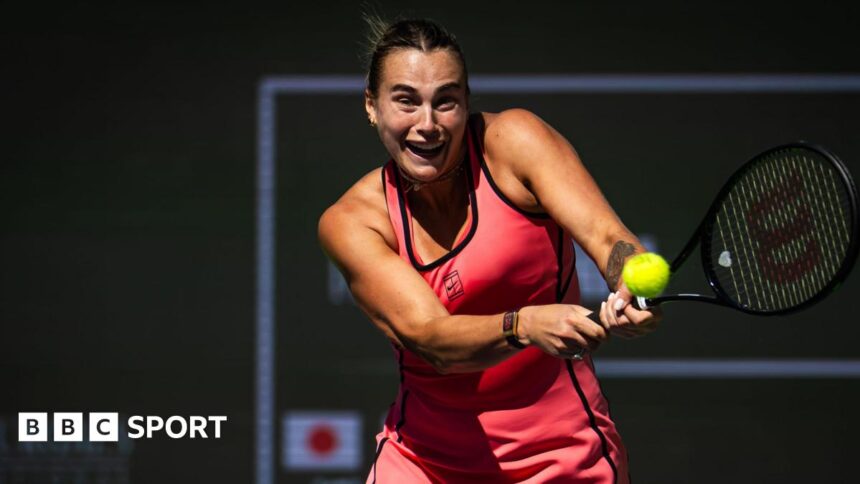
From the first thunderous serve, the blueprint was clear. Sabalenka executed a near-perfect game plan of controlled aggression. She did not merely hit hard; she hit with purpose and stunning depth, pinning Osaka behind the baseline and denying her any rhythm. The key tactical battleground was Osaka’s second serve. Sabalenka stood inches inside the baseline, treating these opportunities as invitations to unleash devastating returns.
The statistics paint a vivid picture of Sabalenka’s dominance:
- Relentless Return Pressure: Sabalenka won a staggering 52% of return points overall, breaking Osaka’s serve four times.
- First Strike Dominance: She consistently won the first three shots of the rally, leveraging her superior firepower in extended neutral exchanges.
- Serve as a Fortress: While not at her absolute ace-laden best, Sabalenka’s own serve remained a reliable weapon, saving all three break points she faced.
Osaka, whose own power is legendary, was often left reacting, her formidable groundstrokes neutralized by the sheer weight and placement of Sabalenka’s shots. The first set was a clinic, wrapped up in just 36 minutes. The second set saw Osaka’s trademark resilience flicker to life. She adjusted, began to find more first serves, and carved out a 4-2 lead. But the mark of a true champion is the response to adversity. Sabalenka simply dialed up her intensity, reeling off the final four games with a breathtaking display of clutch hitting to seal the match in 80 minutes.
Expert Analysis: What This Means for Both Champions
This match was a significant data point for the trajectory of both superstars. For Aryna Sabalenka, it was a critical test passed with flying colors. Beating a player of Osaka’s caliber, in form and with growing confidence, underlines her status as the woman to beat. It demonstrated a mental fortitude that complements her physical power—she never panicked when down a break in the second set. Her game is built for hard courts, and she is proving it is built for pressure.
For Naomi Osaka, the loss is a setback but far from a discouragement. Pushing the world number one deep into the second set is a clear signal that her game is rounding into elite shape. The serve is returning, the movement is improving, and the belief is visibly growing. This performance against the tour’s ultimate benchmark will provide more valuable information than three easy wins. She is no longer just a comeback story; she is a legitimate threat, and the tennis world should expect her to challenge for big titles again soon.
The Road Ahead: Predictions for the Season’s Biggest Stages
This Indian Wells clash is likely a preview of marquee matchups we will see throughout 2024, particularly at the Grand Slam level. Sabalenka’s victory solidifies her as the favorite for any hard-court event she enters. Her combination of raw power and refined consistency makes her nearly unplayable when she is “on.” The target on her back is immense, but she is wearing it comfortably.
Osaka’s path is one of continued ascent. The goals will shift from winning matches to winning titles. Her game is clearly Grand Slam-ready in its potential. Key areas for development will be consistency over a two-week fortnight and constructing points against the very top players who can match her power, as Sabalenka did. Based on this evidence, a deep run at the US Open—the site of her greatest triumphs—is a very realistic ambition.
The most exciting prediction? This rivalry, frozen in time since 2018, is now thawed and active. As Sabalenka predicted, we will see “many more matches.” Each will be a must-watch event, a clash of styles and personalities that elevates the sport.
Conclusion: A Defining Win in the Desert
Aryna Sabalenka’s victory over Naomi Osaka at Indian Wells was a defining moment in the early chapter of the 2024 season. It was a match that delivered on its immense hype, showcasing the very best of the modern women’s game: breathtaking power, tactical nuance, and profound resilience. Sabalenka emerged not just as the winner, but as a champion reaffirming her reign. Osaka departed not as a defeated former star, but as a resurgent force who has officially rejoined the elite. The desert winds have shifted. The hierarchy is clear for now, but the challenge has been firmly laid down. For tennis fans, the message is simple: buckle up. This rivalry is just beginning, and its next chapters will be written on the grandest stages imaginable.
Source: Based on news from BBC Sport.